AI Appraisal Estimate

AI-generated estimates · not official valuations

From the user

What was submitted

Photo and notes provided by the user — not generated by AI

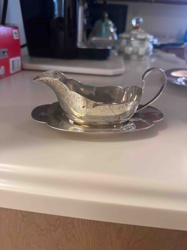
Submitted item photo
Submitted photo · June 4, 2026

User's notes

Sterling

AI analysis below

AI appraisal

AI analysis & estimate

AI-Generated · Verify before acting

Everything below is generated by AI for informational purposes only. AI can make mistakes — the AI may misidentify items or misattribute them (artist, maker, brand, designer, origin, era). This is not an official valuation and should not be used for insurance, sale, tax, estate, legal, or lending purposes — or any decision requiring a certified appraisal. It is not an authoritative claim about any person, brand, or rights holder — do not share or rely on it as a factual statement about a third party. Always consult qualified professionals before making financial decisions.

Note

This analysis also relies on unverified notes provided by the user, which may be incomplete or inaccurate and could affect the result.

Read the full disclaimer

AI Identification

·Not independently authenticated·Verify before acting

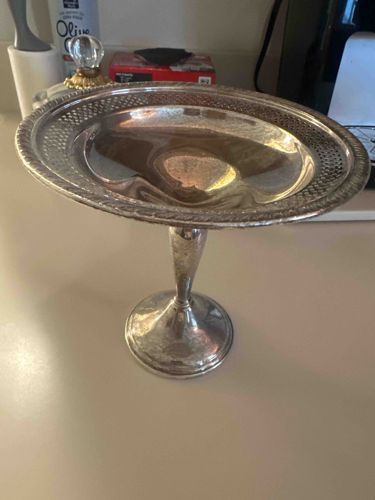
Vintage Mid-Century Pierced Sterling Silver Pedestal Compote Dish

Sterling Silver Hollowware

AI Estimated Value

·Not an official valuation·Verify before acting

$250 - $450

As of June 4, 2026

AI Item Analysis

·AI can make mistakes·Verify before acting
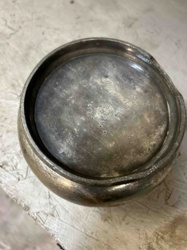
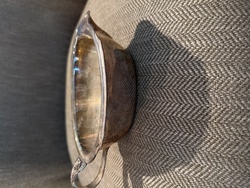
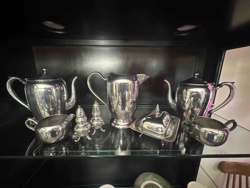
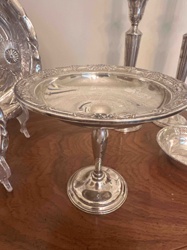
This item is a tall, elegant pedestal compote dish, commonly referred to as a tazza or comport, crafted from sterling silver (.925 fineness). The piece features a shallow, circular bowl with a wide, decorative rim. The rim is distinguished by a delicate bands of openwork piercing in a geometric lattice pattern, framed by a repoussé or stamped gadrooned border. The bowl is supported by a slender, tapered trumpeted stem that descends into a weighted, stepped circular base for stability. Physically, the item exhibits a high-polish finish classic to American mid-century silver manufacturers such as Gorham, Reed & Barton, or Whiting. While the specific maker's mark is not visible in the provided photograph, the construction is typical of early to mid-20th-century silver hollowware. In terms of condition, the silver shows a visible layer of tarnish and oxidation across the surface, particularly within the recessed areas of the piercing and around the base. There appear to be minor surface abrasions and superficial scratching consistent with age and regular use. The overall structural integrity remains intact without obvious misshapen edges or deep dents. The craftsmanship is high-quality, showcasing a balance between functional weight and decorative aesthetic, typical of high-end household table service items from the 1940s-1960s.
AI Appraisal Report

·AI can make mistakes·Verify before acting
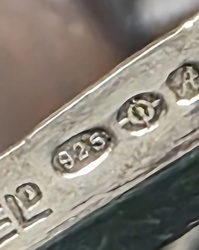
I have examined the digital representation of the Pierced Sterling Silver Pedestal Compote. Based on my visual analysis, the piece demonstrates the hallmark characteristics of American mid-century silver hollowware, specifically the geometric lattice piercing and gadrooned borders favored by makers like Gorham or Reed & Barton. The 'Sterling' designation indicates a 92.5% silver purity, though the base is clearly 'weighted'—a common manufacturing technique of the 1940s-1960s where the stem and base are filled with pitch or cement to provide stability. This significantly impacts value, as the silver weight is limited to the thin exterior foil rather than solid metal. The condition shows heavy tarnish and oxidation, which, while reversible through professional polishing, currently obscures possible fine scratches or 'pitting' from acidic food contact. The market for mid-century sterling hollowware remains stable but is currently secondary to the scrap value of the silver itself, unless a prestigious maker’s mark (such as Tiffany & Co.) is identified. Comparables for weighted pierced tazzas of this size typically hammer between $200 and $500 depending on the manufacturer and the extent of any dents. Note: This appraisal is based solely on photographic evidence. A definitive valuation is limited without a physical inspection to verify the maker’s mark on the underside and calculate the 'melt weight' of the silver. To fully authenticate this item, I would require a high-resolution macro photograph of the base stamps and an in-person examination to check for 'bleeding' (where the weighted filling begins to break through the silver skin). No scientific testing was performed; veracity is based on the provided 'Sterling' description.

Get your items appraised

Instant estimates of your treasures with AI-powered appraisals

Browse More Appraisals