AI estimate as of October 2, 2025 · verify with a professional before acting
AI-Generated · Verify before acting
Everything on this page is generated by AI for informational purposes only. AI can make mistakes — the AI may misidentify items or misattribute them (artist, maker, brand, designer, origin, era). This is not an official valuation and should not be used for insurance, sale, tax, estate, legal, or lending purposes — or any decision requiring a certified appraisal. It is not an authoritative claim about any person, brand, or rights holder — do not share or rely on it as a factual statement about a third party. Always consult qualified professionals before making financial decisions.
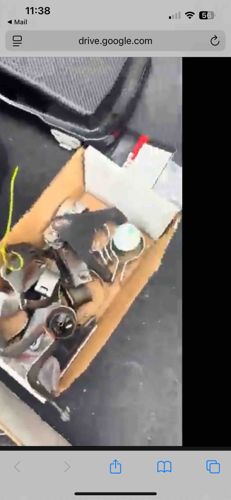
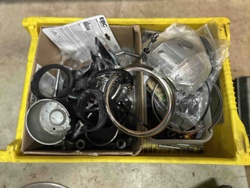
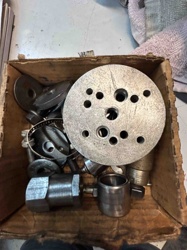
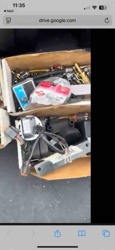
The item in question is a collection of miscellaneous hardware and small parts, contained within an open, rectangular cardboard box. The box itself is light brown, consistent with standard corrugated cardboard, and appears to have some minor wear and discoloration from use or age. The contents include a variety of metallic and possibly plastic components, predominantly in shades of gray, black, and silver. Notable visible objects include several metal clips or clamps, some appearing to be spring-loaded, and at least one part with a circular, possibly threaded, component. One object has a bright, light blue or cyan-colored element that stands out against the more muted tones of the other items. A yellow string or cord is also visible, entangled with some of the parts, suggesting they may have been previously bundled or were part of an assembly. The overall condition of the contents seems to be used, with some pieces exhibiting scratches, scuffs, and possibly some surface dirt or grime, consistent with parts that have been removed from an assembly, stored, or are intended for repair/repurposing. There are no clear manufacturer's marks or identifying stamps visible in the provided image. The variety and nature of the parts suggest they could be from electronic devices, small appliances, automotive components, or general household hardware. The assortment implies either a collection of discarded parts, spare parts, or components for a specific project. Quality indicators and craftsmanship are difficult to assess without closer inspection of individual pieces, but they appear to be standard mass-produced items.
AI Appraisal Report
I have carefully examined the provided image of the 'Mixed Hardware and Miscellaneous Small Parts in a Cardboard Box.' My assessment of its condition, based solely on visual inspection, is that the contents are used and show signs of wear, including scratches, scuffs, and possibly some grime. The light brown cardboard box itself also exhibits minor wear and discoloration. There are no readily identifiable manufacturer's marks or stamps to confirm authenticity or origin. These appear to be standard, mass-produced components.
Market conditions for miscellaneous used hardware and small parts are generally very low. Comparable items, often sold as 'junk lots' or 'parts bins,' typically fetch nominal prices, primarily driven by weight for scrap metal if applicable, or by a specific, identifiable, and in-demand component within the lot. Given the generic nature of these parts and the absence of any obviously high-value items (e.g., precious metals, rare electronic components), demand is extremely limited. There is no discernible rarity for this collection.
Factors significantly impacting value negatively include the used condition, unknown provenance, lack of specific identification for individual parts, and the general 'junk lot' nature. The small quantity and variety without a clear purpose further diminish value.
It is crucial to note the limitations of authenticity verification from images alone. Without physical inspection, I cannot ascertain the exact material composition (e.g., type of metal, plastic grade), functionality of spring-loaded mechanisms, or the precise nature of the blue element. In-person examination would be required to identify individual parts, assess their functionality and condition more accurately, and determine if any specific components possess hidden value beyond their apparent generic utility. Provenance documentation (e.g., original source of parts, purpose) or scientific testing (e.g., material analysis) would be necessary for full authentication and a more precise valuation, but are highly unlikely to be economically justified for such an item.