AI Appraisal Estimate

AI-generated estimates · not official valuations

From the user

What was submitted

Photo and notes provided by the user — not generated by AI

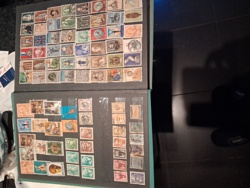
Submitted item photo
Submitted photo · June 26, 2026

User's notes

No additional notes provided.

AI analysis below

AI appraisal

AI analysis & estimate

AI-Generated · Verify before acting

Everything below is generated by AI for informational purposes only. AI can make mistakes — the AI may misidentify items or misattribute them (artist, maker, brand, designer, origin, era). This is not an official valuation and should not be used for insurance, sale, tax, estate, legal, or lending purposes — or any decision requiring a certified appraisal. It is not an authoritative claim about any person, brand, or rights holder — do not share or rely on it as a factual statement about a third party. Always consult qualified professionals before making financial decisions.

Read the full disclaimer

AI Identification

·Not independently authenticated·Verify before acting

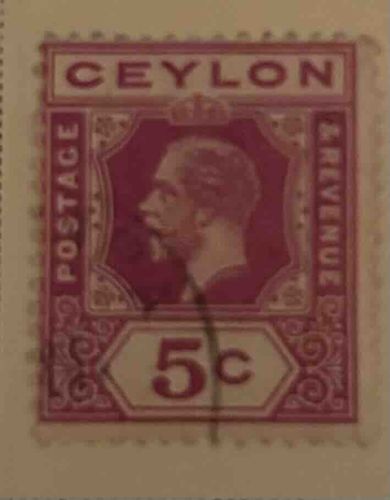
Ceylon 5c Postage & Revenue Stamp (King Edward VII)

Philatelic Collectible

AI Estimated Value

·Not an official valuation·Verify before acting

$50 - $100

As of June 26, 2026

AI Item Analysis

·AI can make mistakes·Verify before acting
This item is a vintage postage and revenue stamp from Ceylon (present-day Sri Lanka), featuring a portrait of King Edward VII. The stamp is predominantly in shades of reddish-purple or magenta, printed on what appears to be off-white or light cream paper. It has a rectangular shape with serrated or perforated edges, indicating a standard stamp manufacturing process. The central vignette displays a right-facing profile portrait of King Edward VII, depicted with a mustache and beard common to his image. Above the portrait, a small crown is visible, denoting royal authority. The word 'CEYLON' is prominently displayed in a rectangular banner at the top, while 'POSTAGE' runs vertically along the left side and 'REVENUE' runs vertically along the right side. At the bottom, within an ornate hexagonal cartouche, the denomination '5c' is clearly printed, signifying five cents. The design includes intricate scrollwork and decorative elements around the central portrait and the denomination, characteristic of a late 19th or early 20th-century philatelic aesthetic. The overall condition shows signs of age, with some slight discoloration or toning of the paper. A vertical line or mark is visible passing through the '5c' denomination and partially obscuring the portrait, which could be a cancellation mark, a fold, or a crease, potentially impacting its value. The perforations appear relatively intact, though exact count and condition cannot be precisely determined from the image. The stamp reflects a colonial era postal and fiscal instrument from the British Empire.

AI Appraisal Report

·AI can make mistakes·Verify before acting
I have examined the image of this Ceylon 5c Postage & Revenue Stamp featuring King Edward VII. Based on visual assessment, the stamp appears to be authentic, consistent with known issues for this period and denomination. The design elements, including the portrait, text placement, and decorative scrollwork, align with philatelic references for Ceylon stamps of King Edward VII's reign. However, definitive authenticity can only be fully confirmed through in-person examination, including detailed study of paper type, printing methods, and watermarks if applicable. The condition is good for its age, though there is clear evidence of a significant vertical cancellation mark passing through the "5c" denomination and the King's portrait. This heavy cancel significantly impacts its philatelic value. The perforations appear relatively intact, but exact centering and a precise perforation count cannot be determined from the image alone. There is also some slight toning of the paper, which is common for stamps of this vintage. Ceylon King Edward VII stamps are generally common unless they possess specific varieties (e.g., watermarks, plate flaws), which are not discernible here. Stamps with heavy cancellations like this example typically sell at a discount compared to finer, lightly canceled, or unused examples. My valuation reflects these factors, considering general market demand for common colonial issues in good-used condition. A range is provided to account for minor variations in perceived appeal or unobservable nuances in wear. For full authentication and to identify any potential rare varieties, physical inspection by a philatelic expert, ideally with UV light analysis and watermark detection, would be essential.

Get your items appraised

Instant estimates of your treasures with AI-powered appraisals

Browse More Appraisals