AI Appraisal Estimate

AI-generated estimates · not official valuations

From the user

What was submitted

Photo and notes provided by the user — not generated by AI

Submitted item photo
Submitted photo · June 20, 2026

User's notes

No additional notes provided.

AI analysis below

AI appraisal

AI analysis & estimate

AI-Generated · Verify before acting

Everything below is generated by AI for informational purposes only. AI can make mistakes — the AI may misidentify items or misattribute them (artist, maker, brand, designer, origin, era). This is not an official valuation and should not be used for insurance, sale, tax, estate, legal, or lending purposes — or any decision requiring a certified appraisal. It is not an authoritative claim about any person, brand, or rights holder — do not share or rely on it as a factual statement about a third party. Always consult qualified professionals before making financial decisions.

Read the full disclaimer

AI Identification

·Not independently authenticated·Verify before acting

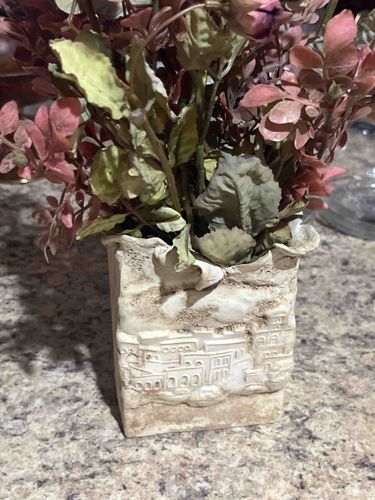
Relief-Decorated Rectangular Ceramic Bud Vase

Home Decor / Ceramics

AI Estimated Value

·Not an official valuation·Verify before acting

$15 - $35

As of June 20, 2026

AI Item Analysis

·AI can make mistakes·Verify before acting
This item is a small, rectangular ceramic bud vase featuring a raised relief architectural scene. The vase is constructed from a light-colored clay or ceramic material, possibly bisque-fired or finished with a matte, unglazed cream surface. The physical design is characterized by straight vertical walls and an irregular, wavy, or 'tortuous' top rim that gives it a handcrafted appearance. The primary aesthetic feature is a bas-relief carving on the front face depicting a stylized Mediterranean or Middle Eastern village, showcasing clustered dwellings with small windows and flat roofs. The color palette is monochromatic, primarily consisting of off-white and cream, though significant brown and tan staining is present within the recessed areas of the carving and along the textured surface, suggesting an antiqued wash or a heavy patina from age and use. The texture is gritty and porous, typical of cast resin or slip-cast ceramic. Condition-wise, the piece shows visible surface wear, substantial dust accumulation in the crevices, and what appears to be organic buildup or staining near the rim. There are no visible maker's marks or signatures in the provided view. The style is contemporary folk art, likely manufactured within the last 30 to 40 years as a decorative souvenir or home accessory. Inside, the vase contains an assortment of artificial flora, including dusty-pink eucalyptus-like leaves and small purple fabric blooms, which appear to be fixed or tightly packed within the vessel.
AI Appraisal Report

·AI can make mistakes·Verify before acting
I have conducted a visual examination of the relief-decorated rectangular ceramic bud vase. The piece is a contemporary, slip-cast decorative object, likely mass-produced for the giftware or souvenir market within the last 30 years. My assessment of the material suggests a low-fire porous ceramic or cast resin, finished with a heavy dark wash to simulate age and highlight the architectural relief. The 'tortuous' rim and gritty texture are intentional stylistic choices to mimic handcrafted folk art. Condition appears fair to good; however, there is significant accumulation of dust and organic staining that suggests it has been used as a functional vessel without regular cleaning. The presence of low-quality artificial flora further indicates its status as a common home decor item rather than a fine art piece. The market for such items is saturated, with high availability in secondary retail environments like thrift stores, estate sales, and online marketplaces (e.g., Etsy or eBay). Rarity is non-existent. The value is primarily driven by its decorative utility. Factors depressing the value include the lack of a maker's mark and the visible surface wear. Limitations: This appraisal is based solely on digital imagery. To provide a definitive valuation, an in-person inspection is required to confirm material composition (clay vs. resin) and to check for hidden structural cracks or manufacturer stamps on the base. Provenance documentation, such as original purchase receipts or artist signatures, would be necessary to elevate this from a generic decorative object to a collectible work of art. Scientific testing of the glaze for lead or mineral content could also clarify its origin.

Get your items appraised

Instant estimates of your treasures with AI-powered appraisals

Browse More Appraisals