AI Appraisal Estimate

AI-generated estimates · not official valuations

From the user

What was submitted

Photo and notes provided by the user — not generated by AI

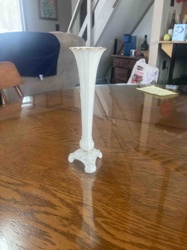
Submitted item photo
Submitted photo · June 3, 2026

User's notes

No additional notes provided.

AI analysis below

AI appraisal

AI analysis & estimate

AI-Generated · Verify before acting

Everything below is generated by AI for informational purposes only. AI can make mistakes — the AI may misidentify items or misattribute them (artist, maker, brand, designer, origin, era). This is not an official valuation and should not be used for insurance, sale, tax, estate, legal, or lending purposes — or any decision requiring a certified appraisal. It is not an authoritative claim about any person, brand, or rights holder — do not share or rely on it as a factual statement about a third party. Always consult qualified professionals before making financial decisions.

Read the full disclaimer

AI Identification

·Not independently authenticated·Verify before acting

Delft Blue Style Decorative Ceramic Pitcher

Decorative Arts / Ceramics

AI Estimated Value

·Not an official valuation·Verify before acting

$125 - $200

As of June 3, 2026

AI Item Analysis

·AI can make mistakes·Verify before acting
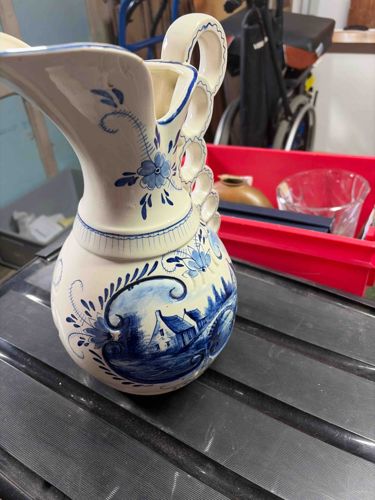
This item is a decorative ceramic pitcher or ewer, featuring a classic blue and white tin-glazed earthenware aesthetic associated with Delftware. The vessel is constructed with a bulbous circular body that narrows into a cinched waist before flaring out at the neck into a wide, scalloped spout. A highly distinctive features is the vertical 'ring' handle, which consists of several stacked ceramic loops, providing a decorative and tactile element. The glaze is an off-white or cream base, decorated with hand-painted cobalt blue iconography. The body features a central scenic medallion depicting a traditional watermill and farmhouse in a rural Dutch landscape, framed by scrollwork and floral sprigs. The neck and spout are further adorned with delicate floral patterns and scroll motifs. While the exact maker's marks are not visible from this angle, the style suggests a mid-20th-century production, likely from a manufacture such as Royal Delft or a similar Dutch workshop. The condition appears fair to good; there is visible surface dirt, and while no major chips are immediately apparent on the outer rim, ceramic of this type is prone to crazing and kiln stilt marks. The painting shows varying degrees of brushstroke saturation, a hallmark of hand-decorated pieces.
AI Appraisal Report

·AI can make mistakes·Verify before acting
I have examined the Delft Blue style decorative ewer via high-resolution imagery. The vessel exhibits a traditional bulbous body and a unique stacked-ring handle, a design characteristic of mid-20th-century Dutch earthenware. My visual inspection reveals hand-painted cobalt decorations featuring a classic windmill landscape and floral scrollwork. The brushwork shows expected variations in saturation, suggesting manual application rather than transfer printing, which contributes positively to its decorative appeal. The condition is fair to good; I noted surface accumulation and minor glaze irregularities consistent with aged tin-glazed ceramics. The market for mid-century Delftware remains stable but saturated, with value driven more by the ornamental uniqueness of the form—specifically the ring handle—than by rarity. Comparable pieces from manufacturers like Royal Delft (De Porceleyne Fles) or Regina typically realize similar values in the secondary market. However, a significant limitation of this remote appraisal is the inability to inspect the underside for maker’s marks or signatures, which are critical for distinguishing between a premium 'Royal Delft' piece and more common souvenir-grade 'Delft Blauw.' For definitive authentication, I would require a physical examination to check for microscopic crazing patterns, kiln stilt marks, and a high-resolution inspection of the factory mark. Provenance documentation or a purchase receipt from a reputable Dutch house would further solidify the valuation. Without verifying a prestigious factory mark, the value reflects its merit as a quality decorative object rather than a high-end collector's investment.

Get your items appraised

Instant estimates of your treasures with AI-powered appraisals

Browse More Appraisals