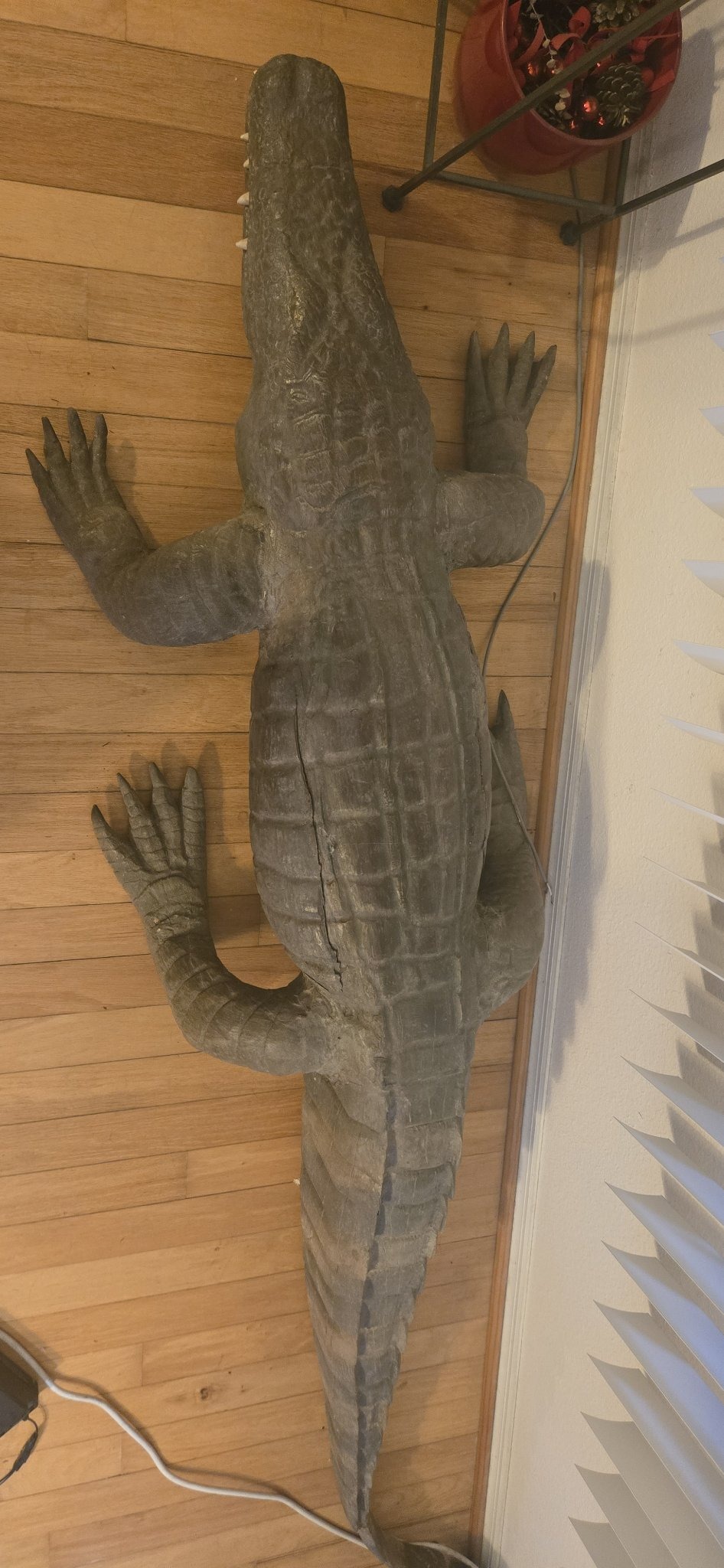
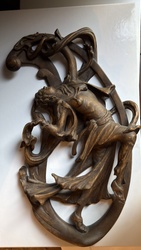
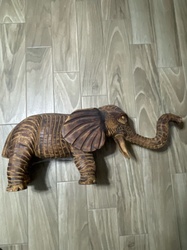
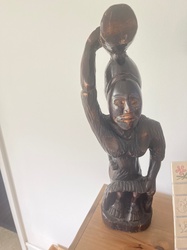
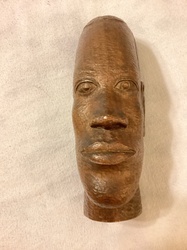
8ft Alligator by James Sears of Florida
Material: Basswood
Weight: 200 lbs
Dimensions: 8ft x 2ft x 1ft
These notes were written by the person who submitted this item. Appraiser.AI has not verified them, and the AI's identification and estimate may rely on them.
AI Estimated Value
Not an official valuation
$2,500-$4,000
AI estimate as of November 17, 2026 · verify with a professional before acting
AI-Generated · Verify before acting
Everything on this page is generated by AI for informational purposes only. AI can make mistakes — the AI may misidentify items or misattribute them (artist, maker, brand, designer, origin, era). This is not an official valuation and should not be used for insurance, sale, tax, estate, legal, or lending purposes — or any decision requiring a certified appraisal. It is not an authoritative claim about any person, brand, or rights holder — do not share or rely on it as a factual statement about a third party. Always consult qualified professionals before making financial decisions.
This analysis also relies on unverified notes provided by the user, which may be incomplete or inaccurate and could affect the result.
This large-scale decorative carving depicts an alligator in a top-down, sprawling posture. Based on visual inspection, the sculpture is crafted from a single or multi-pieced wood block with a heavily textured, greyish-brown finish meant to simulate natural reptilian skin and scutes. The surface displays deeply gouged scale patterns along the back, detailed clawed feet, an open-jawed snout showing individual carved teeth, and a long tapered tail. A significant natural seasoning check or splitting crack runs down the length of the back and midsection, which is common in large wooden carvings as the material ages and dries. The owner provides context, identifying the piece as an 8-foot alligator sculpture made of basswood by carver James Sears of Florida, with a reported weight of 200 pounds and approximate dimensions of 8 feet by 2 feet by 1 foot. However, this specific maker attribution and material specification are user-supplied claims and remain unverified from the image alone, as no clear signature or maker's mark is visible in the provided photograph. The identification rests purely on the subject matter and stylistic rendering of the wooden figure. The piece exhibits craftsmanship consistent with folk art or regional wildlife woodcarving traditions, though age and exact provenance cannot be determined without physical inspection.
AI Appraisal Report
Based on the provided image and information, I have evaluated this large-scale carved wood alligator sculpture. Per user submission, the piece is identified as an 8-foot basswood carving by Florida carver James Sears, weighing approximately 200 pounds and measuring 8 feet by 2 feet by 1 foot. I must emphasize that this attribution is an unverified hypothesis; I cannot confirm the maker, exact wood species, or weight from a photograph alone, as no clear signature or maker's mark is visible in the visual evidence. Based on what I can see, the sculpture displays a heavily textured greyish-brown finish, deeply gouged scale patterns, detailed clawed feet, an open-jawed snout, and a noticeable natural seasoning check running down the length of the back. Large wooden carvings frequently develop such splitting cracks as the material ages and dries, which impacts both structural integrity and aesthetic presentation. My appraisal value estimate of $2,500 to $4,000 assumes the owner's attribution to James Sears is correct. Folk art and regional wildlife woodcarvings of this monumental scale have a niche collector market, though demand varies widely based on regional interest and artist recognition. If the piece turns out to be a reproduction, a generic copy, or simply in the style of regional wildlife carving rather than by Sears' own hand, the value would likely decrease significantly to the $600 to $1,200 range, reflecting purely decorative value rather than named folk art. To move beyond an assumption and confirm authenticity, authorship, and material composition, an in-person physical inspection by a qualified folk art expert, along with provenance documentation and detailed examination of carving techniques, would be necessary.