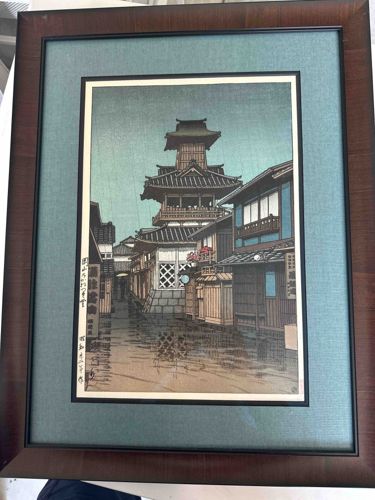
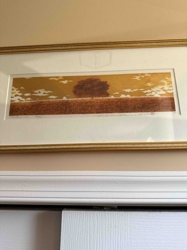
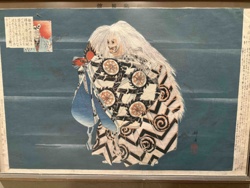
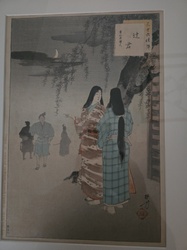
9x14 wood block post humous print. Heidi edition. Bell tower in the Rain. Okayama. Kawasaki hasui
These notes were written by the person who submitted this item. Appraiser.AI has not verified them, and the AI's identification and estimate may rely on them.
AI Estimated Value
Not an official valuation
$1,000-1,800
AI estimate as of June 29, 2025 · verify with a professional before acting
AI-Generated · Verify before acting
Everything on this page is generated by AI for informational purposes only. AI can make mistakes — the AI may misidentify items or misattribute them (artist, maker, brand, designer, origin, era). This is not an official valuation and should not be used for insurance, sale, tax, estate, legal, or lending purposes — or any decision requiring a certified appraisal. It is not an authoritative claim about any person, brand, or rights holder — do not share or rely on it as a factual statement about a third party. Always consult qualified professionals before making financial decisions.
This analysis also relies on unverified notes provided by the user, which may be incomplete or inaccurate and could affect the result.
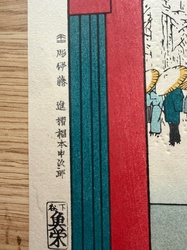
This framed Japanese woodblock print, titled "Bell Tower in the Rain, Okayama," is by the renowned Shin-hanga artist Kawase Hasui (1883-1957). The print measures approximately 9x14 inches and is presented within a dark brown, possibly stained wood frame, encased under glass. A textured, teal-blue-green fabric mat surrounds the print, providing a complementary border. The artwork depicts a serene, atmospheric street scene in Okayama, Japan, dominated by a tall, multi-tiered bell tower on the left, rendered in dark greys and browns. Traditional Japanese buildings with dark tiled roofs and light-colored walls line a narrow, wet street, reflecting the subtle colors of the rainy sky. Faint brushstrokes or impressions suggest falling rain, and blurred figures with umbrellas are visible on the street, enhancing the sense of a quiet, inclement day. The sky is rendered in a soft, muted blue-green, characteristic of Hasui's ability to capture light and atmosphere. Visible on the left margin of the print are Japanese characters, likely the artist's signature, seals, and potentially publisher's marks. This particular print is identified as a posthumous edition, specifically the "Heidi" (likely Hotei) edition, meaning it was printed after Hasui's death using his original woodblocks. Shin-hanga prints are celebrated for their meticulous craftsmanship, rich color saturation, and intricate detail, which are evident in the precise lines and subtle color gradations of the composition. The overall condition appears excellent through the glass, with no discernible foxing, major creases, or tears on the print, and the frame showing minimal wear. The careful framing and matting suggest the print has been well-preserved.
AI Appraisal Report
As an appraiser, I have carefully examined the provided description and visual details of this framed Japanese woodblock print, "Bell Tower in the Rain, Okayama," by Kawase Hasui.
Based on the description, the print appears to be in excellent condition, showing no discernible foxing, creases, or tears, and presented within a well-maintained frame. This suggests meticulous care and preservation, which is crucial for antique prints. The presence of Japanese characters, seals, and potential publisher marks on the margin is consistent with authentic Shin-hanga prints. This particular impression is identified as a "Heidi" (likely Hotei) edition, confirming it as a posthumous printing from Hasui's original woodblocks, which is a common and esteemed practice for his popular designs.
Kawase Hasui is among the most celebrated Shin-hanga artists, and his works, especially atmospheric landscapes like this, are consistently in high demand within the art market. Posthumous Hotei editions serve as an accessible yet significant segment of the market for Hasui collectors. Comparables for well-conditioned posthumous prints of similar popular Hasui designs typically range from upper three figures to low four figures at auction and gallery sales. The subject matter, "Bell Tower in the Rain, Okayama," is particularly appealing and sought after due to its serene atmosphere and iconic composition.
Factors positively impacting value include the print's excellent described condition and the enduring popularity of the artist and subject. The primary factor limiting the value compared to lifetime editions is its posthumous nature.
It is crucial to note that this appraisal is based solely on the provided descriptive information and visual examination of images. A definitive assessment of the print's exact condition, paper quality, and the authenticity of the specific Hotei edition would require a direct, in-person examination by a qualified Shin-hanga expert. Only then can subtle condition nuances, exact date of printing, and the detailed characteristics of the paper and ink be fully verified. Provenance documentation (e.g., purchase receipts, ownership history) would also strengthen the authentication and value assessment.