AI estimate as of August 17, 2025 · verify with a professional before acting
AI-Generated · Verify before acting
Everything on this page is generated by AI for informational purposes only. AI can make mistakes — the AI may misidentify items or misattribute them (artist, maker, brand, designer, origin, era). This is not an official valuation and should not be used for insurance, sale, tax, estate, legal, or lending purposes — or any decision requiring a certified appraisal. It is not an authoritative claim about any person, brand, or rights holder — do not share or rely on it as a factual statement about a third party. Always consult qualified professionals before making financial decisions.
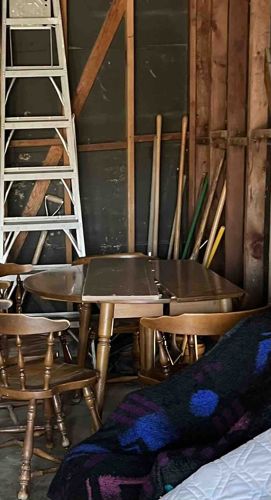
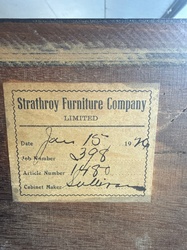
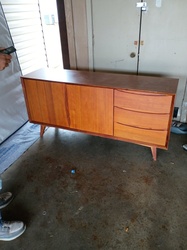
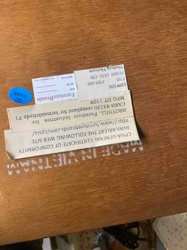
The item identified is a wooden gateleg or drop-leaf dining table, likely made of solid wood or wood veneer, exhibiting a warm, medium-brown tone with a noticeable sheen from a clear finish, possibly lacquer or varnish. The tabletop appears to have a central, fixed section with two hinged drop-leaves, which are currently in an extended or partially extended position, forming an ovular or rounded rectangular shape when fully open. The surface shows some signs of wear, including potential scratches or scuffs, and areas of discoloration, particularly on the central panel, suggesting age and regular use. The legs are turned, displaying subtle curves and possibly reeded or ringed details, indicating a traditional or colonial revival style. The table's construction involves sturdy wooden components, and its design is practical for space-saving. It appears to be a functional, everyday piece rather than an ornate, high-end antique, likely dating from the mid-20th century to the late 20th century. Visible craftsmanship points to standard commercial manufacturing, with no obvious unique maker's marks or signatures discernible from the image. The accompanying chairs, one partially visible to the left, are also made of wood with turned legs and spindle backs, consistent with a casual dining set. The overall condition suggests a well-used but structurally sound piece of furniture, suitable for refurbishment or continued use as-is.
AI Appraisal Report
Upon visual examination of the provided image, I assess this wooden drop-leaf dining table to be a functional, utilitarian piece, likely manufactured in the mid-to-late 20th century. The condition appears to be fair to good, exhibiting wear consistent with regular household use, including surface scuffs, potential scratches, and discoloration on the central panel. Structural integrity seems sound, though this cannot be definitively confirmed without physical inspection. The turned legs and overall style suggest a traditional or colonial revival aesthetic, commonly found in commercial furniture production of that era. Authenticity, based solely on this image, points to a period appropriate, mass-produced item rather than a unique artisan piece or high-end antique.
The current market for used, utilitarian dining tables of this style is modest. While gateleg tables offer practical space-saving features, demand is generally stable but not high, primarily for those seeking affordable, functional furniture. Comparables in similar condition typically retail in secondary markets (e.g., online marketplaces, consignment shops, estate sales) for a relatively low range. Factors impacting value negatively include the visible wear and the absence of any discernible maker's marks or unique design elements that would distinguish it. Positive factors include its apparent structural soundness and functional design. This is certainly not a rare item.
Limitations in authenticity verification are significant. Without in-person examination, I cannot confirm the exact wood type, construction methods (e.g., solid wood vs. veneer, joinery), nor can I thoroughly assess the extent of surface damage or structural stability. Provenance documentation could potentially add value if it related to a notable history, but this is unlikely for such a common piece. Scientific testing is not typically warranted for an item of this type and value.