Late Victorian or Eastlake Style Carved Wood Wall Mirror
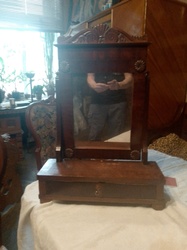
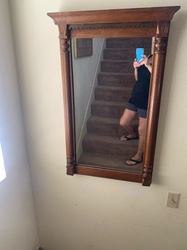
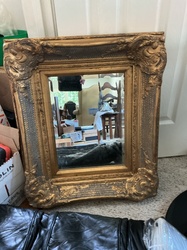
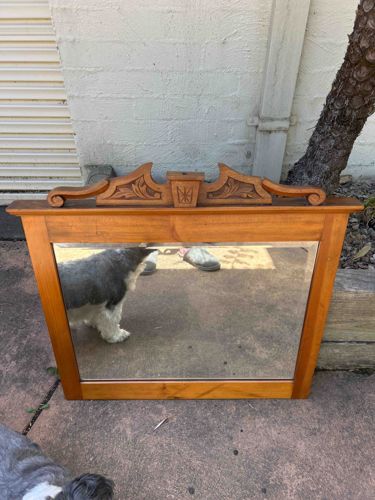
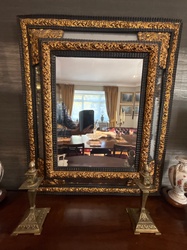
This is a rectangular wall mirror featured in a medium-tone wood frame, likely oak or pine with a fruitwood finish. The most prominent feature is the decorative crest or pediment, which exhibits Late Victorian or Eastlake influences. The crest consists of a central rectangular block with a sunburst or etched geometric motif, flanked by two symmetrical hand-carved panels featuring acanthus leaf or stylized scrolling foliage. These panels terminate in elegant outward-facing scrolls. The main frame is constructed with a simple, flat-panel design and a protruding top ledge (mantel-style). Below the ledge, the mirror glass appears to be beveled, suggesting higher-quality craftsmanship. The wood shows a warm, honey-colored patina consistent with age. There are visible signs of wear including minor scuffs to the wood finish, particularly along the lower edges, and some potential darkening or early desilvering around the perimeter of the mirror glass. The construction appears sturdy, utilizing traditional joinery. This piece likely dates from the late 19th to early 20th century and was originally part of a larger bedroom suite, such as a dresser topper, or intended as a standalone hall mirror.
AI-Generated Appraisal Disclaimer
Estimated Value
$100 - $175
Basic Information
Category
Antique Furniture / Decorative Mirrors
Appraised On
February 24, 2026
Estimated Value
$100 - $175
Item Description
This is a rectangular wall mirror featured in a medium-tone wood frame, likely oak or pine with a fruitwood finish. The most prominent feature is the decorative crest or pediment, which exhibits Late Victorian or Eastlake influences. The crest consists of a central rectangular block with a sunburst or etched geometric motif, flanked by two symmetrical hand-carved panels featuring acanthus leaf or stylized scrolling foliage. These panels terminate in elegant outward-facing scrolls. The main frame is constructed with a simple, flat-panel design and a protruding top ledge (mantel-style). Below the ledge, the mirror glass appears to be beveled, suggesting higher-quality craftsmanship. The wood shows a warm, honey-colored patina consistent with age. There are visible signs of wear including minor scuffs to the wood finish, particularly along the lower edges, and some potential darkening or early desilvering around the perimeter of the mirror glass. The construction appears sturdy, utilizing traditional joinery. This piece likely dates from the late 19th to early 20th century and was originally part of a larger bedroom suite, such as a dresser topper, or intended as a standalone hall mirror.
Get Your Items Appraised
Instant estimates of your treasures with AI-powered instant appraisals