AI Appraisal Estimate

AI-generated estimates · not official valuations

From the user

What was submitted

Photo and notes provided by the user — not generated by AI

Submitted item photo
Submitted photo · June 17, 2026

User's notes

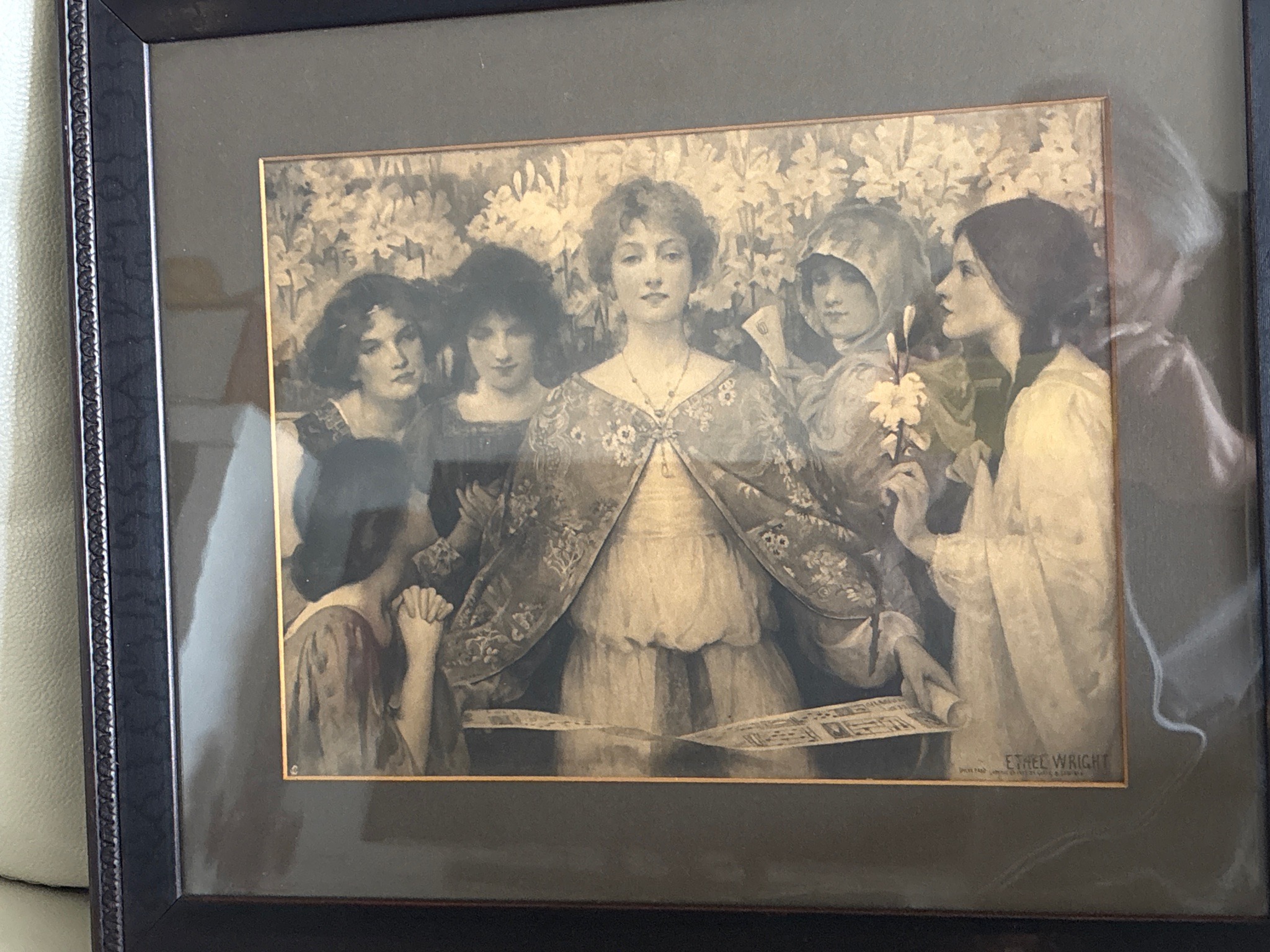
Sepia print by Ethel WRIGHT

AI analysis below

AI appraisal

AI analysis & estimate

AI-Generated · Verify before acting

Everything below is generated by AI for informational purposes only. AI can make mistakes — the AI may misidentify items or misattribute them (artist, maker, brand, designer, origin, era). This is not an official valuation and should not be used for insurance, sale, tax, estate, legal, or lending purposes — or any decision requiring a certified appraisal. It is not an authoritative claim about any person, brand, or rights holder — do not share or rely on it as a factual statement about a third party. Always consult qualified professionals before making financial decisions.

Note

This analysis also relies on unverified notes provided by the user, which may be incomplete or inaccurate and could affect the result.

Read the full disclaimer

AI Identification

·Not independently authenticated·Verify before acting

"Songs of Greeting" by Ethel Wright

Fine Art Prints

AI Estimated Value

·Not an official valuation·Verify before acting

$450 - $650

As of June 17, 2026

AI Item Analysis

·AI can make mistakes·Verify before acting
This is a monochrome sepia-toned print of the painting "Songs of Greeting" by the British artist Ethel Wright (1866–1939). The imagery features a group of several young women in Aesthetic or Pre-Raphaelite style attire, positioned against a dense backdrop of tall white lilies. The central figure wears a decorative floral cloak and a pendant necklace, holding a scroll of sheet music with other women. The composition is characteristic of Wright's late 19th-century work, emphasizing feminine beauty and romanticism. The print is housed in a dark, rectangular wooden frame with a detailed beaded or rope-twist inner border. It is professionally matted with a dark grey or charcoal mat board that features a thin gold-toned fillet or bevel. The artist's name, 'ETHEL WRIGHT', is clearly visible in block lettering in the lower right corner, along with smaller publication text indicating it may be a copyright-protected lithographic or photogravure reproduction from the late Victorian or Edwardian era. The condition appears stable, though there is some light reflection on the glass; the paper shows a warm patina consistent with age. There are no obvious tears or foxing visible through the glazing, and the framing demonstrates high-quality preservation techniques.
AI Appraisal Report

·AI can make mistakes·Verify before acting
I have virtually examined this monochrome sepia print of 'Songs of Greeting' by Ethel Wright (1866–1939). The work is a period reproduction, likely a high-quality photogravure or lithograph from the late 19th or early 20th century, which was a common medium for disseminating Wright's Aesthetic Movement and Pre-Raphaelite influenced imagery. The condition appears well-preserved, showing a warm, even patina consistent with age without evidence of significant foxing, moisture damage, or sun-bleaching. The professional framing—featuring a beaded wood frame and charcoal matting—adds decorative value and suggests a history of careful ownership. Wright’s market has seen a resurgence of interest alongside other female artists of the Victorian era. While her original oil paintings achieve four to five figures, hers are less common in print form than contemporaries like Leighton or Rossetti, lending a degree of rarity. The value is supported by the high-quality archival presentation and the specific subject matter, which remains popular for its classical romanticism. Comparable period photogravures of British Victorian art typically sell within the $300-$800 range depending on size, condition, and framing. Limitations: This appraisal is based on digital images. Without an in-person examination, I cannot confirm if the print is laid down on an acidic backing or if the glass is UV-protective. Full authentication would require removing the print from the frame to inspect for watermarks, plate marks, or blind stamps on the margin. Additionally, provenance documentation from the original point of sale would be necessary to establish its specific edition and publication year definitively. A physical inspection would also assess the paper's integrity and confirm the printing technique (e.g., distinguishing between a photogravure and a later offset lithograph).

Get your items appraised

Instant estimates of your treasures with AI-powered appraisals

Browse More Appraisals