AI estimate as of December 7, 2025 · verify with a professional before acting
AI-Generated · Verify before acting
Everything on this page is generated by AI for informational purposes only. AI can make mistakes — the AI may misidentify items or misattribute them (artist, maker, brand, designer, origin, era). This is not an official valuation and should not be used for insurance, sale, tax, estate, legal, or lending purposes — or any decision requiring a certified appraisal. It is not an authoritative claim about any person, brand, or rights holder — do not share or rely on it as a factual statement about a third party. Always consult qualified professionals before making financial decisions.
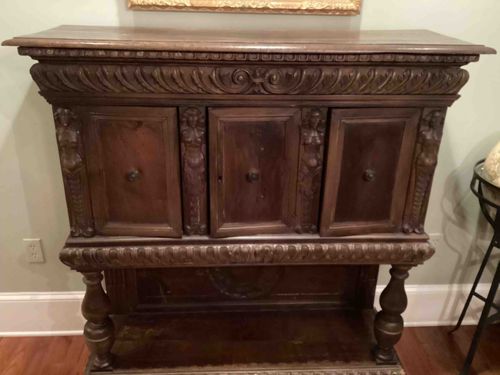
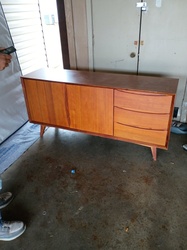
This is a substantial console cabinet, likely from the Baroque or Neo-Baroque period, constructed from a dark-stained, heavy wood, possibly oak or walnut, exhibiting a rich, deep brown hue with visible grain. The top surface is a solid, relatively plain plank of wood, showing some signs of wear and a soft sheen from age and handling. The most striking features are the extensive and elaborate carvings throughout its structure. The upper frieze below the top features a scrolling acanthus leaf motif, centrally adorned with what appears to be a cartouche or a decorative shell-like element. Below this, the cabinet body contains three recessed panel doors, each with a small, dark wooden knob-like pull. Flanking each door are intricately carved caryatid-like figures, depicting robed female torsos and heads, emerging from decorative architectural elements. These figures add significant sculptural detail and classical influence. The bottom section of the cabinet features another heavily carved frieze, mirroring the upper one, resting on four robust, turned wooden legs with a baluster-like form, terminating in flattened, carved feet. A lower shelf or stretcher is visible, suggesting a two-tiered base structure. The overall condition appears to be good for its age, displaying a desirable antique patina, consistent with years of use. Some minor surface wear, small dings, or variations in the wood finish would be expected but are not overtly visible in the provided image. The craftsmanship indicates a high level of skill, with deep, crisp carvings that articulate curves and forms, suggesting a well-made piece of furniture intended to convey status and artistry. The style points to a European origin, likely 17th to 19th century.
AI Appraisal Report
Based on my visual examination of the provided image, this Carved Baroque Console Cabinet presents as a substantial and well-crafted piece, likely from the Neo-Baroque period, given its robust form and extensive, intricate carvings. The dark-stained heavy wood, likely oak or walnut, displays a desirable antique patina consistent with significant age. The elaborate acanthus leaf motifs, central cartouche/shell element, and particularly the caryatid-like figures flanking the three panel doors, speak to high-level craftsmanship and design typical of the 19th-century revival styles. The overall condition appears good for its age, showing expected wear rather than significant damage, which contributes positively to its current market value.
Market comparables for similar Neo-Baroque carved console cabinets with good provenance and condition typically range from $2,500 to $5,000, influenced by the quality of carving and historical context. The demand for such ornate, statement pieces remains steady among collectors of antique furniture and interior designers seeking classical or historical accents. Rarity is moderate; while not unique, pieces of this scale and carving quality are not commonplace. Factors significantly impacting value include the exceptional detail of the carvings and the overall impressive presence of the cabinet.
It is crucial to note that my assessment is purely based on visual examination of the image. For full authentication and a more precise valuation, an in-person examination would be essential to verify wood species, assess for repairs or restorations, confirm construction techniques, and check the integrity of all carved elements. Furthermore, provenance documentation, if available, could significantly enhance value by confirming its history and origin.