AI estimate as of December 16, 2025 · verify with a professional before acting
AI-Generated · Verify before acting
Everything on this page is generated by AI for informational purposes only. AI can make mistakes — the AI may misidentify items or misattribute them (artist, maker, brand, designer, origin, era). This is not an official valuation and should not be used for insurance, sale, tax, estate, legal, or lending purposes — or any decision requiring a certified appraisal. It is not an authoritative claim about any person, brand, or rights holder — do not share or rely on it as a factual statement about a third party. Always consult qualified professionals before making financial decisions.
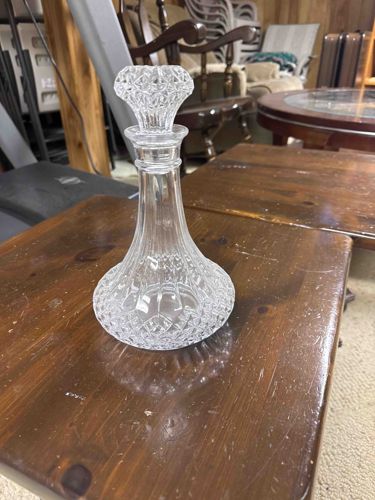
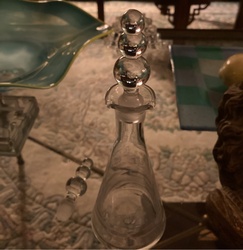
This is a clear glass decanter, likely made of crystal or high-quality glass, featuring extensive cut glass patterns. The decanter has a classic bell-shaped body that tapers upwards to a slender neck, culminating in a flared rim designed to accommodate the stopper. The lower two-thirds of the decanter's body and its flattened base are adorned with intricate diamond-cut patterns, characterized by intersecting lines that create a multifaceted, reflective surface. Towards the top of the body, just before the neck, there is a band of vertical ridged cuts. The neck itself is smooth and unadorned. The accompanying stopper is also crafted from clear glass and features a faceted, ornamental top, possibly a large diamond or star-cut design, which sits atop a smoothly tapered clear stem that plugs into the decanter's neck. The craftsmanship suggests precision in the cutting, designed to maximize light refraction and create a sparkling effect. No obvious manufacturer's marks, signatures, or stamps are discernible in the provided image. The decanter appears to be in good condition, with no visible chips, cracks, or significant wear. There might be some minor dust or smudges from handling, but these do not indicate damage to the glass itself. The style is indicative of decorative barware, possibly from the mid-20th century or later, designed for serving spirits like whiskey, brandy, or wine. Its clear, brilliant appearance and detailed cutting point to a good quality piece.
AI Appraisal Report
I have examined the provided image of this clear cut glass decanter with its stopper. Visually, the decanter appears to be in very good condition, showing no discernible chips, cracks, or significant wear. The intricate diamond-cut patterns and vertical ridged cuts are well-executed, indicative of good quality craftsmanship. The clarity of the glass suggests it is either crystal or high-quality leaded glass, designed to maximize light refraction. The stopper's faceted design complements the decanter's aesthetics perfectly.
Authenticity, as always, is limited when based solely on images. Without an in-person examination, I cannot confirm the exact material (e.g., lead crystal vs. high-quality glass), nor detect subtle manufacturing marks, etching, or flaws that might indicate its origin or age. A physical inspection would allow me to check for pontil marks, assess glass composition, and look for manufacturer's signatures often found on the base or discreetly within the cutting.
In terms of market conditions, decorative cut glass decanters, particularly those without specific maker identification (like Baccarat, Waterford, or other renowned houses), are quite common. While attractive, the market for generic cut glass has seen moderate demand. Comparable pieces of this quality and condition typically fall into a modest price range. Rarity is not a significant factor here; similar styles were produced by numerous manufacturers from the mid-20th century onwards. The primary value drivers are its excellent condition and aesthetic appeal, rather than historical significance or extreme rarity. Full authentication would require a hands-on inspection, potentially including UV light examination for repairs, and possibly weighing to deduce lead content.