These notes were written by the person who submitted this item. Appraiser.AI has not verified them, and the AI's identification and estimate may rely on them.
AI Estimated Value
Not an official valuation
$500-800
AI estimate as of October 6, 2025 · verify with a professional before acting
AI-Generated · Verify before acting
Everything on this page is generated by AI for informational purposes only. AI can make mistakes — the AI may misidentify items or misattribute them (artist, maker, brand, designer, origin, era). This is not an official valuation and should not be used for insurance, sale, tax, estate, legal, or lending purposes — or any decision requiring a certified appraisal. It is not an authoritative claim about any person, brand, or rights holder — do not share or rely on it as a factual statement about a third party. Always consult qualified professionals before making financial decisions.
This analysis also relies on unverified notes provided by the user, which may be incomplete or inaccurate and could affect the result.
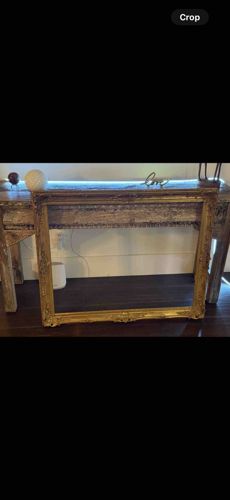
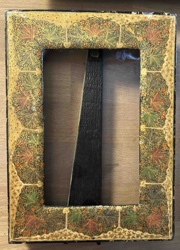
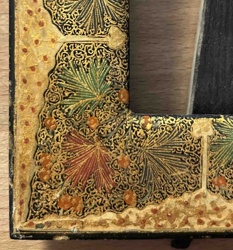
This is an ornate rectangular picture frame, appearing to be crafted from wood with a gilded finish. The overall color is a rich, antique gold, showing signs of age and patina with some areas where the gold leaf or paint has dulled or slightly chipped, revealing darker undertones. The frame features elaborate rococo or baroque-inspired carved detailing, particularly noticeable on the corners and along the inner and outer most moldings. The ornamentation includes floral motifs, scrolls, and possibly acanthus leaves, suggesting a high level of craftsmanship. The frame has a substantial and deep profile, giving it a three-dimensional quality. While no specific size can be determined without scale, its proportions suggest it would accommodate a moderately large artwork or mirror. There are no visible manufacturer's marks or signatures. The visible condition includes some expected wear and tear consistent with its age, such as minor chips in the gesso or gilding, particularly around the raised decorative elements. The corners appear to be sound, indicating a well-constructed piece. The elaborate nature of the carving and the application of gilding point to a piece from the late 19th or early 20th century, designed to house a significant painting or mirror. Its decorative style indicates a demand for luxurious and historically inspired aesthetics in home decor during that period. The frame itself is the sole item present, without any artwork, glass, or backing.
AI Appraisal Report
I've examined the provided image of this ornate gilt picture frame. Based on its appearance, I assess it to be a substantial piece, likely constructed from wood with a gilded finish. The elaborate rococo or baroque-inspired carving, featuring floral motifs and scrolls, suggests a late 19th to early 20th-century origin, consistent with historical aesthetics of the period. The deep profile and craftsmanship indicate a frame designed for a significant artwork or mirror. Its condition shows expected wear and tear for its age, including minor chips and dulled gilding, which I consider to be an attractive patina rather than significant damage. The corners appear structurally sound.
In terms of market conditions, there's a steady demand for antique frames, particularly those with intricate carving and a desirable gilt finish. Comparable pieces with similar decorative complexity, age, and condition often retail in the $600-$1,200 range, especially if they are of a good size. Our frame, being a standalone piece without artwork, glass, or backing, positions it within the lower to mid-range of this spectrum. Demand for these frames is driven by collectors and interior designers seeking historically accurate or period-appropriate decor.
Factors impacting value positively include the intricate carving and substantial profile. The signs of age contribute to its antique appeal. The primary limitation in this appraisal is the lack of physical examination. Without it, I cannot definitively confirm the Gilding method (e.g., water gilding vs. oil gilding), the wood type, or the precise construction techniques. A hands-on inspection would allow me to check for repairs, assess the stability of the gesso, and look for any hidden maker's marks. Provenance documentation could also significantly enhance its value by confirming its history. However, based on the visual evidence, I am confident in my assessment of its decorative quality and general period.