Polished River Rock or Gneiss Stone
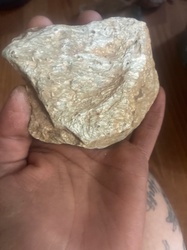
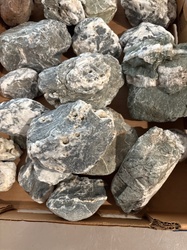
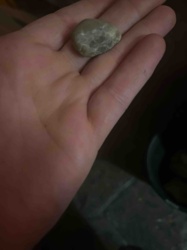
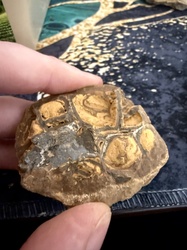
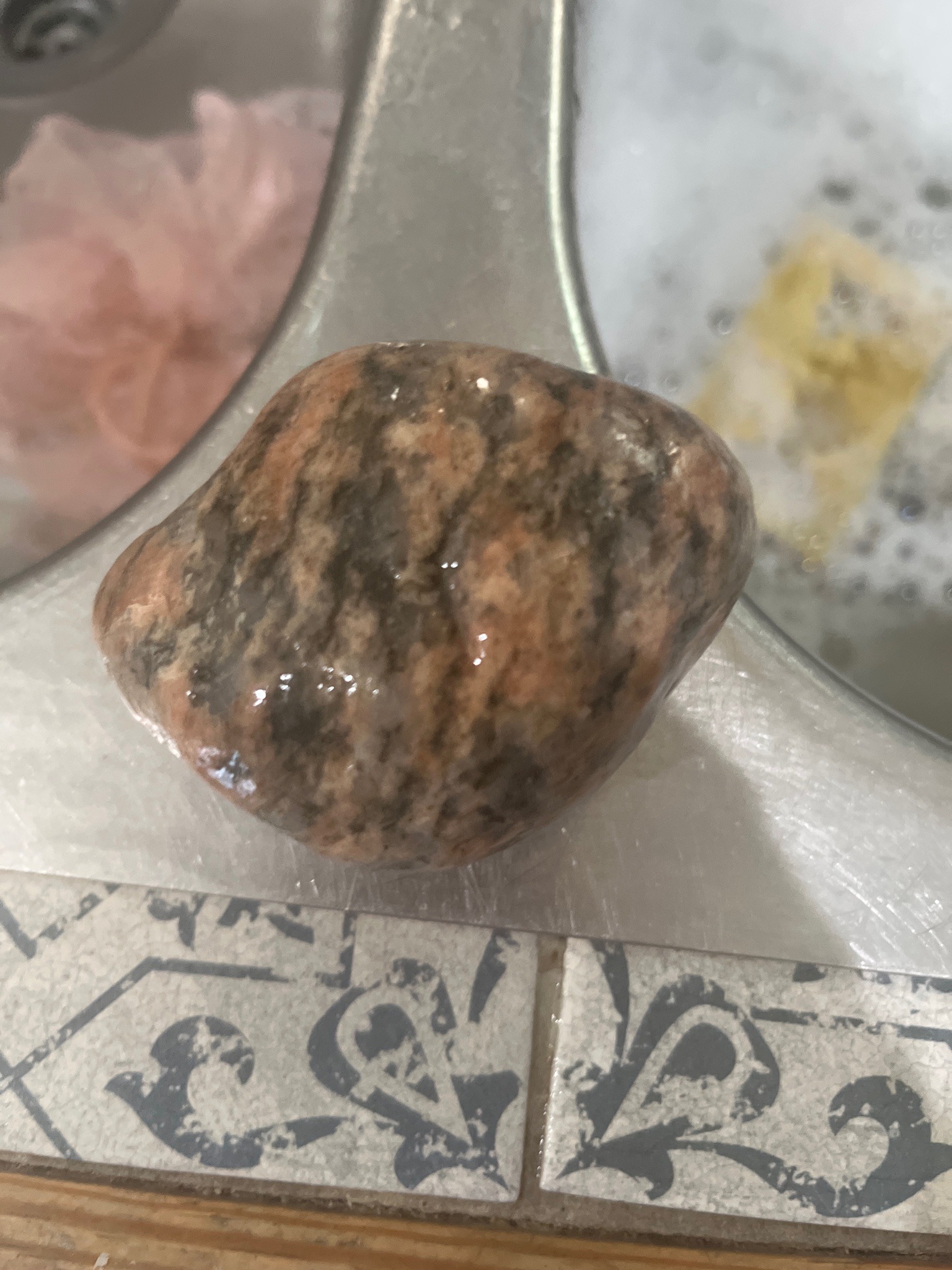
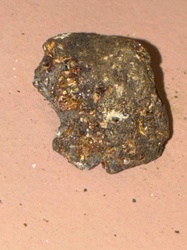
This item is a naturally formed, water-worn, and likely tumble-polished stone. Measured relative to its surroundings, it is approximately 2 to 3 inches in length with an irregular, rounded, and smooth oval shape. The geological composition appears to be a metamorphic rock, potentially Gneiss, characterized by distinct mineral banding and a coarse-grained crystalline structure. The color palette is a rich blend of earthy tones including salmon-pink, muted orange, charcoal gray, and hints of creamy white, suggesting the presence of potassium feldspar, quartz, and possibly biotite or hornblende. The surface is highly reflective and appears wet or polished to a high-gloss finish, which enhances the vibrancy of the internal mineral patterns. There are no visible maker's marks, signatures, or synthetic fabrications, as this is a natural specimen. Visible condition includes some minor surface pitting and small natural fissures common in silicate-based rocks, but it lacks significant chips or cracks. Its age is geological, likely hundreds of millions of years in the making, though its current state of finish suggests recent human collection and polishing. The craftsmanship is evidenced by the thorough smoothness of the surface, indicating either extensive natural river erosion or a mechanical rock tumbling process that has removed all sharp edges.
AI-Generated Appraisal Disclaimer
Estimated Value
$5.00 - $15.00
Basic Information
Category
Rocks, Minerals & Fossils
Appraised On
April 16, 2026
Estimated Value
$5.00 - $15.00
Item Description
This item is a naturally formed, water-worn, and likely tumble-polished stone. Measured relative to its surroundings, it is approximately 2 to 3 inches in length with an irregular, rounded, and smooth oval shape. The geological composition appears to be a metamorphic rock, potentially Gneiss, characterized by distinct mineral banding and a coarse-grained crystalline structure. The color palette is a rich blend of earthy tones including salmon-pink, muted orange, charcoal gray, and hints of creamy white, suggesting the presence of potassium feldspar, quartz, and possibly biotite or hornblende. The surface is highly reflective and appears wet or polished to a high-gloss finish, which enhances the vibrancy of the internal mineral patterns. There are no visible maker's marks, signatures, or synthetic fabrications, as this is a natural specimen. Visible condition includes some minor surface pitting and small natural fissures common in silicate-based rocks, but it lacks significant chips or cracks. Its age is geological, likely hundreds of millions of years in the making, though its current state of finish suggests recent human collection and polishing. The craftsmanship is evidenced by the thorough smoothness of the surface, indicating either extensive natural river erosion or a mechanical rock tumbling process that has removed all sharp edges.
Related Tags
Get Your Items Appraised
Instant estimates of your treasures with AI-powered instant appraisals