AI Appraisal Estimate

AI-generated estimates · not official valuations

From the user

What was submitted

Photo and notes provided by the user — not generated by AI

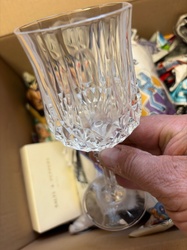
Submitted item photo
Submitted photo · June 17, 2026

User's notes

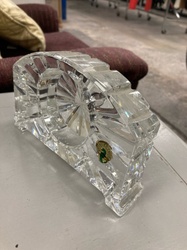
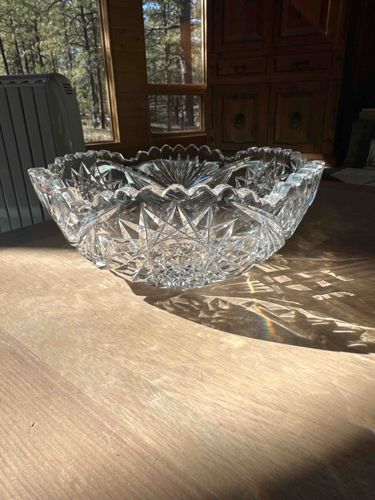
Clear, heavy, beautiful cuts around the perimeter, scalloped rim

AI analysis below

AI appraisal

AI analysis & estimate

AI-Generated · Verify before acting

Everything below is generated by AI for informational purposes only. AI can make mistakes — the AI may misidentify items or misattribute them (artist, maker, brand, designer, origin, era). This is not an official valuation and should not be used for insurance, sale, tax, estate, legal, or lending purposes — or any decision requiring a certified appraisal. It is not an authoritative claim about any person, brand, or rights holder — do not share or rely on it as a factual statement about a third party. Always consult qualified professionals before making financial decisions.

Note

This analysis also relies on unverified notes provided by the user, which may be incomplete or inaccurate and could affect the result.

Read the full disclaimer

AI Identification

·Not independently authenticated·Verify before acting

American Brilliant Period (ABP) Cut Glass Centerpiece Bowl

Fine Antique Glassware and Crystal

AI Estimated Value

·Not an official valuation·Verify before acting

$450 - $650

As of June 17, 2026

AI Item Analysis

·AI can make mistakes·Verify before acting
This is a substantial and finely crafted centerpiece bowl made of high-lead content clear glass, characteristic of the American Brilliant Period (circa 1876–1917). The bowl features exceptionally heavy and deep geometric miter cuts that create a complex pattern of hobstars, fan motifs, and cross-hatched diamonds across the exterior. The rim is intricately finished with a deep scalloped 'sawtooth' edge, where each tooth is individually polished to a sharp point. Its weight indicates a high-quality lead crystal that produces the prismatic rainbows visible on the table surface, suggesting excellent light refraction. The glass appears exceptionally clear without the yellow or green tint often found in lower-quality pressed glass imitations. The construction involves a thick blank that has been deeply carved rather than molded. While no specific maker's mark is visible in the photo, the level of craftsmanship is consistent with top-tier manufacturers like Libby, Hoare, or Hawkes. The condition appears excellent with no visible clouding (sickness), major chips to the sawtooth rim, or deep scratches, though minor shelf wear on the base is expected for its age. This piece exemplifies the 'rich cut' style, focusing on a brilliant play of light through mathematical precision in glass cutting.
AI Appraisal Report

·AI can make mistakes·Verify before acting
I have carefully examined the American Brilliant Period (ABP) centerpiece bowl. The heavy lead content and deep miter cuts, specifically the complex hobstar and fan motifs, indicate a high-quality hand-cut blank from the peak of the 'Rich Cut' era (1876–1917). The clarity and prismatic refraction suggests a superior lead oxide content characteristic of top-tier glass houses like Libbey or Hawkes. The sawtooth rim appears remarkably preserved; in pieces of this age, significant chipping usually diminishes value by 40-50%, but this example shows excellent maintenance. The presence of minor base shelf wear is actually a positive indicator of authentic period age. Market demand for ABP glass has stabilized after a historic peak, with current collectors prioritizing size, complexity, and condition over unsigned attribution. Comprising a substantial centerpiece, this bowl is more desirable than smaller nappies or dishes. However, identifying a specific maker is difficult without a visible acid-etched signature, which can add a 20% premium. Limitations: This evaluation is based on visual data alone. A physical inspection is required to check for 'glass sickness' (internal clouding) and to verify the resonance of the ring when struck, which confirms structural integrity. I would also use a high-magnification lens to search for faint makers' marks and use UV light to check for the characteristic lime-green fluorescence of period-correct glass. Given its current condition and size, it represents a fine example of American craftsmanship.

Get your items appraised

Instant estimates of your treasures with AI-powered appraisals

Browse More Appraisals