AI Appraisal Estimate

AI-generated estimates · not official valuations

From the user

What was submitted

Photo and notes provided by the user — not generated by AI

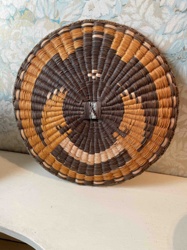
Submitted item photo
Submitted photo · May 18, 2026

User's notes

Circa 1994, Yupik

AI analysis below

AI appraisal

AI analysis & estimate

AI-Generated · Verify before acting

Everything below is generated by AI for informational purposes only. AI can make mistakes — the AI may misidentify items or misattribute them (artist, maker, brand, designer, origin, era). This is not an official valuation and should not be used for insurance, sale, tax, estate, legal, or lending purposes — or any decision requiring a certified appraisal. It is not an authoritative claim about any person, brand, or rights holder — do not share or rely on it as a factual statement about a third party. Always consult qualified professionals before making financial decisions.

Note

This analysis also relies on unverified notes provided by the user, which may be incomplete or inaccurate and could affect the result.

Read the full disclaimer

AI Identification

·Not independently authenticated·Verify before acting

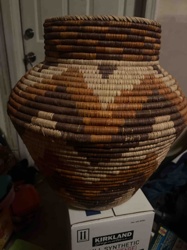
Yupik Eskimo Coiled Sea Grass Basket with Lid

Native American Art & Artifacts - Basketry

AI Estimated Value

·Not an official valuation·Verify before acting

$1,200 - $1,800

As of May 18, 2026

AI Item Analysis

·AI can make mistakes·Verify before acting
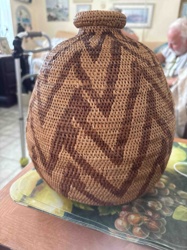
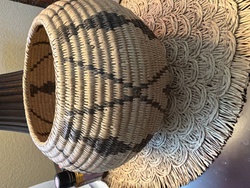
This is a significant contemporary Yupik Eskimo coiled basket, dating to circa 1994, crafted using harvested beach grass (Elymus mollis) from the Alaskan region. The basket features an elegant globular or ovoid shape that tapers to a small, flat base and is topped with a matching fitted lid featuring a functional knob finial. The coil work is exceptionally tight and even, demonstrating high-quality craftsmanship typical of skilled indigenous weavers. The natural pale straw-colored grass provides a neutral background for several intricate figurative motifs woven into the structure. Visible designs include a dark purple or maroon musk ox, a reddish-orange fox, and a red insect-like or crustacean figure, accompanied by geometric stepped patterns in blue and red. The use of dyed decorative elements against the natural grass is characteristic of the period and region. The basket appears to be in excellent structural condition with no visible breakage to the grass fibers or significant fading of the dyed motifs. The consistent tension and symmetrical form indicate the work of an experienced artisan. This piece represents a blend of traditional Yupik utility and aesthetic artistry, intended both as a functional vessel and a piece of cultural fine art.
AI Appraisal Report

·AI can make mistakes·Verify before acting
I have conducted a visual examination of this Yupik Eskimo coiled sea grass basket, dated circa 1994. The craftsmanship is exemplary; the use of Elymus mollis (beach grass) demonstrates the traditional 'hard-stitch' coiling technique. The globular form is expertly balanced, and the inclusion of realistic figurative motifs—the musk ox and fox—elevates this piece from a utilitarian vessel to a work of fine art. Such intricate pictorial designs are highly sought after by collectors of Arctic indigenous arts. The condition appears to be excellent. I observe no structural loss, 'scuffing' of the grass, or significant fading of the dyed fibers, which often occur with exposure to UV light. The market for contemporary Yupik basketry remains strong, particularly for pieces that bridge the gap between 20th-century tradition and modern aesthetic appeal. Comparables for signed or high-quality attributed pictorial baskets of this size and era typically hammer at auction between $1,000 and $2,000 depending on the complexity of the figures. Factors impacting value include the rarity of the musk ox motif and the presence of the original lid. However, it is important to note the limitations of this remote assessment. A definitive valuation and authentication require an in-person inspection to verify the flexibility of the fibers and confirm the absence of hidden repairs or pest damage. Furthermore, while the style is iconographically consistent with 1990s Yupik work, provenance documentation or a weaver’s signature would be required to firmly establish authorship. Scientific testing is generally not required for grass basketry of this period, but a physical review is essential to rule out synthetic dyes or non-traditional materials.

Get your items appraised

Instant estimates of your treasures with AI-powered appraisals

Browse More Appraisals