AI Appraisal Estimate

AI-generated estimates · not official valuations

From the user

What was submitted

Photo and notes provided by the user — not generated by AI

Submitted item photo
Submitted photo · June 1, 2026

User's notes

No additional notes provided.

AI analysis below

AI appraisal

AI analysis & estimate

AI-Generated · Verify before acting

Everything below is generated by AI for informational purposes only. AI can make mistakes — the AI may misidentify items or misattribute them (artist, maker, brand, designer, origin, era). This is not an official valuation and should not be used for insurance, sale, tax, estate, legal, or lending purposes — or any decision requiring a certified appraisal. It is not an authoritative claim about any person, brand, or rights holder — do not share or rely on it as a factual statement about a third party. Always consult qualified professionals before making financial decisions.

Read the full disclaimer

AI Identification

·Not independently authenticated·Verify before acting

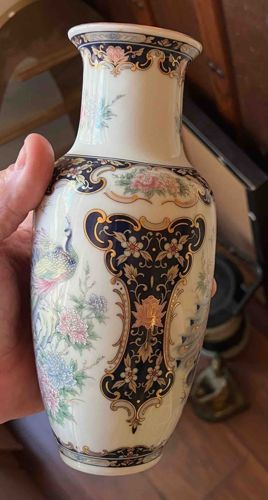
Japanese Satsuma-Style Porcelain Peacock Vase

Antique & Vintage Asian Ceramics

AI Estimated Value

·Not an official valuation·Verify before acting

$45 - $85

As of June 1, 2026

AI Item Analysis

·AI can make mistakes·Verify before acting
This is a decorative ceramic vase crafted in the traditional Japanese Satsuma style. It features a high-gloss cream-colored porcelain body characterized by a classic baluster shape with a flared rim and a slightly tapered neck. The primary decorative motif consists of two detailed peacocks amidst a blossoming garden of pink peonies and purple flowers, rendered in a delicate pastel palette. The composition is framed by prominent cobalt blue panels, or 'cartouches,' which are richly embellished with intricate 22k gold gilding and floral patterns. Notable features include heavy moriage-style texturing along the borders and gilded accents that create a sense of depth and luxury. The construction is solid with a refined glazed finish. While no maker's mark is visible on the exterior, this style of mass-produced export porcelain frequently dates from the mid-to-late 20th century (circa 1960s-1980s). The condition appears excellent with no visible chips, cracks, or significant crazing, though there is minor shelf wear on the base. The quality of the gilding and the precision of the transfer-ware design indicate a well-maintained piece of decorative Asian art, likely produced for the Western market.
AI Appraisal Report

·AI can make mistakes·Verify before acting
Based on my visual analysis of this Satsuma-style porcelain peacock vase, I have determined it is a mid-to-late 20th-century decorative export piece, likely produced in Japan or China between 1970 and 1990. The item presents in excellent condition with no visible cracks, chips, or significant crazing. The heavy gold moriage and cobalt blue borders are characteristic of mass-produced 'Royal Satsuma' or similar trade names intended for the Western market. The central motif appears to be a high-quality transfer-ware application rather than hand-painted, which is standard for pieces of this era. The gold gilding shows minimal rubbing, suggesting it has been used primarily for display. Market demand for mid-century export porcelain is currently stable but modest. Because these items were produced in high volumes, they lack the rarity associated with Meiji-period Satsuma. Similar pieces are frequently found in estate sales and online gift shops, typically fetching between $40 and $100 depending on size and local market interest. The peacock and peony motif is a classic 'prestige' design that maintains a baseline level of decorative appeal. Crucially, this appraisal is based on photographic evidence only. A physical inspection is required to confirm the absence of professional repairs under UV light and to check for a 'Made in Japan' or 'Nippon' stamp on the base, which was obscured in the description. Scientific testing such as thermoluminescence is not warranted for this price point, but provenance documentation—such as original purchase receipts—would help solidify its vintage status. Authenticity as a period antique is unlikely given the stylistic markers of modern commercial production.

Get your items appraised

Instant estimates of your treasures with AI-powered appraisals

Browse More Appraisals