AI Appraisal Estimate

AI-generated estimates · not official valuations

From the user

What was submitted

Photo and notes provided by the user — not generated by AI

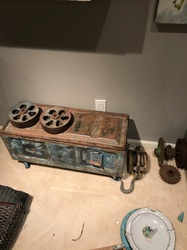
Submitted item photo
Submitted photo · May 27, 2026

User's notes

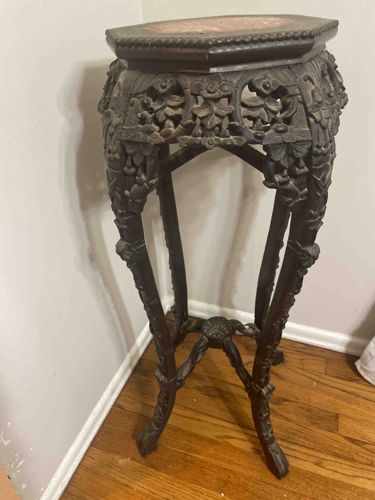
Chinese pedestal. Late 1880s. Hand carved and intricate. Teakwood with rose wood top and marble inset bought in an antique shop in the 1920s. Chinese characters on underside

AI analysis below

AI appraisal

AI analysis & estimate

AI-Generated · Verify before acting

Everything below is generated by AI for informational purposes only. AI can make mistakes — the AI may misidentify items or misattribute them (artist, maker, brand, designer, origin, era). This is not an official valuation and should not be used for insurance, sale, tax, estate, legal, or lending purposes — or any decision requiring a certified appraisal. It is not an authoritative claim about any person, brand, or rights holder — do not share or rely on it as a factual statement about a third party. Always consult qualified professionals before making financial decisions.

Note

This analysis also relies on unverified notes provided by the user, which may be incomplete or inaccurate and could affect the result.

Read the full disclaimer

AI Identification

·Not independently authenticated·Verify before acting

Chinese Hand-Carved Teakwood Pedestal with Rosewood Top and Marble Inset

Furniture

AI Estimated Value

·Not an official valuation·Verify before acting

$1,800 - $2,500

As of May 27, 2026

AI Item Analysis

·AI can make mistakes·Verify before acting
This is a Chinese pedestal, exhibiting intricate hand-carved details, typical of late 19th-century craftsmanship. The primary material appears to be dark-stained teakwood, lending a rich, deep brown hue, with a rosewood top. A distinguishing feature is the octagonal top surface which incorporates a circular inset of variegated stone, likely a reddish-brown marble given the contextual information. The visible surface of the marble shows some potential scratches or light wear consistent with age and use. The top section features a highly ornate fretwork apron, characterized by deeply carved floral and foliate motifs that flow seamlessly into the four cabriole legs. These legs are also heavily carved with continuous organic forms, suggestive of tree branches or vines, creating a very naturalistic and organic aesthetic. The legs converge towards the bottom, joined by a central, four-way stretcher, also elaborately carved with floral or intertwined elements in a similar style to the apron and legs. The overall construction displays a high degree of skill and attention to detail, indicative of quality craftsmanship. The dark patina suggests considerable age, aligns with the late 1880s estimation. While no specific maker's marks are visible in the provided image, the mention of 'Chinese characters on underside' in the context suggests there might be identifying inscriptions. Minor scuffs and dust are visible on the lower portions, but significant damage or repairs are not immediately apparent, suggesting a relatively well-preserved condition for its age. The item’s purchase in the 1920s further corroborates its antique status. The complex carvings and robust construction contribute to its overall quality.

AI Appraisal Report

·AI can make mistakes·Verify before acting
This Chinese hand-carved pedestal, dating to the late 1880s, is a remarkable example of period craftsmanship. The intricate details, particularly the deeply carved floral and foliate motifs on the fretwork apron, cabriole legs, and stretcher, speak to a high level of skill. The use of dark-stained teakwood with a rosewood top and the octagonal marble inset are indicative of quality materials. Based on the visual information, the condition appears relatively well-preserved for its age, with only minor scuffs and dust consistent with antique status. The dark patina further supports its age. Its purchase in the 1920s reinforces its antique provenance. The "Chinese characters on underside" are crucial for full authentication as they could provide maker's marks or dating, significantly impacting value. Market demand for well-preserved, intricately carved late 19th-century Chinese furniture remains steady, particularly for items with clear provenance and traditional aesthetics. Its rarity is enhanced by the detailed carving and the mixed material construction (teak, rosewood, marble). Factors positively impacting value include its age, intricate craftsmanship, use of quality materials, and apparent good condition. The most significant limitation is the inability to physically inspect the "Chinese characters on underside" or assess structural integrity, repairs, or the exact nature of the marble wear without in-person examination. Scientific testing of the wood or patina could further confirm age. Full authentication, especially regarding specific workshops or regions, would benefit from expert physical examination and historical documentation.

Get your items appraised

Instant estimates of your treasures with AI-powered appraisals

Browse More Appraisals