AI Appraisal Estimate

AI-generated estimates · not official valuations

From the user

What was submitted

Photo and notes provided by the user — not generated by AI

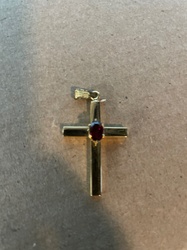
Submitted item photo
Submitted photo · June 10, 2026

User's notes

No additional notes provided.

AI analysis below

AI appraisal

AI analysis & estimate

AI-Generated · Verify before acting

Everything below is generated by AI for informational purposes only. AI can make mistakes — the AI may misidentify items or misattribute them (artist, maker, brand, designer, origin, era). This is not an official valuation and should not be used for insurance, sale, tax, estate, legal, or lending purposes — or any decision requiring a certified appraisal. It is not an authoritative claim about any person, brand, or rights holder — do not share or rely on it as a factual statement about a third party. Always consult qualified professionals before making financial decisions.

Read the full disclaimer

AI Identification

·Not independently authenticated·Verify before acting

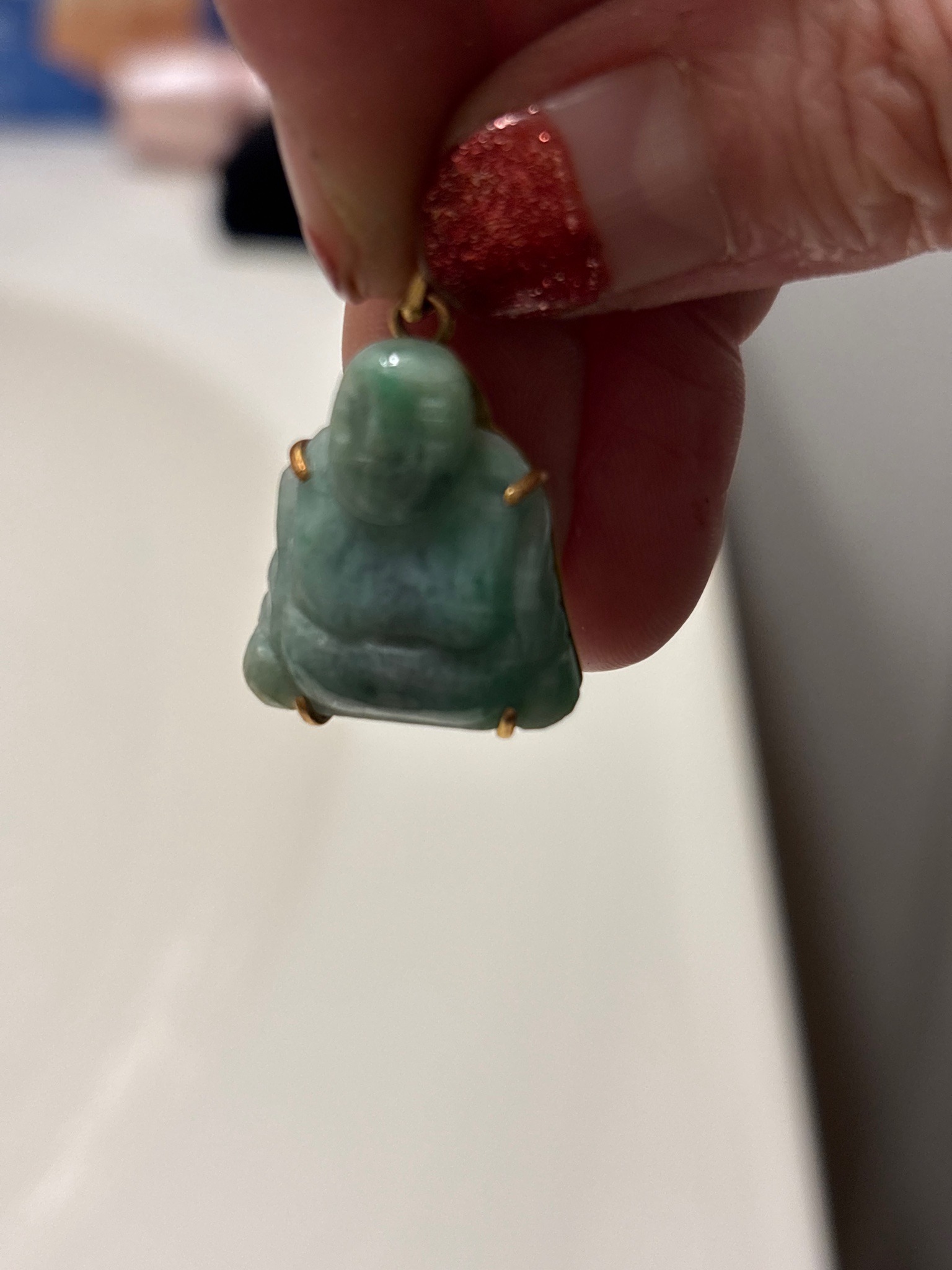
Carved Green Jadeite Laughing Buddha Pendant

Fine Jewelry / Religious & Cultural Pendants

AI Estimated Value

·Not an official valuation·Verify before acting

$450 - $650

As of June 10, 2026

AI Item Analysis

·AI can make mistakes·Verify before acting
This item is a small, hand-carved pendant depicting Budai, commonly known as the Laughing Buddha. The piece is crafted from translucent to semi-translucent green jade, likely jadeite, exhibiting a mottled appearance with varying shades of celadon and forest green across its surface. The carving follows traditional iconography, featuring a rotund figure in a seated posture with a prominent belly and a smiling facial expression. The stone is held within a simple four-prong yellow gold setting (estimated 14k or 18k based on common jewelry of this type) that follows the silhouette of the carving. A small gold jump ring is attached at the top for suspension from a chain. Regarding condition, the jade shows a smooth, glossy polish with no immediately apparent fractures or chips, though natural internal inclusions and clouds are visible, which is characteristic of genuine jadeite. The gold prongs appear secure and intact. There are no visible maker's marks or stamps on the front; such marks would typically be found on the back of the setting or the bail. This style of 'Good Fortune' jewelry was highly popular in the mid-to-late 20th century and remains a staple in Cantonese-style jewelry design. The craftsmanship shows moderate detail, with softly rounded features that suggest a commercial-grade high-volume production rather than a one-of-a-kind master carving.
AI Appraisal Report

·AI can make mistakes·Verify before acting
I have completed a visual examination of the Carved Green Jadeite Laughing Buddha Pendant. The piece features a mottled celadon and forest green jadeite, likely Grade A (natural, untreated), though Grade B (bleached/polymer impregnated) cannot be ruled out via imagery. The carving of Budai displays standard commercial-grade craftsmanship typical of mid-to-late 20th-century Cantonese production. The 14k-18k yellow gold four-prong setting appears secure, exhibiting a high-polish finish with no significant wear to the prongs. The market for 'Good Fortune' talismans remains stable, though value is heavily dictated by the specific quality of the jadeite. While this specimen shows desirable translucency, the lack of intense 'Imperial' green saturation and the presence of visible internal inclusions place it in a moderate price bracket. Comparable auction results for similar commercial-grade jadeite Buddhas in gold settings frequently fall between $400 and $700. Significant value limitations exist without physical inspection. I cannot definitively verify the gold purity without an acid or X-ray fluorescence (XRF) test. Most importantly, distinguishing between Grade A, B, and C jadeite (which involves polymer or dye treatments) is impossible through photographs alone. A full valuation would require a spectroscopic analysis and a refractive index test by a gemological laboratory (such as GIA). Furthermore, provenance documentation would be required to confirm the exact age and origin of the piece. The current valuation assumes a natural, untreated stone of commercial quality.

Get your items appraised

Instant estimates of your treasures with AI-powered appraisals

Browse More Appraisals