AI estimate as of August 15, 2025 · verify with a professional before acting
AI-Generated · Verify before acting
Everything on this page is generated by AI for informational purposes only. AI can make mistakes — the AI may misidentify items or misattribute them (artist, maker, brand, designer, origin, era). This is not an official valuation and should not be used for insurance, sale, tax, estate, legal, or lending purposes — or any decision requiring a certified appraisal. It is not an authoritative claim about any person, brand, or rights holder — do not share or rely on it as a factual statement about a third party. Always consult qualified professionals before making financial decisions.
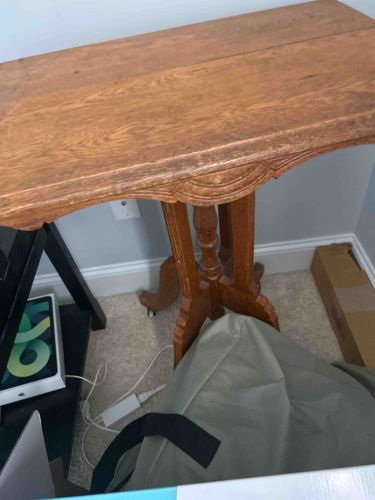
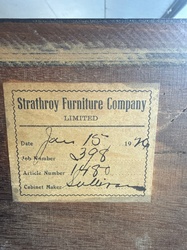
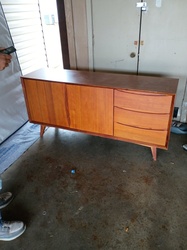
This appears to be an antique or vintage console table, also known as a hall or sofa table, crafted from what looks to be solid oak or a similar hard brown wood, given its prominent grain. The tabletop is rectangular with rounded corners and features a scalloped, carved apron on the long side facing the viewer, indicating a decorative design element, possibly in a Rococo Revival or Victorian style. The wood exhibits a medium-brown tone, likely a natural finish with a clear varnish or lacquer, which shows significant wear and discoloration, particularly along the front edge and across the top surface, suggesting age and extensive use. There are visible scuffs, scratches, and potential water rings or fading, indicative of a well-patinated surface rather than a smooth, pristine one. The table is supported by a central turned pedestal base, splitting into splayed legs with carved or shaped feet, offering stability. One of the feet appears to have a small, possibly original caster underneath, suggesting it was designed for mobility. The construction seems robust, indicating good craftsmanship, although no specific maker's marks or signatures are visible in the provided image. The overall condition suggests it is an older piece, potentially early to mid-20th century or even late 19th century, in 'as found' condition with wear consistent with age and use, requiring potential restoration to its finish.
AI Appraisal Report
I have carefully examined the image of this Turned Pedestal Console Table. Based on its design, visible wear, and construction, I assess it to be an authentic antique or vintage piece, likely dating from the late 19th to early 20th century. The turned pedestal and splayed, carved legs are consistent with furniture styles of that period, possibly Rococo Revival or Victorian influence, as suggested by the scalloped apron. Its 'as found' condition, with significant scuffs, scratches, discoloration, and potential water rings, indicates heavy usage over many decades, which is a common characteristic of genuine antiques. The visible caster on one leg further supports its age and original design functionality.
Market conditions for such pieces are moderately stable. While mass-produced modern furniture dominates, there's a niche market for solid wood, character-filled antique console tables. Comparables typically include similar oak or walnut hall tables from the late Victorian or Edwardian eras. Demand is present but not exceptionally high, as pieces in this condition often require restoration, which can deter some buyers. Its rarity is moderate; while not unique, finding one in solid oak with these specific design elements is less common than generic pine or mahogany pieces.
Factors significantly impacting its value are primarily its condition and the cost of restoration. The extensive wear on the finish, while typical of age, reduces its immediate market appeal compared to a restored piece. Without physical inspection, I cannot confirm the presence of any structural damage or woodworm, which would further impact value. Limitations in authenticity verification from images alone are significant; I cannot definitively determine the wood species (e.g., distinguishing oak from chestnut or ash), confirm original hardware, or rule out later modifications. A hands-on examination would reveal joinery types, internal construction details, and allow for a thorough assessment of structural integrity and the true extent of finish damage. Provenance documentation (e.g., original sales receipts or family history) would add significantly to its value, and scientific testing, such as dendrochronology, could provide a more precise dating if needed for higher-value verification.