AI estimate as of October 2, 2025 · verify with a professional before acting
AI-Generated · Verify before acting
Everything on this page is generated by AI for informational purposes only. AI can make mistakes — the AI may misidentify items or misattribute them (artist, maker, brand, designer, origin, era). This is not an official valuation and should not be used for insurance, sale, tax, estate, legal, or lending purposes — or any decision requiring a certified appraisal. It is not an authoritative claim about any person, brand, or rights holder — do not share or rely on it as a factual statement about a third party. Always consult qualified professionals before making financial decisions.
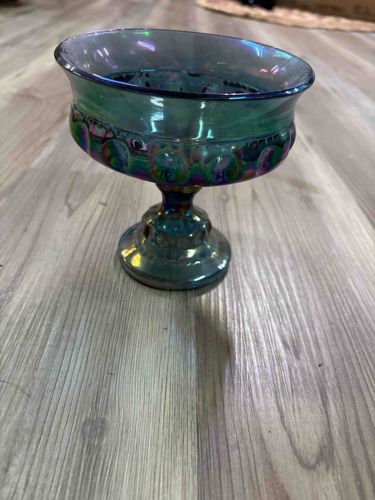
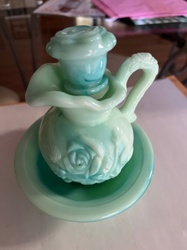
This is a vintage carnival glass compote dish, featuring an iridescent teal or peacock blue color with shimmering purple and green overtones that shift depending on the light and viewing angle. The dish is constructed from molded glass and stands on a single pedestal base. The bowl portion of the compote is wide and shallow, with a slightly flaring rim. A distinctive design element is a band of raised, circular or 'thumbprint' like patterns encircling the exterior of the bowl, just below the rim, adding textural interest and enhancing the play of light on the iridescent surface. The stem is relatively short and thick, leading to a flared, rounded foot that provides stability. The overall finish of the glass exhibits the characteristic 'oil slick' effect of carnival glass, achieved by applying metallic salts to hot glass. No significant chips, cracks, or repairs are immediately visible from the provided images, suggesting it is in good, used vintage condition. Minor surface wear or slight manufacturing imperfections typical of molded glass from its era might be present but are not clearly discernible. This piece likely dates from the early to mid-20th century, a period when carnival glass was highly popular due to its affordability and decorative appeal. The craftsmanship is indicative of mass-produced decorative glassware, with its molded patterns and vibrant, yet somewhat irregular, iridescence characteristic of the genre. The material appears to be pressed glass, giving it a substantial feel.
AI Appraisal Report
I have examined the provided image of this Iridescent Teal Carnival Glass Compote Dish. Based on visual assessment, the condition appears to be good vintage, with no immediate chips, cracks, or repairs visible. The characteristic 'oil slick' iridescence with peacock blue, purple, and green overtones is evident, consistent with authentic carnival glass. The molded construction and 'thumbprint' pattern are typical of pieces from the early to mid-20th century. Authenticity, based solely on the image, seems likely for an era-appropriate carnival glass item. However, without a physical inspection, I cannot rule out minor surface wear, internal stress fractures, or subtle repairs that might not be visible in photographs.
Market conditions for carnival glass are generally stable, with common patterns like this one seeing moderate demand. Comparables for similar-sized and patterned teal or peacock blue carnival glass compotes typically sell in the $40 to $70 range on online auction sites and at vintage marketplaces. While carnival glass has collectors, pieces with unique patterns, rare colors, or those from specific, highly sought-after manufacturers (e.g., Fenton 'Pearls and Scales') command higher prices. This piece, while attractive, appears to be a more common production item.
Dramatically impacting factors for value would include significant damage (chips, cracks), which would reduce the value considerably. Conversely, if this were a rare color variation or a piece by a highly collectible maker with an identifiable mark (which is not visible and often absent on carnival glass), the value could increase. Rarity is low for this style and color combination. For full authentication and to ascertain any manufacturer specifics or subtle condition issues, a hands-on examination, possibly under magnification, would be beneficial. Documentation of provenance, while rare for such items, would also add value and certainty.