AI estimate as of October 14, 2025 · verify with a professional before acting
AI-Generated · Verify before acting
Everything on this page is generated by AI for informational purposes only. AI can make mistakes — the AI may misidentify items or misattribute them (artist, maker, brand, designer, origin, era). This is not an official valuation and should not be used for insurance, sale, tax, estate, legal, or lending purposes — or any decision requiring a certified appraisal. It is not an authoritative claim about any person, brand, or rights holder — do not share or rely on it as a factual statement about a third party. Always consult qualified professionals before making financial decisions.
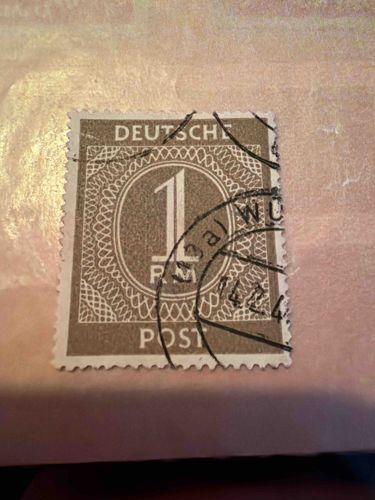
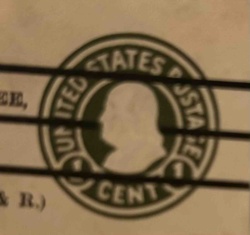
This item is a German postage stamp, specifically a 1 Reichsmark denomination stamp issued during the hyperinflation period of 1923. Its physical characteristics include a square shape with perforated edges, indicative of standard stamp manufacturing. The primary color of the stamp is a somber grey-brown or sepia tone, reflecting the utilitarian aesthetics often seen during periods of economic hardship. The design features a large numeral '1' prominently in the center, encircled by an intricate, repeating pattern of interlocking loops or a guilloche-like design. Above the numeral, the word 'DEUTSCHE' is clearly legible, and below it 'POST' is visible, confirming its origin as a German postal item. The currency abbreviation 'RM' (Reichsmark) is also faintly discernible beneath the '1'. A notable distinguishing element is the black circular postmark, which partially obscures the design but clearly indicates 'WURZBURG' as the originating postal district and a date that appears to be '9.1.24' (January 9, 1924), providing a precise usage date. The stamp appears to be used, given the cancellation mark. Visible condition issues include this prominent postmark which covers a significant portion of the stamp's face. The paper itself shows typical signs of age, with some slight discoloration or toning consistent with a stamp from the early 20th century. There are no obvious tears or major creases visible, suggesting a relatively well-preserved used condition for its age. The craftsmanship details are typical of a mass-produced postage stamp of the era, focusing on functionality rather than elaborate artistic flourishes, yet the guilloche pattern does display a degree of fine engraving. Given the 'Deutsche Post' inscription and the '1 RM' denomination, this stamp dates to the Weimar Republic period, specifically the severe hyperinflation era shortly after the introduction of the new Reichsmark currency, estimated to be from 1923-1924.
AI Appraisal Report
I have visually examined the provided image of this German 1 Reichsmark postage stamp from the 1923 Inflation Period. Based on the description and visual cues, the stamp appears to be authentic, originating from the Weimar Republic era, as indicated by 'DEUTSCHE POST' and 'RM' denomination. The square shape, perforated edges, and grey-brown/sepia tone are consistent with issues from this period. The prominent numeral '1' and guilloche-like pattern are characteristic design elements. The black circular postmark from 'WURZBURG' dated '9.1.24' confirms its usage and aids in dating. Condition-wise, it appears to be a used stamp. The postmark, while clear, is heavy and partially obscures the design, which typically detracts from philatelic value compared to a lightly struck or corner cancellation. The paper shows expected age-related toning, but the absence of obvious tears or major creases suggests it is relatively well-preserved for its age.
Regarding market conditions, German hyperinflation stamps, while historically significant, were mass-produced. Common denominations like the 1 Reichsmark, even used, are generally readily available to collectors. Their demand is moderate, primarily from thematic collectors of German philately or inflation-era topics. Rarity is low for this specific stamp in used condition, especially with a heavy cancellation. The most significant factor impacting its value negatively is the heavy postmark. Without physical examination, I cannot comment on paper quality nuances, presence of hidden flaws (e.g., thinning, repairs), or gum (though irrelevant for a used stamp). Full authentication would benefit from in-person inspection to verify paper type, printing methods, and confirm the cancellation's authenticity. However, based on the provided image, its value falls within a modest range, typically appealing to entry-level or intermediate collectors.