These notes were written by the person who submitted this item. Appraiser.AI has not verified them, and the AI's identification and estimate may rely on them.
AI Estimated Value
Not an official valuation
$600-900
AI estimate as of August 31, 2025 · verify with a professional before acting
AI-Generated · Verify before acting
Everything on this page is generated by AI for informational purposes only. AI can make mistakes — the AI may misidentify items or misattribute them (artist, maker, brand, designer, origin, era). This is not an official valuation and should not be used for insurance, sale, tax, estate, legal, or lending purposes — or any decision requiring a certified appraisal. It is not an authoritative claim about any person, brand, or rights holder — do not share or rely on it as a factual statement about a third party. Always consult qualified professionals before making financial decisions.
This analysis also relies on unverified notes provided by the user, which may be incomplete or inaccurate and could affect the result.
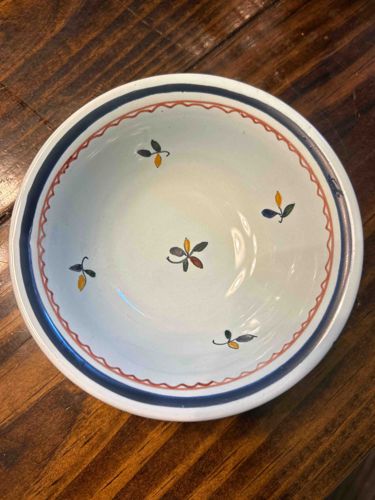
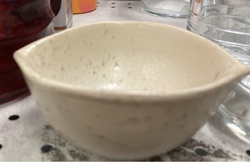
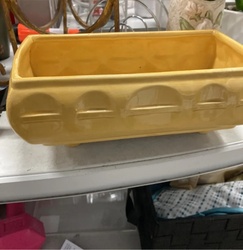
This is a round, shallow ceramic bowl, likely earthenware or faience, featuring a hand-painted decorative scheme. The base color of the interior is a creamy off-white or very light blue, suggesting a glazed surface. The rim of the bowl is adorned with two concentric bands: an outer solid dark blue band, approximately 1 cm wide, followed by an inner thinner band (around 0.5 cm wide) in a reddish-brown or rust color, executed with a distinctive wavy or zig-zag pattern. The interior of the bowl is sparsely decorated with several individual, stylized floral or leaf motifs. Each motif consists of two or three small, tear-drop or spatulate shapes that converge, with various color combinations including dark blue, yellowish-orange, and reddish-brown, often with a central dot or stem. The painting style appears rustic and somewhat naive, indicating a handcrafted origin rather than mass production. The brushstrokes are visible, adding to its artisanal charm. There are no overt signs of damage such as chips, cracks, or repairs visible in the provided image. The glaze appears consistent, though subtle variations in color or texture might exist due to the handmade nature. Given the additional context 'Le rouennier,' this bowl strongly suggests a Faience de Rouen style, originating from Rouen, France, which is known for its distinct decorative patterns and quality craftsmanship, typically produced from the 17th to 19th centuries, but revived in later periods. The quality of craftsmanship appears to be good for a hand-decorated piece of its kind, with clear lines and consistent color application within the decorative elements, although minor imperfections inherent to pottery making may be present upon closer inspection.
AI Appraisal Report
Based on my visual examination of the provided image, this Faience Style Decorative Bowl, with the additional context of 'Le rouennier,' strongly suggests a piece in the Faience de Rouen tradition. The round, shallow form, creamy off-white base glaze, and distinctive hand-painted decoration align with characteristics of Rouen faience, known for its bold designs and vibrant palette. The outer dark blue and inner reddish-brown wavy bands on the rim are particularly indicative of this style, as are the stylized floral or leaf motifs within the bowl, executed with a charmingly rustic and naive hand.
Condition appears good for its age; I detect no visible chips, cracks, or repairs from the image. The glaze looks consistent, and the hand-applied brushstrokes, while contributing to its artisanal charm, show a decent level of skill for this type of production.
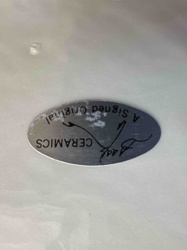
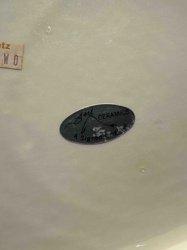
In terms of authenticity, while the visual cues are strong for a Faience de Rouen style, definitive authentication without physical examination is limited. Full verification would require in-person inspection to assess clay body, glaze characteristics, and potential maker's marks not visible here. Provenance documentation or scientific testing of materials (e.g., thermoluminescence for age) would further bolster authenticity claims and value.
Market conditions for authentic historical faience, particularly Rouen ware, remain stable with consistent demand among collectors of European ceramics. The handmade nature, distinct decorative style, and apparent good condition contribute positively to its value. Comparables from reputable auction houses for similar Rouen faience bowls of good condition range from $500 to over $1,500, depending on precise age, rarity of pattern, and maker. Given the visual evidence, I assess its market value to be in the range of $600-900, assuming it holds up to in-person authentication.