AI Appraisal Estimate

AI-generated estimates · not official valuations

From the user

What was submitted

Photo and notes provided by the user — not generated by AI

Submitted item photo
Submitted photo · June 12, 2026

User's notes

No additional notes provided.

AI analysis below

AI appraisal

AI analysis & estimate

AI-Generated · Verify before acting

Everything below is generated by AI for informational purposes only. AI can make mistakes — the AI may misidentify items or misattribute them (artist, maker, brand, designer, origin, era). This is not an official valuation and should not be used for insurance, sale, tax, estate, legal, or lending purposes — or any decision requiring a certified appraisal. It is not an authoritative claim about any person, brand, or rights holder — do not share or rely on it as a factual statement about a third party. Always consult qualified professionals before making financial decisions.

Read the full disclaimer

AI Identification

·Not independently authenticated·Verify before acting

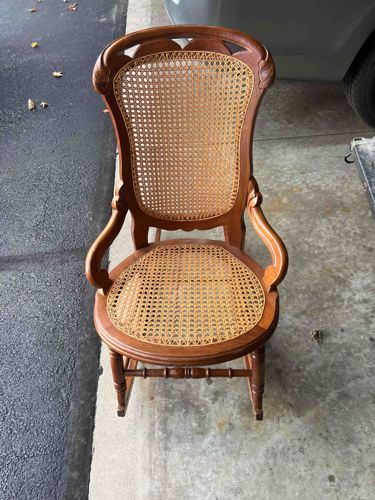
Victorian Style Cane Rocking Chair

Furniture

AI Estimated Value

·Not an official valuation·Verify before acting

$300-500

As of June 12, 2026

AI Item Analysis

·AI can make mistakes·Verify before acting
This appears to be a Victorian-style rocking chair, likely dating from the late 19th to early 20th century. It is constructed primarily from a medium-toned hardwood, possibly walnut or a stained fruitwood, exhibiting a rich, warm brown color with a visible wood grain. The chair features a high, curved back and a rounded seat, both accented with woven cane panels. The cane work appears to be in good condition with a tight, even weave. Notable features include elaborate scrolling and carved detailing on the top rail of the backrest and on the arms, indicative of the Victorian aesthetic. The arms sweep gracefully downwards, ending in a volute or scroll-like detail before joining the front legs. The legs are turned, with spool-and-bead turning visible on the front and side stretchers that connect the legs for structural integrity. The chair rests on classic rockers, suggesting comfortable, gentle motion. Overall, the craftsmanship appears to be of good quality, with well-formed curves and intricate carving. While the overall condition appears good from the image, closer inspection would be required to identify specific wear patterns, scratches, nicks, or any signs of repair to the wood frame or cane. The finish exhibits a moderate sheen, consistent with age and gentle use, contributing to a desirable patina. There are no immediately visible major damages or breaks, though the cane's tension and the stability of the joints would need verification for a complete assessment. No manufacturer's marks or signatures are visible in the provided image.
AI Appraisal Report

·AI can make mistakes·Verify before acting
Based on my visual examination of the provided image, this Victorian-style rocking chair appears to be in good overall condition for its age, likely late 19th to early 20th century. The wood, which I believe to be a stained hardwood such as walnut or a fruitwood, displays a desirable patina and a moderate sheen consistent with gentle use. The carved and scrolling details are characteristic of the Victorian aesthetic, particularly the top rail and arm volutes. The cane work on both the back and seat appears intact with a tight weave, which is a significant factor as cane damage can heavily depreciate value. The turned legs and stretchers with spool-and-bead detailing further support its period authenticity. Market conditions for Victorian-era furniture are generally stable but not experiencing a broad surge in demand. While pieces with exceptional carving or provenance can command high prices, utilitarian pieces like rocking chairs fall into a more accessible price bracket. This chair's condition and attractive design suggest it would be appealing to collectors or individuals furnishing period homes. Demand is moderate, as these items are not exceedingly rare, but well-preserved examples like this one are always sought after. Factors impacting value include the seemingly good condition of the cane and the preservation of the carved details. The primary limitation in authenticating this piece solely from the image is the inability to physically inspect for repairs, woodworm, joint stability, or the true condition and tension of the cane. A hands-on examination would also be necessary to check for manufacturer's marks, original finish integrity, and any structural weaknesses that could affect usability and long-term value. Without physical inspection, I cannot fully guarantee the absence of hidden flaws or prior restorations.

Get your items appraised

Instant estimates of your treasures with AI-powered appraisals

Browse More Appraisals