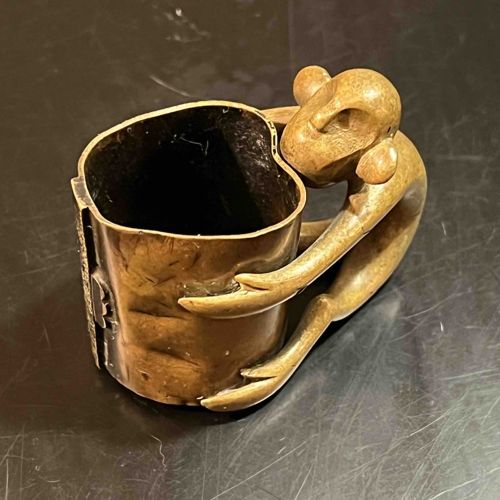
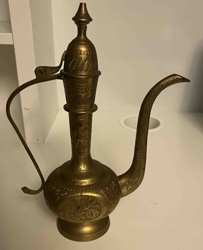
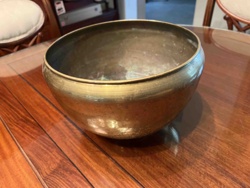
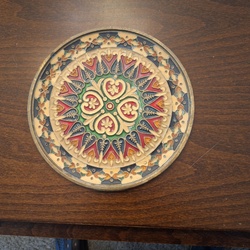
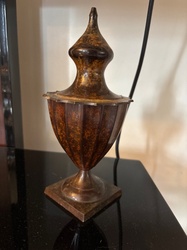
Antique metal small brass cup with monkey handle / Made in Austria / Width: 2.5 inches / height: 1.5 inches / length: 1.5 inches / Grooves on the front indicating usage for other functionality
These notes were written by the person who submitted this item. Appraiser.AI has not verified them, and the AI's identification and estimate may rely on them.
AI Estimated Value
Not an official valuation
$100-150
AI estimate as of August 13, 2025 · verify with a professional before acting
AI-Generated · Verify before acting
Everything on this page is generated by AI for informational purposes only. AI can make mistakes — the AI may misidentify items or misattribute them (artist, maker, brand, designer, origin, era). This is not an official valuation and should not be used for insurance, sale, tax, estate, legal, or lending purposes — or any decision requiring a certified appraisal. It is not an authoritative claim about any person, brand, or rights holder — do not share or rely on it as a factual statement about a third party. Always consult qualified professionals before making financial decisions.
This analysis also relies on unverified notes provided by the user, which may be incomplete or inaccurate and could affect the result.
This is an antique small brass cup featuring a figural monkey handle, likely originating from Austria. The item measures approximately 2.5 inches in width, 1.5 inches in height, and 1.5 inches in length. It is constructed entirely of brass, exhibiting a deep, rich bronze/golden color with a well-developed, uneven patina that suggests considerable age and handling. The patina shows variations in tone, from darker browns in recessed areas to lighter, burnished highlights on raised surfaces, giving it an antique character. The cup itself has an open-top, somewhat irregular or 'pinched' oval shape, rather than a perfectly round form. A significant feature is the monkey figure, which appears to be climbing or holding onto the side of the cup, forming the handle. The monkey is sculpted with discernible facial features, ears, and limbs that wrap around the vessel. The craftsmanship of the monkey, while stylized, indicates attention to detail in its form and integration with the cup. One side of the cup features vertical grooves or ridges, possibly indicating a past functional aspect, such as an attachment point for another item, a specific gripping surface, or part of a measuring system, although its exact purpose is not immediately clear. The overall construction appears solid, likely cast. Visible condition issues include expected surface wear consistent with an antique metallic object, such as minor scratches, abrasions, and a natural darkening of the brass. There are no overt signs of significant damage, repairs, or structural instability. The interior of the cup also shows signs of aging and wear, with a similar dark patina. The piece displays good quality in its casting and sculptural detail for its size, typical of late 19th to early 20th century European decorative metalware.
AI Appraisal Report
Upon examining the images and details of this Antique Austrian Brass Monkey-Handle Cup, I find it to be a charming example of late 19th or early 20th-century European decorative metalware. The rich, uneven patina and cast construction are consistent with objects of this period, suggesting authenticity. The subject matter—a figural monkey—is a highly collectible motif, often associated with Japonisme influences or whimsical design popular at the turn of the century. The small size and unique 'pinched' oval shape, combined with the mysterious vertical grooves, add to its character. The overall condition appears good for its age, with expected surface wear but no signs of significant damage or repair. The market for Austrian decorative brass, particularly pieces from Vienna, remains strong, with collectors drawn to well-executed, figural items. While similar small decorative brass objects can be found, the engaging monkey handle makes this piece more desirable than standard items. Comparable monkey-themed brassware from this era often achieves prices in the low-to-mid hundred-dollar range. The primary factor influencing its value is the strong collector demand for novelty and figural animal motifs. However, a definitive authentication is limited by the digital examination. An in-person inspection is required to confirm the alloy composition, examine maker's marks not visible in photos, and assess the casting method firsthand. Full authentication would ideally involve provenance documentation or comparison with known, marked examples from Austrian foundries of the period.