AI Appraisal Estimate

AI-generated estimates · not official valuations

From the user

What was submitted

Photo and notes provided by the user — not generated by AI

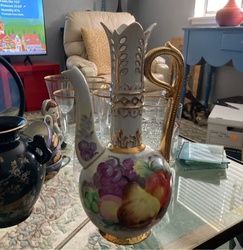
Submitted item photo
Submitted photo · June 6, 2026

User's notes

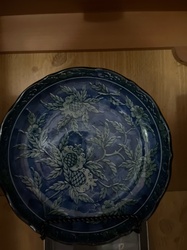
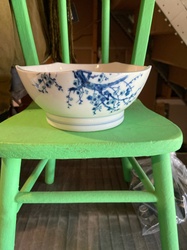
Flower and Phoenix Design

AI analysis below

AI appraisal

AI analysis & estimate

AI-Generated · Verify before acting

Everything below is generated by AI for informational purposes only. AI can make mistakes — the AI may misidentify items or misattribute them (artist, maker, brand, designer, origin, era). This is not an official valuation and should not be used for insurance, sale, tax, estate, legal, or lending purposes — or any decision requiring a certified appraisal. It is not an authoritative claim about any person, brand, or rights holder — do not share or rely on it as a factual statement about a third party. Always consult qualified professionals before making financial decisions.

Note

This analysis also relies on unverified notes provided by the user, which may be incomplete or inaccurate and could affect the result.

Read the full disclaimer

AI Identification

·Not independently authenticated·Verify before acting

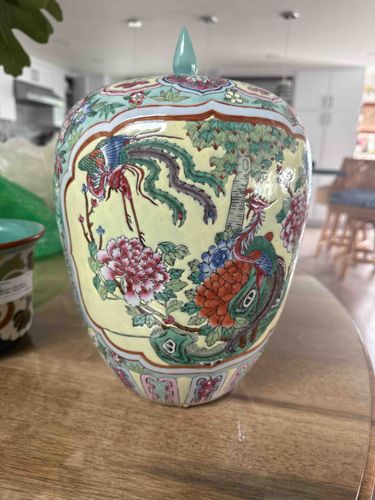
Chinese Famille Jaune Porcelain Ginger Jar with Phoenix and Peony Decoration

Antique Asian Ceramics and Porcelain

AI Estimated Value

·Not an official valuation·Verify before acting

$1,400 - $1,800

As of June 6, 2026

AI Item Analysis

·AI can make mistakes·Verify before acting
This is a large, oviform porcelain ginger jar with an inset domed lid topped by a pointed finial. The vessel features a striking 'famille jaune' (yellow family) aesthetic, defined by its vibrant pale yellow ground. The central decorative scheme consists of two large cartouches or panels framed by iron-red outlines, each containing an intricate scene of a phoenix (fenghuang) perched among blossoming peonies and rocky outcroppings. The phoenix is rendered with multi-colored plumage including greens, reds, and blues, symbolizing high virtue and grace in Chinese culture. Surrounding these panels is a turquoise-green ground heavily adorned with 'famille rose' style floral scrolls and auspicious symbols. The foot of the jar is decorated with a band of multi-colored ruyi-head lappets in shades of pink, yellow, and blue. The craftsmanship shows a high level of detail in the overglaze enamel application, typical of Late Qing Dynasty or Early Republic Period styles (late 19th to early 20th century). The surface exhibits a glossy vitreous glaze with minor shelf wear on the unglazed foot rim. There are no immediate signs of significant cracks or large chips, although small firing irregularities or pinpricks in the glaze are visible upon close inspection, suggesting traditional kiln firing methods. The finial possesses a smooth turquoise glaze, contrasting effectively with the busy pattern of the body.

AI Appraisal Report

·AI can make mistakes·Verify before acting
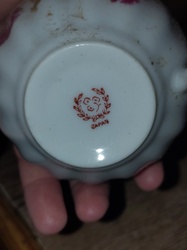
Based on my visual examination of this Famille Jaune Ginger Jar, the piece exemplifies the ornate decorative style prevalent during the late Qing Dynasty to the early Republic Period (circa 1890–1920). The use of the yellow ground, historically associated with imperial status, combined with the phoenix and peony motif—symbolizing the 'King of Birds' and 'Flower of Riches'—indicates a high-quality production intended for the domestic market or wealthy overseas collectors. The execution of the overglaze enamels is crisp, particularly the iron-red framing and the varied palette of the ruyi-head lappets, which suggests a skilled workshop. In the current market for Asian ceramics, large jars with original lids command a premium, as matching lids are frequently lost or damaged. The condition appears excellent with no visible structural cracks; however, the presence of minor kiln pinpricks actually supports a traditional firing period rather than modern mass production. Comparables at auction for jars of this size and palette range from $1,200 to $2,500 depending on the presence of a reign mark. A significant limitation of this appraisal is the inability to examine the base for a Guangxu or Qianlong apocryphal mark, or to inspect the 'orange peel' texture of the glaze and the weight of the paste in hand. To definitively confirm the age and distinguish this from a mid-20th-century high-quality reproduction, a physical inspection of the foot rim's oxidation and the internal glaze wear is necessary. Provenance documentation or a microscopic examination of the enamel bubbling would be required to reach the higher end of the valuation spectrum.

Get your items appraised

Instant estimates of your treasures with AI-powered appraisals

Browse More Appraisals