AI estimate as of December 13, 2025 · verify with a professional before acting
AI-Generated · Verify before acting
Everything on this page is generated by AI for informational purposes only. AI can make mistakes — the AI may misidentify items or misattribute them (artist, maker, brand, designer, origin, era). This is not an official valuation and should not be used for insurance, sale, tax, estate, legal, or lending purposes — or any decision requiring a certified appraisal. It is not an authoritative claim about any person, brand, or rights holder — do not share or rely on it as a factual statement about a third party. Always consult qualified professionals before making financial decisions.
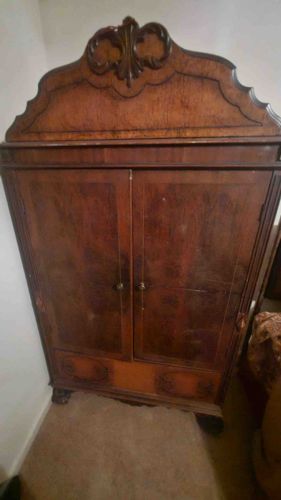
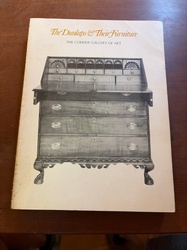
This appears to be an antique or vintage wardrobe, likely dating to the Art Deco period, characterized by its distinctive silhouette and decorative elements. The piece is constructed primarily from wood, exhibiting a rich, dark brown finish, possibly walnut or mahogany veneer, with visible wood grain patterns suggesting its natural material. The overall form is rectangular, with two central doors that open to reveal storage. A prominent feature is the ornate, carved pediment at the top, showcasing symmetrical scrollwork and foliate motifs, which adds a decorative flourish and enhances its period aesthetic. The pediment's top edge is scalloped, further accentuating the design. Below the main doors, there appears to be a smaller drawer or a false front, indicated by a horizontal separation line. The wardrobe stands on four short, carved feet, typical of furniture from the early to mid-20th century. The handles on the double doors are small, circular, and metallic, probably brass or a similar alloy, showing some patina consistent with age. Visible condition issues include some scuffing and loss of finish along the bottom edge and on the feet, as well as general surface wear, minor scratches, and discolored areas on the main door panels and the lower section, indicating its age and usage. The wood paneling on the doors shows some swirling grain patterns, possibly a burl veneer, suggesting quality craftsmanship. No specific maker's marks or signatures are discernable from the image. The overall construction appears solid, indicative of traditional furniture-making techniques.
AI Appraisal Report
I've examined this Art Deco wardrobe with Carved Pediment based on the provided image. This piece appears to be a genuine Art Deco era item, likely dating from the 1920s to 1940s, given its distinctive silhouette, rich wood finish, and the ornate, symmetrical scrollwork and foliate motifs on the pediment. The dark brown finish, possibly walnut or mahogany veneer with prominent burl patterns on the door panels, suggests quality craftsmanship for the period. The small, circular metallic handles also align with Art Deco aesthetics. I note typical age-related wear, including scuffing and finish loss along the bottom edge and feet, minor scratches, and discoloration on the main door panels. While these condition issues are consistent with a functional piece of its age, they do impact its market value. The overall construction appears solid, indicating traditional furniture-making techniques, which is a positive factor.
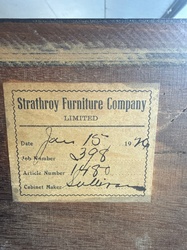
In terms of market conditions, Art Deco furniture continues to have a niche but consistent demand. Pieces with unique decorative elements, such as this carved pediment, tend to fetch higher prices than plainer counterparts. However, wardrobes, as a category, can be slower movers compared to smaller, more versatile pieces like dressers or side tables, due to their size and specific function. Rarity for this specific design is moderate; while not unique, similar ornate Art Deco wardrobes are not commonplace. Factors impacting value include the visible wear and tear which would benefit from restoration to achieve a higher value. The lack of discernable maker's marks or signatures prevents attribution to a specific artisan or manufacturer, which could elevate its value. For full authentication and to ascertain the exact wood species and construction methods, an in-person examination is crucial. A physical inspection would also allow for a more precise assessment of the extent of wear, any structural integrity issues, and potential repairs. Additionally, provenance documentation could further enhance its historical and monetary value.