Chert Biface Hand Axe Pebble Chopper
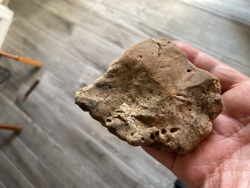
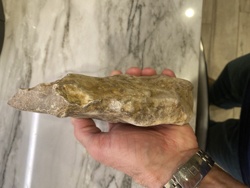
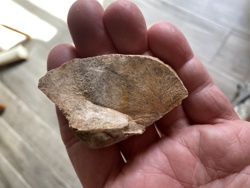
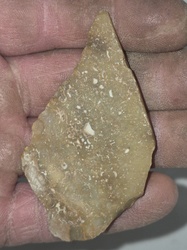
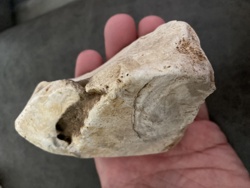
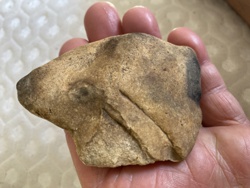
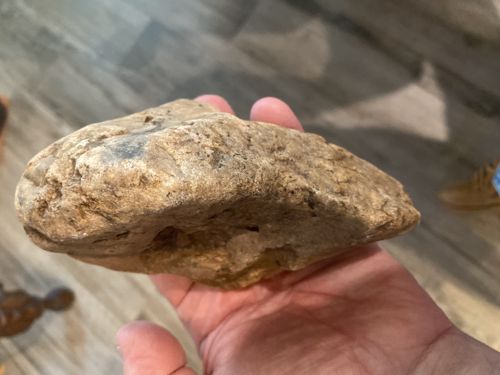
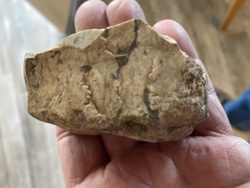
This artifact is a prehistoric lithic tool, specifically identified as a biface hand axe or pebble chopper, measuring 5.50 by 3 inches. It is constructed from a dense, crypto-crystalline chert, exhibiting characteristic earth tones of tan and grey with visible mineral staining and a weathered patina typical of long-term environmental exposure. The tool features a robust, teardrop-shaped profile with deliberate flake scars along its edges, indicating it was shaped through percussion knapping. This 'bifacial' working creates a primitive cutting edge while maintaining a thicker, rounded base designed to fit comfortably in the palm of the hand. The surface shows significant smoothing and rounding of the arris (the sharp ridges between flake scars), suggesting heavy use-wear or post-depositional water tumbling in a fluvial environment. While described with Acheulean characteristics—a style associated with the Lower Paleolithic—its find location in Guthrie, OK, presents a significant archaeological anomaly as the Acheulean tradition is generally associated with Afro-Eurasia. Despite this geographical curiosity, the craftsmanship shows clear intentionality in the removal of flakes to create a purposeful chopping or scraping tool. The condition is stable but reflects extreme antiquity, with no modern chips or alterations visible beyond historical wear and natural weathering processes.
AI-Generated Appraisal Disclaimer
Estimated Value
$150 - $250
Basic Information
Category
Archeological Artifacts / Prehistoric Stone Tools
Appraised On
March 6, 2026
Estimated Value
$150 - $250
Additional Details Provided By Owner
User Provided Information
Lower Paleolithic Acheulean chert bi face hand axe pebble chopper tool found in Guthrie OK measuring 5.50 x 3 "
Item Description
This artifact is a prehistoric lithic tool, specifically identified as a biface hand axe or pebble chopper, measuring 5.50 by 3 inches. It is constructed from a dense, crypto-crystalline chert, exhibiting characteristic earth tones of tan and grey with visible mineral staining and a weathered patina typical of long-term environmental exposure. The tool features a robust, teardrop-shaped profile with deliberate flake scars along its edges, indicating it was shaped through percussion knapping. This 'bifacial' working creates a primitive cutting edge while maintaining a thicker, rounded base designed to fit comfortably in the palm of the hand. The surface shows significant smoothing and rounding of the arris (the sharp ridges between flake scars), suggesting heavy use-wear or post-depositional water tumbling in a fluvial environment. While described with Acheulean characteristics—a style associated with the Lower Paleolithic—its find location in Guthrie, OK, presents a significant archaeological anomaly as the Acheulean tradition is generally associated with Afro-Eurasia. Despite this geographical curiosity, the craftsmanship shows clear intentionality in the removal of flakes to create a purposeful chopping or scraping tool. The condition is stable but reflects extreme antiquity, with no modern chips or alterations visible beyond historical wear and natural weathering processes.
Get Your Items Appraised
Instant estimates of your treasures with AI-powered instant appraisals