AI identification & appraisal estimate

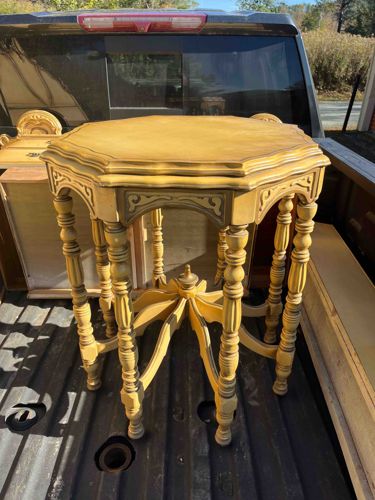
Octagonal Entry/Accent Table

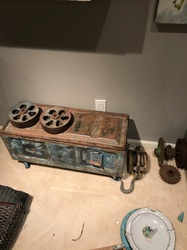
Submitted photo of Octagonal Entry/Accent Table
Photo submitted by the user — not generated by AI

AI Estimated Value

Not an official valuation

$300-500

AI estimate as of October 4, 2025 · verify with a professional before acting

AI-Generated · Verify before acting

Everything on this page is generated by AI for informational purposes only. AI can make mistakes — the AI may misidentify items or misattribute them (artist, maker, brand, designer, origin, era). This is not an official valuation and should not be used for insurance, sale, tax, estate, legal, or lending purposes — or any decision requiring a certified appraisal. It is not an authoritative claim about any person, brand, or rights holder — do not share or rely on it as a factual statement about a third party. Always consult qualified professionals before making financial decisions.

Read the full disclaimer

AI Item Analysis

This is an antique or vintage octagonal accent table, likely functioning as an entry or side table. It is constructed primarily of wood, featuring a light yellowish-gold painted finish with some darker accents, possibly in a muted green or gray, highlighting the carved details and recessed areas. The table boasts an octagonal tabletop with a slightly raised, beveled edge over a frieze that exhibits intricate, arching scrollwork and pierced designs on each of its eight sides. This decorative element suggests a Gothic Revival or possibly a Victorian Aesthetic movement influence. The table is supported by eight turned legs, each featuring multiple rounded and tapered sections, tapering towards disc-shaped feet. These legs connect to a central turned finial, from which eight curved stretchers radiate outwards, meeting the legs at a lower point, forming a robust and visually engaging base. The overall construction appears sturdy, characteristic of furniture from the late 19th or early 20th century. Visible condition issues include some scuffs and wear to the painted finish, particularly on the edges and legs, consistent with age and use. There are no obvious signs of major damage or repair from the provided image, but a closer inspection would be needed to confirm. The craftsmanship, particularly the turning of the legs and the detailed fretwork, indicates a piece of reasonable quality for its style period, possibly mass-produced but with attention to decorative elements. The unique octagonal shape and the elaborate base differentiate it from simpler accent tables.
AI Appraisal Report

Based on my visual examination of the provided image, this Octagonal Entry/Accent Table appears to be an antique or vintage piece, likely dating from the late 19th to early 20th century. Its construction in wood with a light painted finish and darker accents accentuates the intricate arching scrollwork and pierced designs on the frieze, indicative of potential Gothic Revival or Victorian Aesthetic movement influence. The eight turned legs with disc-shaped feet, connected by a central finial and radiating curved stretchers, form a distinctive and visually engaging base. The overall condition shows scuffs and wear to the painted finish, particularly on edges and legs, which is consistent with age and use. I see no obvious signs of major damage or repair, suggesting a structurally sound piece, though closer inspection would confirm this. Market conditions for such accent tables are generally stable for pieces with unique decorative elements. The craftsmanship, though likely mass-produced for the period, displays attention to detail in the turning and fretwork. Its octagonal shape and elaborate base offer a degree of rarity compared to simpler rectangular or round tables, contributing positively to its value. Demand for unique antique accent furniture remains modest but consistent among collectors and interior designers seeking period-appropriate pieces. Factors impacting value include the charming aesthetic and functional versatility. However, the painted finish, while original in style, may deter some purists who prefer natural wood finishes. Wear to the paint also limits its top-tier value. It is important to note that my assessment of authenticity is based solely on visual cues from the image. Full authentication would necessitate an in-person examination to inspect joinery, wood species, and the true nature of the finish. Provenance documentation, if available, would further verify its age and origin. Without physical inspection, I cannot definitively determine if the paint is original or a later overpaint, which could impact value.

Keep exploring

More furniture appraisals

Get your items appraised

Instant AI-powered appraisal estimates from a photo

Browse More Appraisals