AI estimate as of October 26, 2025 · verify with a professional before acting
AI-Generated · Verify before acting
Everything on this page is generated by AI for informational purposes only. AI can make mistakes — the AI may misidentify items or misattribute them (artist, maker, brand, designer, origin, era). This is not an official valuation and should not be used for insurance, sale, tax, estate, legal, or lending purposes — or any decision requiring a certified appraisal. It is not an authoritative claim about any person, brand, or rights holder — do not share or rely on it as a factual statement about a third party. Always consult qualified professionals before making financial decisions.
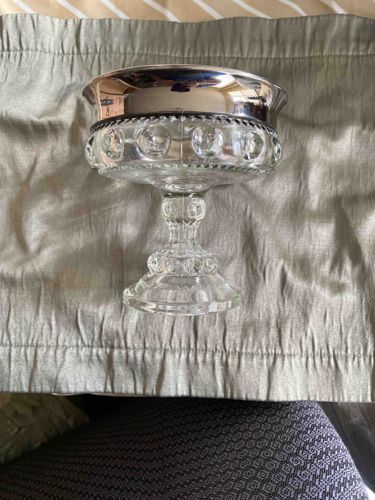
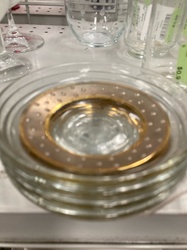
This item is a clear glass pedestal dish with a pronounced silver-plated rim. The dish features a bowl-like top section crafted from clear pressed glass, characterized by a series of prominent, circular, convex 'bubble' or 'coin' like raised designs encircling its exterior, giving it a tactile and decorative quality. Below this patterned section, there is a clear glass pedestal base. The stem of the pedestal is faceted or molded with decorative elements, leading down to a wider, circular foot. The foot itself also exhibits a molded design, possibly a continuation of the 'bubble' motif or a similar patterned relief, that helps to anchor the piece and provide stability. A significant feature is the wide, highly reflective silver-plated band that forms the upper rim of the bowl section. This silver plating shows some signs of tarnish and possibly some minor surface scratches, visible as darker areas and reflections, indicating age and use. Below the silver rim and above the patterned glass section, there appears to be a smaller, darker decorative band, possibly blackened or antiqued metalwork, providing a contrasting border. The overall construction suggests a two-component design: a glass body and a metal rim, likely joined. The style, with its combination of pressed glass patterns and silver-plated elements, is characteristic of late 19th to early 20th-century decorative glassware, often used for serving candies, nuts, or as a compote. No specific maker's marks or signatures are discernible from the provided images, but the craftsmanship of the pressed glass indicates a mass-produced yet aesthetically pleasing item from its era. The item appears to be in good vintage condition, aside from the expected tarnish on the silver plating.
AI Appraisal Report
Based on my examination of the provided image, this silver-plated and clear glass pedestal dish exhibits characteristics consistent with late 19th to early 20th-century decorative glassware. The pressed glass design featuring prominent 'bubble' or 'coin' like raised patterns, combined with the silver-plated rim, is typical of compotes or serving dishes from that era. The item appears to be in good vintage condition, with the primary observable flaw being tarnish on the silver-plated rim, which is expected for an item of this age and material. The dark decorative band beneath the silver rim adds a nice contrasting detail. Authenticity, based on visual cues, seems to be a genuine period piece rather than a modern reproduction. However, without a physical inspection, I cannot confirm the exact metal composition of the 'silver-plating' or the method of attachment. The absence of discernible maker's marks is common for mass-produced items of this type, which limits specific attribution.
In terms of market conditions, similar clear pressed glass compotes with silver-plated rims from this period are not particularly rare. They are frequently found in antique shops and online marketplaces. Demand is generally moderate, driven by collectors of antique glass, those furnishing period homes, or individuals seeking decorative accent pieces. The lack of a famous maker or unique, exceptionally intricate design prevents it from commanding a high premium. Factors impacting value include the good overall condition, despite the tarnish, and the attractive, classic design. A full in-person examination would be needed to assess structural integrity, presence of chips or cracks not visible in the image, the exact quality of the silvering, and any hidden marks. Provenance documentation, if available, could also enhance value. Given these considerations, I would place the appraisal value for this piece at $40 - $70.