AI Appraisal Estimate

AI-generated estimates · not official valuations

From the user

What was submitted

Photo and notes provided by the user — not generated by AI

Submitted item photo
Submitted photo · June 6, 2026

User's notes

Tea pot blue and white has

AI analysis below

AI appraisal

AI analysis & estimate

AI-Generated · Verify before acting

Everything below is generated by AI for informational purposes only. AI can make mistakes — the AI may misidentify items or misattribute them (artist, maker, brand, designer, origin, era). This is not an official valuation and should not be used for insurance, sale, tax, estate, legal, or lending purposes — or any decision requiring a certified appraisal. It is not an authoritative claim about any person, brand, or rights holder — do not share or rely on it as a factual statement about a third party. Always consult qualified professionals before making financial decisions.

Note

This analysis also relies on unverified notes provided by the user, which may be incomplete or inaccurate and could affect the result.

Read the full disclaimer

AI Identification

·Not independently authenticated·Verify before acting

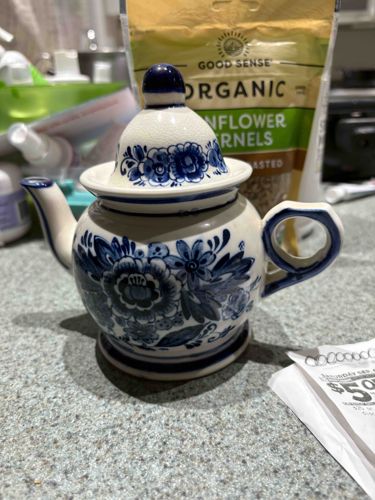
Delftware Style Miniature Teapot

Decorative Ceramic

AI Estimated Value

·Not an official valuation·Verify before acting

$25-50

As of June 6, 2026

AI Item Analysis

·AI can make mistakes·Verify before acting
This is a miniature decorative teapot, likely made of ceramic or porcelain, featuring a classic blue and white Delftware style floral pattern. The body of the teapot is predominantly white with intricate hand-painted or transfer-printed floral motifs in a deep cobalt blue. The flowers appear to be a mix of stylized blooms and leaves, artistically arranged around the circumference of the pot. The teapot has a relatively small, squat body with a narrow spout and a C-shaped handle. The handle has a small, open loop at its top. Both the spout and handle are outlined with blue details, mirroring the decorative style. The lid fits snugly into the top opening of the teapot and features a matching blue and white floral design, topped with a solid blue finial. There are visible signs of crazing (a fine network of cracks) on the white glazed surfaces of both the body and the lid, which is a common characteristic of older ceramic glazes and can indicate age or a particular firing process. No apparent chips, breaks, or repairs are visible from the provided image, suggesting it is in good, albeit aged, condition. The base of the teapot is ringed with a double blue line. The overall craftsmanship appears to be of decent quality, consistent with mass-produced decorative ceramics from the mid-to-late 20th century, probably intended for display rather than functional use due to its small size. It does not appear to bear any discernible maker's marks or signatures from the visible angles.

AI Appraisal Report

·AI can make mistakes·Verify before acting
Based on my examination of the provided image, this miniature Delftware-style teapot presents as a decorative ceramic piece. Its condition appears good overall, with no visible chips, cracks (beyond crazing), or repairs. The network of crazing on the glaze is consistent with age and typical for ceramic glazes of this type, especially those from the mid-to-late 20th century. Authenticity, in terms of its origin as a decorative item, seems clear, although it is certainly a 'style' piece rather than a true antique Delftware from the Netherlands. In terms of market conditions, items like this are generally considered decorative collectibles. The market for mass-produced Delftware-style ceramics is broad but not particularly robust, as these items are quite common. Comparables would include similar miniature decorative teapots or 'souvenir ware' from the same period. Demand is moderate, primarily from collectors of miniature teapots or blue-and-white ceramics, but rarity is low due to common production numbers. Factors significantly impacting value include its small size (limiting functional use), the decorative rather than antique nature, and the apparent absence of specific maker's marks or historical significance. It is crucial to note the limitations of authenticating solely from images. Without physical examination, I cannot definitively ascertain the precise ceramic body type, the method of decoration (hand-painted vs. transfer-printed details), or the exact date of manufacture. An in-person inspection would allow for tactile assessment, detailed examination for any faint maker's marks or factory identifiers, and a more precise evaluation of craftsmanship. Provenance documentation, if available, would significantly enhance the item's historical context and potential value. Scientific testing is generally not applied to items of this typical value range but could confirm clay composition or glaze type if necessary for higher-end authentication.

Get your items appraised

Instant estimates of your treasures with AI-powered appraisals

Browse More Appraisals