AI estimate as of September 29, 2025 · verify with a professional before acting
AI-Generated · Verify before acting
Everything on this page is generated by AI for informational purposes only. AI can make mistakes — the AI may misidentify items or misattribute them (artist, maker, brand, designer, origin, era). This is not an official valuation and should not be used for insurance, sale, tax, estate, legal, or lending purposes — or any decision requiring a certified appraisal. It is not an authoritative claim about any person, brand, or rights holder — do not share or rely on it as a factual statement about a third party. Always consult qualified professionals before making financial decisions.
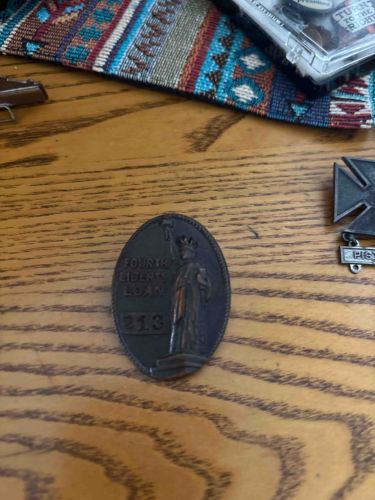
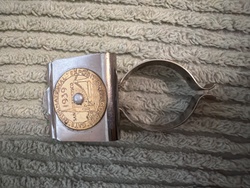
This item is an oval-shaped metal pin or medallion, likely made of bronze or a similar base metal, featuring a dark, aged patina. The overall color is a dull, dark brown to black, indicative of age and possibly intentional antiquing or surface treatment. Its dimensions appear to be approximately 1.5 to 2 inches in length. The obverse prominently displays a raised relief of the Statue of Liberty, facing slightly right, holding her torch aloft. To the left of the Statue, the text 'FOURTH LIBERTY LOAN' is inscribed vertically in uppercase letters. Below this text, the number '213' is visibly embossed, likely indicating a specific campaign number, pledge amount, or a unique identifier from the era. The edges of the medallion are slightly raised, framing the central design. There are no obvious signs of significant damage such as deep scratches, bends, or breaks to the metal, though the surface shows typical wear consistent with its age, including minor abrasions and a generally softened appearance of the raised details. The craftsmanship appears to be standard for mass-produced patriotic memorabilia from the early 20th century, specifically the World War I era (1918, corresponding to the Fourth Liberty Loan). The item serves as a historical artifact, commemorating financial contributions to the war effort. The reverse side is not visible, but such items typically feature a pin clasp or an additional informational inscription.
AI Appraisal Report
Upon visual examination of the provided image, this World War I Fourth Liberty Loan Pin/Medallion appears to be an authentic example of patriotic memorabilia from the 1918 era. Its oval shape, bronze-like patina, and raised relief of the Statue of Liberty with the inscription 'FOURTH LIBERTY LOAN' are consistent with known examples of such items. The '213' embossed below the text is likely a campaign or donor identifier, common on these pieces. I assess the condition as 'Good' to 'Very Good' vintage condition. The dark, aged patina is appropriate for its age, and there are no visible major damages like bends or deep scratches, only typical surface wear and softening of details commensurate with over a century of existence. This item holds significant historical value, representing a tangible link to American civilian contributions during WWI.
Market conditions for such WWI patriotic pins are generally stable. These items are fairly common, having been mass-produced. Comparables typically sell in the $20-$80 range, depending on condition, uniqueness of the identifier (if any), and dealer/platform. Demand is primarily from military history collectors, WWI enthusiasts, and those interested in patriotic Americana. While not exceptionally rare, well-preserved examples with clear details are always desirable. Factors impacting value include the historical significance, condition, and clarity of the design and text. The lack of a reverse image limits full assessment, as the pin mechanism or additional markings could influence value slightly.
For full authentication, a physical examination would be crucial to verify the metal composition, inspect the reverse for maker's marks or pin attachments, and assess the tactile quality consistent with early 20th-century manufacturing. Provenance documentation, though rare for such common items, would definitively confirm its history. While I am confident in its probable authenticity based on the image, an in-person inspection eliminates any remaining uncertainty regarding age, material, and manufacturing integrity.