AI estimate as of September 17, 2025 · verify with a professional before acting
AI-Generated · Verify before acting
Everything on this page is generated by AI for informational purposes only. AI can make mistakes — the AI may misidentify items or misattribute them (artist, maker, brand, designer, origin, era). This is not an official valuation and should not be used for insurance, sale, tax, estate, legal, or lending purposes — or any decision requiring a certified appraisal. It is not an authoritative claim about any person, brand, or rights holder — do not share or rely on it as a factual statement about a third party. Always consult qualified professionals before making financial decisions.
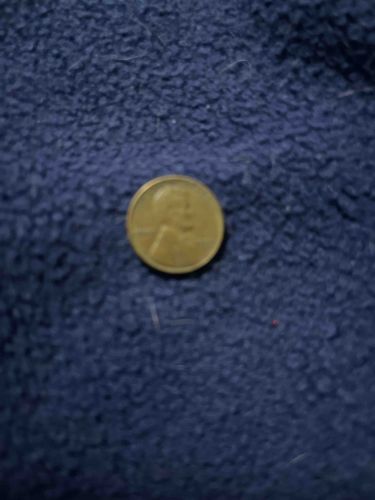
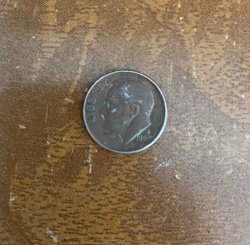
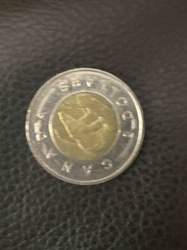
The item depicted is a single United States Lincoln Cent, commonly known as a penny. From the visible obverse side, the profile bust of Abraham Lincoln facing right is clearly discernible. The coin exhibits a metallic, coppery-bronze color, consistent with the typical composition of a US penny, although the exact alloy cannot be determined without further examination. The surface appears somewhat dull with a visible patina, suggesting moderate to heavy circulation and possibly some environmental exposure. There is no significant luster discernible, and the overall impression is one of age and use. The details of Lincoln's bust, while identifiable, show signs of wear, particularly on the higher points of the relief such as the forehead, cheek, and shoulder areas. The 'LIBERTY' inscription and 'IN GOD WE TRUST' motto, typically present on the obverse, are not sharply defined due to the image resolution and condition, though their general outline might be present. The date, crucial for identification and valuation, is not clearly visible in this image. The coin itself appears to be a standard size for a US cent, approximately 19.05 mm (0.75 inches) in diameter, and its circular shape is intact without apparent bending or warping. There are no obvious signs of major damage like large scratches, dents, or holes, but the overall worn state indicates a 'Good' to 'Very Good' condition grade based on visible details. Without a clear date and mint mark, it is difficult to accurately pinpoint the specific year of mintage, but the design indicates a coin from the Lincoln Cent series, which began in 1909 and continues to the present day. The quality of craftsmanship is typical for a mass-produced governmental coinage, with the design elements historically well-executed but now softened by wear.
AI Appraisal Report
I have examined the provided image of this United States Lincoln Cent. Based on the visual evidence, the coin appears authentic, consistent with a standard issue Lincoln Cent. The bust of Abraham Lincoln is clearly discernible, and the coppery-bronze color is appropriate for the series. Signs of heavy circulation are evident in the dull surface and significant wear on Lincoln's higher facial features, suggesting a grade in the 'Good' to 'Very Good' range. There is no visible luster, and the details appear soft. Without a clear date or mint mark, precise identification and valuation are severely hampered.
Market conditions for common, heavily circulated Lincoln Cents are very low. Millions were minted, and modern examples hold only face value, unless they are specific rare varieties or key dates in high grades. Comparables would be other common, well-worn Lincoln Cents, which typically trade for face value or a few cents above, if at all, to collectors seeking filler coins. Demand is extremely low for such examples. Rarity cannot be assessed without a discernible date and mint mark; however, the overall condition suggests it is not a high-value key date. Factors significantly impacting value are the lack of a visible date and the worn condition. If this were a common date (post-1959), its value would be face value.
Limitations in authenticity verification from an image alone are significant. While the design itself appears correct, an in-person examination would be crucial to confirm the coin's actual metallic content, weight, and precise diameter. I would also need to examine the reverse side for the mint mark and conduct a physical inspection under magnification to definitively identify the date and any potential die varieties, which could drastically alter the appraisal. Scientific testing for alloy composition and precise weight would be required for full authentication, especially if there were any suspicion of a counterfeit, which is not suggested by the image but always a possibility without physical examination. Without the date, I am estimating based on the assumption of a common date and heavy wear.