AI Appraisal Estimate

AI-generated estimates · not official valuations

From the user

What was submitted

Photo and notes provided by the user — not generated by AI

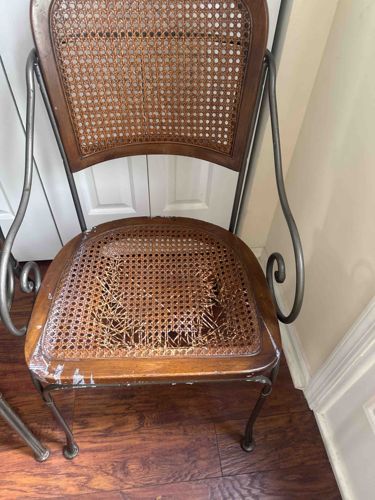
Submitted item photo
Submitted photo · June 14, 2026

User's notes

No additional notes provided.

AI analysis below

AI appraisal

AI analysis & estimate

AI-Generated · Verify before acting

Everything below is generated by AI for informational purposes only. AI can make mistakes — the AI may misidentify items or misattribute them (artist, maker, brand, designer, origin, era). This is not an official valuation and should not be used for insurance, sale, tax, estate, legal, or lending purposes — or any decision requiring a certified appraisal. It is not an authoritative claim about any person, brand, or rights holder — do not share or rely on it as a factual statement about a third party. Always consult qualified professionals before making financial decisions.

Read the full disclaimer

AI Identification

·Not independently authenticated·Verify before acting

Cane Back and Seat Dining Chair with Metal Frame

Furniture

AI Estimated Value

·Not an official valuation·Verify before acting

$50 - $100

As of June 14, 2026

AI Item Analysis

·AI can make mistakes·Verify before acting
This is a vintage or antique armless dining or accent chair featuring a combination of wood and metal construction. The chair's frame, including the backrest top rail and seat rim, is crafted from what appears to be a medium-toned hardwood, possibly oak or walnut, finished with a glossy lacquer or varnish. The backrest and seat are both inset with traditional cane webbing, exhibiting a classic open hexagonal pattern. The seat cane is severely damaged, with large sections torn and completely missing, revealing the underlying support structure. The wooden components show signs of wear, including chipped finish along the front edge of the seat and some scuffing. The slender legs and arms are made of dark-colored, possibly wrought iron or steel, with a matte or satin finish, and feature decorative scrolls at the top of the arms and subtle curves in the legs. One arm is visible, curving outwards and terminating in an inward-facing spiral. The overall style suggests a European influence, perhaps French Bistro or late 19th to early 20th century traditional design. This chair requires substantial repair to its caning before it can be comfortably or safely used.
AI Appraisal Report

·AI can make mistakes·Verify before acting
I have examined the provided image of the Cane Back and Seat Dining Chair with Metal Frame. Based on my visual assessment, this appears to be a vintage or antique piece, likely dating from the late 19th to early 20th century, with a design suggesting European (possibly French Bistro) influence. The combination of hardwood and metal, along with the cane webbing, is consistent with that period. The chair's condition significantly impacts its value. The cane seat is severely damaged, requiring complete replacement, and the cane back may also need repair or replacement. There are also visible chips in the wood finish and general wear consistent with age and use. Authenticity, based solely on an image, is challenging to confirm definitively. While the style aligns with known period pieces, reproductions exist. Full authentication would require in-person examination to assess construction techniques, wood grain, joinery, and patina, as well as provenance documentation if available. Scientific testing, such as wood dating, could also provide more definitive age confirmation. In terms of market conditions, chairs in this condition are typically sold "as-is" for a much lower value than restored pieces. The cost of professional caning repair can range from a few hundred dollars to more, easily exceeding the current market value of an unrestored chair. Demand for unrestored pieces is limited to buyers interested in restoration projects or for decorative purposes where functionality isn't paramount. Rarity is moderate; while not unique, this specific combination of materials and style isn't ubiquitous. Given the significant damage and the restoration costs involved, the primary value lies in its potential after repair, or as a project piece. Its current market appeal is severely diminished by the condition.

Get your items appraised

Instant estimates of your treasures with AI-powered appraisals

Browse More Appraisals