AI Appraisal Estimate

AI-generated estimates · not official valuations

From the user

What was submitted

Photo and notes provided by the user — not generated by AI

Submitted item photo
Submitted photo · June 13, 2026

User's notes

No additional notes provided.

AI analysis below

AI appraisal

AI analysis & estimate

AI-Generated · Verify before acting

Everything below is generated by AI for informational purposes only. AI can make mistakes — the AI may misidentify items or misattribute them (artist, maker, brand, designer, origin, era). This is not an official valuation and should not be used for insurance, sale, tax, estate, legal, or lending purposes — or any decision requiring a certified appraisal. It is not an authoritative claim about any person, brand, or rights holder — do not share or rely on it as a factual statement about a third party. Always consult qualified professionals before making financial decisions.

Read the full disclaimer

AI Identification

·Not independently authenticated·Verify before acting

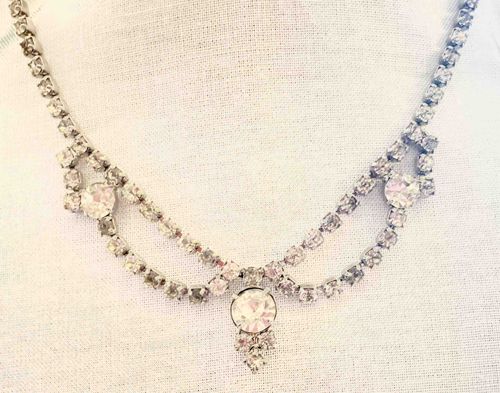
Vintage Rhinestone Festoon Necklace

Jewelry

AI Estimated Value

·Not an official valuation·Verify before acting

$65 - $95

As of June 13, 2026

AI Item Analysis

·AI can make mistakes·Verify before acting
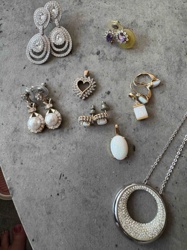
This is a vintage rhinestone necklace, likely dating from the mid-20th century, possibly the 1940s to 1960s, given its construction and style. The necklace features a festoon design, characterized by draped chains of stones connecting primary elements. The overall color is silver-toned, indicating a probable rhodium-plated base metal, which was common for costume jewelry of this era, or potentially sterling silver, though further inspection would be needed to confirm the metal content. The necklace is adorned with numerous clear, round-cut rhinestones. The main body of the necklace consists of a single strand of individually set rhinestones forming the 'chain' portion. In the front, a more elaborate bib or festoon element is formed by a double row of smaller rhinestones creating a delicate swag, from which three larger, round-cut rhinestones are prominently suspended. The central large rhinestone features a small cluster of smaller dangling rhinestones beneath it, adding to its visual interest. The construction appears to be individual bezel or prong settings for each stone, linked together to form flexible articulation. Some stones show minor discoloration or dullness, common with age and wear in vintage rhinestones, possibly indicating foil deterioration or surface scratching. There are no visible maker's marks, signatures, or stamps in the provided image. The craftsmanship appears to be standard for vintage costume jewelry, with all stones present and accounted for, suggesting it is in good, wearable condition for its age. The design is elegant and classic, typical of formal costume jewelry meant to mimic fine diamonds.
AI Appraisal Report

·AI can make mistakes·Verify before acting
Based on my visual examination of the images, this piece is a classic example of mid-20th century costume jewelry, likely dating from the 1940s to 1960s. The festoon design, featuring swags of clear rhinestones suspended from a central strand, was highly popular during this period for emulating the look of fine diamond necklaces. The base metal appears to be a silver-toned alloy, consistent with rhodium plating common for the era. The overall condition is good for its age; all stones appear to be present. However, I note some minor discoloration and dullness in several rhinestones, likely due to age-related foil degradation, which is a key factor impacting value. Without a visible maker's mark (such as Eisenberg, Weiss, or Trifari), the piece is considered unsigned, which places its value within the general market for well-made vintage costume jewelry rather than a specific designer category. Current market comparables for similar unsigned rhinestone festoon necklaces in good condition typically fall within the $65 to $95 range. The demand for such elegant, bridal-appropriate costume pieces is steady. The primary limitations of this appraisal are its reliance on images alone. An in-person examination would be required to test the metal content (to definitively rule out sterling silver) and assess the setting quality and stone condition more closely. Full authentication would require identifying any hidden maker's marks or comparing construction techniques against known designer databases.

Get your items appraised

Instant estimates of your treasures with AI-powered appraisals

Browse More Appraisals