AI Appraisal Estimate

AI-generated estimates · not official valuations

From the user

What was submitted

Photo and notes provided by the user — not generated by AI

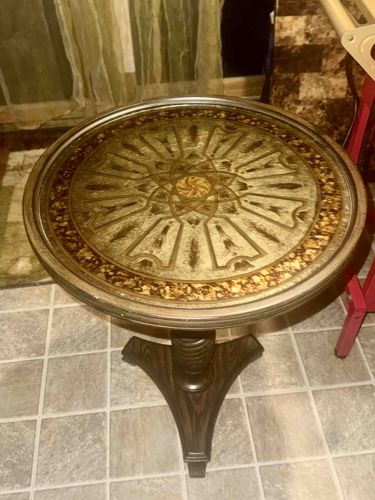
Submitted item photo
Submitted photo · June 8, 2026

User's notes

English Regency Style Eglomise Reverse Painted Neoclassical Side Table

AI analysis below

AI appraisal

AI analysis & estimate

AI-Generated · Verify before acting

Everything below is generated by AI for informational purposes only. AI can make mistakes — the AI may misidentify items or misattribute them (artist, maker, brand, designer, origin, era). This is not an official valuation and should not be used for insurance, sale, tax, estate, legal, or lending purposes — or any decision requiring a certified appraisal. It is not an authoritative claim about any person, brand, or rights holder — do not share or rely on it as a factual statement about a third party. Always consult qualified professionals before making financial decisions.

Note

This analysis also relies on unverified notes provided by the user, which may be incomplete or inaccurate and could affect the result.

Read the full disclaimer

AI Identification

·Not independently authenticated·Verify before acting

English Regency Style Eglomise Reverse Painted Neoclassical Side Table

Furniture

AI Estimated Value

·Not an official valuation·Verify before acting

$600 - $900

As of June 8, 2026

AI Item Analysis

·AI can make mistakes·Verify before acting
This is an elegant English Regency style side table, featuring a round top with intricate eglomise (reverse painted glass) ornamentation. The tabletop depicts a neoclassical motif with a central golden medallion resembling a stylized rosette or sunburst, surrounded by radiating geometric patterns and accented with a speckled, almost tortoise-shell-like border in shades of gold and brown. The primary colors of the eglomise are gold, muted cream, and dark brown, creating a rich visual texture. The table appears to be constructed from wood, likely a dark stained hardwood, with a central pedestal base that branches into three carved, stylized feet, offering stability. The pedestal itself has subtle fluting or reeding, contributing to its classical appearance. The overall condition appears good, with a visible shimmer suggesting a glossy finish on the eglomise top. There are no obvious signs of significant damage like cracks in the glass, deep scratches, or major chips, although the image quality prevents a forensic examination of the surface for fine scratches or wear consistent with age and use. The craftsmanship, particularly the detailed reverse painting on glass, indicates a quality piece, likely produced in the early to mid-20th century, or perhaps a more recent reproduction designed to evoke the Regency period.
AI Appraisal Report

·AI can make mistakes·Verify before acting
Upon examining the English Regency style side table, my assessment is based on the provided images and description. The piece is visually striking, defined by its eglomise (reverse painted glass) top featuring a neoclassical sunburst motif against a tortoise-shell-like border. The dark-stained wood base, with its reeded central pedestal and three carved stylized feet, is consistent with the Regency style it emulates. The overall condition appears to be very good from the images, with the glass intact and the finish glossy, showing no major cracks or chips. However, a definitive assessment of authenticity and age from images alone is limited. While the style is Regency (c. 1811-1820), the piece is more likely a high-quality 20th-century revival, possibly mid-century. An in-person inspection would be required to examine the joinery, tool marks, and signs of genuine age versus artificial distressing to confirm this. The market for well-made revival furniture remains steady. Comparable eglomise side tables from the 20th century in good condition typically sell in the $600 to $900 range at auction and in retail environments. Demand for such decorative and functional pieces is consistent, though they are not exceptionally rare. The primary value driver is the decorative quality and condition of the eglomise top. Full authentication would necessitate a physical examination and any available provenance, such as sales receipts or maker's marks, which are not visible.

Get your items appraised

Instant estimates of your treasures with AI-powered appraisals

Browse More Appraisals