AI estimate as of October 26, 2025 · verify with a professional before acting
AI-Generated · Verify before acting
Everything on this page is generated by AI for informational purposes only. AI can make mistakes — the AI may misidentify items or misattribute them (artist, maker, brand, designer, origin, era). This is not an official valuation and should not be used for insurance, sale, tax, estate, legal, or lending purposes — or any decision requiring a certified appraisal. It is not an authoritative claim about any person, brand, or rights holder — do not share or rely on it as a factual statement about a third party. Always consult qualified professionals before making financial decisions.
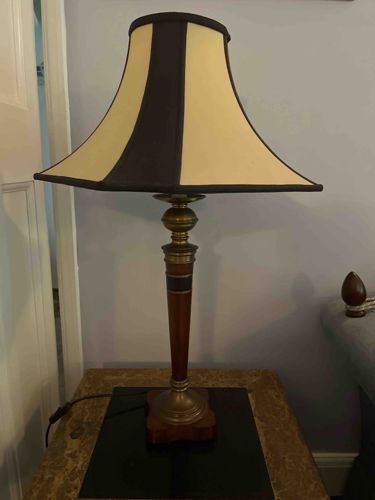
This is a vintage table lamp featuring a Neoclassical or Empire style base and a distinctive striped bell-shaped shade. The lamp stands on a square wooden base, likely stained a dark brown or mahogany color, which shows some visible wear and minor edge scuffs consistent with age and use. Resting on the wooden base is a tiered brass or brass-plated metal foot, which transitions into a tapered wooden column. This column is a rich reddish-brown wood, possibly mahogany or cherry, and features a decorative band in the mid-section composed of what appears to be a darker wood (possibly ebony or ebonized wood) inlaid with thin lighter bands, possibly brass or a different wood, adding an elegant detail. Above the wooden column, there are further brass elements, including a fluted or ringed section leading up to the light socket and shade fitter. The brass components exhibit a warm, aged patina and some surface tarnish, indicating their vintage nature. The electrical cord is black and emerges from the base. The lamp is topped with a prominent bell-shaped fabric lampshade, characterized by alternating vertical stripes of cream or off-white and dark brown or black fabric. The edges of the shade are reinforced with dark trim. The fabric appears to be in good condition with no obvious tears or significant stains, though the cream sections may have slightly yellowed over time. Overall, the lamp presents as a stately and functional decorative object, likely dating from the mid to late 20th century. Its craftsmanship suggests a good quality production, with attention to detail in the turned wood and brasswork, reflecting a classic design aesthetic.
AI Appraisal Report
I have examined the provided image of this Vintage Neoclassical Style Table Lamp with Black and Cream Striped Shade. Based on visual assessment, the lamp appears to be in good vintage condition. The wooden base shows expected minor wear, while the brass components exhibit a warm, aged patina consistent with its likely mid to late 20th-century origin. The shade, a key visual element, appears structurally sound with no obvious tears, though I note that the cream sections may show some age-related yellowing, which is common for fabric of this age. The distinct Neoclassical design, with its turned wood column, brass accents, and bell-shaped striped shade, suggests a decorative piece of good quality.
Market demand for vintage decorative lighting, particularly pieces with classic aesthetics, remains steady. Comparable vintage Neoclassical or Empire-style table lamps with original or period-appropriate shades typically retail in the $150-$250 range, depending on condition and specific design elements. The combination of materials (wood, brass, fabric) and the appealing striped shade contribute positively to its marketability. While not rare, its classic appeal ensures a consistent demand from collectors and decorators.
Factors impacting value include its overall good condition for its age and the completeness of the original style with a fitting shade. The minor wear on the wood base and the patina on the brass are generally acceptable for vintage items and often add to their charm.
Limitations: Without a physical inspection, I cannot definitively confirm the wood species, verify the material composition of the brass elements (solid brass vs. plated), or assess the internal wiring's condition and safety. A 'scratch test' for brass, closer examination of wood grain, and electrical safety testing would require in-person examination. Provenance documentation, if available, could further authenticate its age and manufacturing origin, potentially influencing value upwards if from a notable maker.