AI Appraisal Estimate

AI-generated estimates · not official valuations

From the user

What was submitted

Photo and notes provided by the user — not generated by AI

Submitted item photo
Submitted photo · June 12, 2026

User's notes

No additional notes provided.

AI analysis below

AI appraisal

AI analysis & estimate

AI-Generated · Verify before acting

Everything below is generated by AI for informational purposes only. AI can make mistakes — the AI may misidentify items or misattribute them (artist, maker, brand, designer, origin, era). This is not an official valuation and should not be used for insurance, sale, tax, estate, legal, or lending purposes — or any decision requiring a certified appraisal. It is not an authoritative claim about any person, brand, or rights holder — do not share or rely on it as a factual statement about a third party. Always consult qualified professionals before making financial decisions.

Read the full disclaimer

AI Identification

·Not independently authenticated·Verify before acting

Goebel Hummel 'Postman' Porcelain Figurine

Collectible Ceramic Figurines

AI Estimated Value

·Not an official valuation·Verify before acting

$45.00 - $85.00

As of June 12, 2026

AI Item Analysis

·AI can make mistakes·Verify before acting
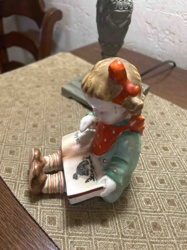
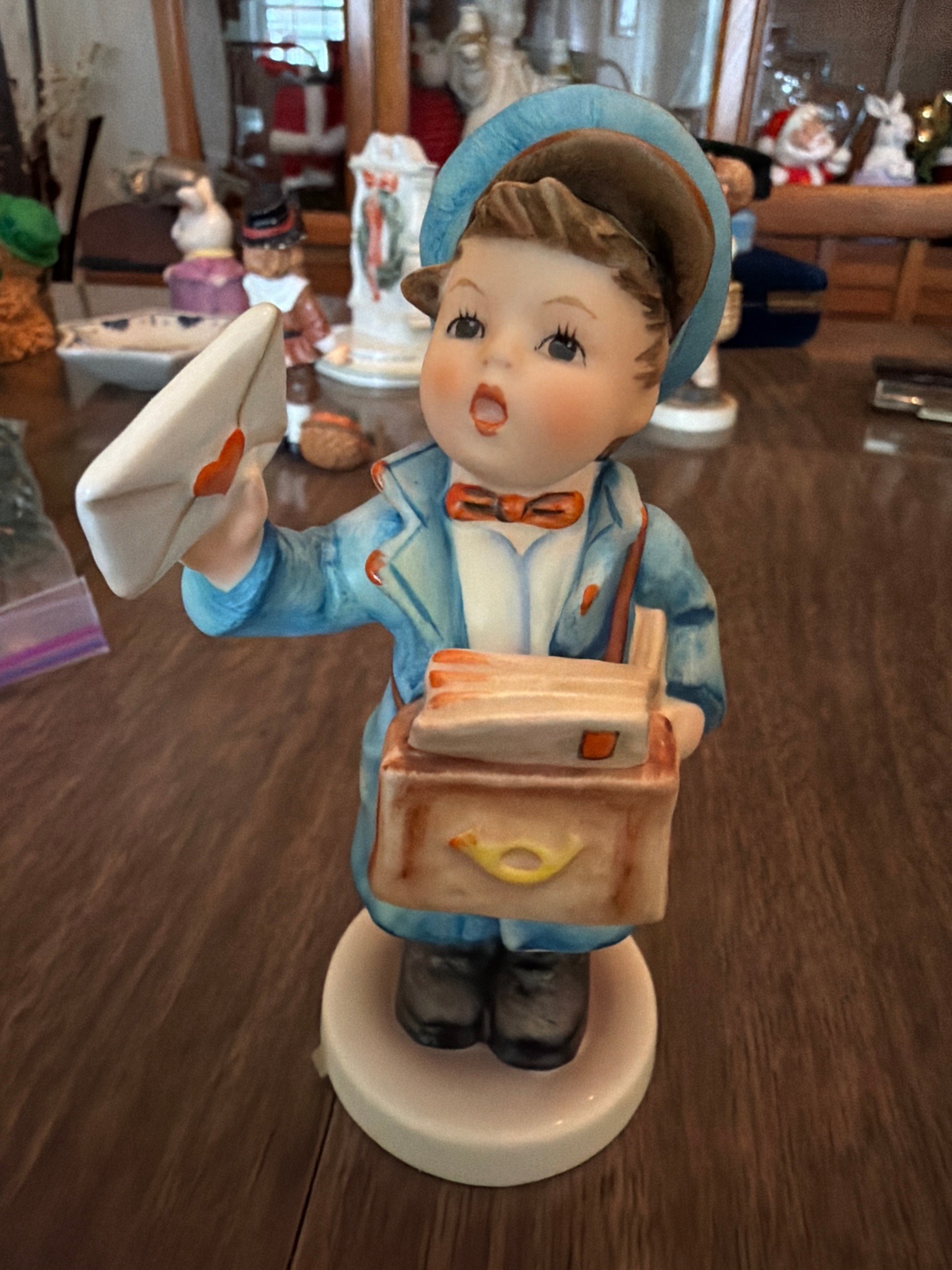
This is a hand-painted porcelain figurine depicting a young boy dressed as a postman, widely recognized as the 'Postman' model (Hummel number 119) from the Goebel porcelain factory in Germany. The figurine stands approximately 4.5 to 5.5 inches tall on a circular, off-white glazed base. The character is dressed in a vibrant light blue overcoat with dark blue shading, a matching blue cap with a brown brim, and a small orange bow tie. He carries an oversized white envelope featuring a prominent red heart seal in his right hand. A brown rectangular mail satchel is slung across his shoulder, decorated with a yellow post-horn emblem and containing additional letters. The craftsmanship showcases the classic M.I. Hummel style, characterized by soft, rounded facial features, expressive eyes with delicately painted lashes, and a matte finish on the clothing surfaces. The color palette emphasizes pastel tones with subtle gradients used to create depth in the folds of the coat. No significant chips or cracks are visible on the forward-facing surfaces, though items of this vintage often show fine crazing in the glaze on the underside of the base. The presence of the post-horn symbol suggests a mid-20th-century design, likely dating from the 1960s to 1980s depending on the specific Goebel trademark stamp (TMK) on the bottom, which is not visible here. The figurine represents a high-quality example of German nostalgic collectibles.

AI Appraisal Report

·AI can make mistakes·Verify before acting
Based on my visual examination of this 'Postman' (Hummel 119) figurine, the piece appears to be a genuine Goebel production from the mid-to-late 20th century. The paint application follows the traditional M.I. Hummel aesthetic, evidenced by the characteristic feathered brushstrokes on the eyebrows and the soft blushing of the cheeks. The matte finish on the overcoat appears remarkably well-preserved with no visible scuffing or 'flea bites.' The market for Hummel figurines has undergone a significant correction over the last two decades. While 'Postman' remains a core piece for nostalgic collectors, it was produced in high volume, making it relatively common. Current market data shows that specimens in the standard 5-inch size range typically sell at auction and secondary retail sites for under $100, unless they possess a rare early trademark (TMK-1 or TMK-2) or unique size variation. A primary value driver is the presence or absence of 'crazing' (fine cracks in the glaze), which often plagues older Goebel pieces. From these images, the surface appears clear; however, a definitive assessment requires a physical 'ring test'—tapping the porcelain to hear if it produces a clear chime or a dull thud, the latter indicating internal stress or repairs. Limitations: My assessment is based solely on the provided visual description. A full authentication would require inspecting the underside of the base to identify the specific Goebel Bee trademark, which narrows the production date to a specific decade. I would also need to examine the piece under a long-wave UV light to detect any professional restoration or overpainting that might be invisible to the naked eye.

Get your items appraised

Instant estimates of your treasures with AI-powered appraisals

Browse More Appraisals