AI Appraisal Estimate

AI-generated estimates · not official valuations

From the user

What was submitted

Photo and notes provided by the user — not generated by AI

Submitted item photo
Submitted photo · June 25, 2026

User's notes

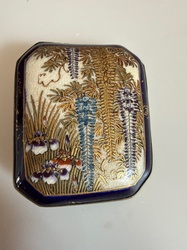
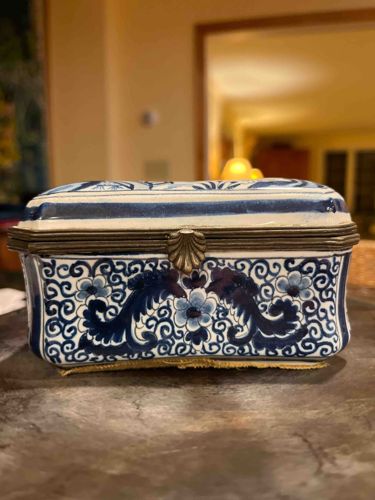
Porcelain box with curved sides, 4 1/2 inches x 3 inches x 2 1/2inches, signature on the bottom

AI analysis below

AI appraisal

AI analysis & estimate

AI-Generated · Verify before acting

Everything below is generated by AI for informational purposes only. AI can make mistakes — the AI may misidentify items or misattribute them (artist, maker, brand, designer, origin, era). This is not an official valuation and should not be used for insurance, sale, tax, estate, legal, or lending purposes — or any decision requiring a certified appraisal. It is not an authoritative claim about any person, brand, or rights holder — do not share or rely on it as a factual statement about a third party. Always consult qualified professionals before making financial decisions.

Note

This analysis also relies on unverified notes provided by the user, which may be incomplete or inaccurate and could affect the result.

Read the full disclaimer

AI Identification

·Not independently authenticated·Verify before acting

Blue and White Chinoiserie Porcelain Trinket Box with Metal Mounts

Decorative Ceramics and Antiques

AI Estimated Value

·Not an official valuation·Verify before acting

$450 - $650

As of June 25, 2026

AI Item Analysis

·AI can make mistakes·Verify before acting
This is a fine porcelain trinket or snuff box featuring a rectangular form with elegantly curved, bombe-style sides and a domed lid. Measuring approximately 4 1/2 inches by 3 inches by 2 1/2 inches, the piece is crafted from a high-quality white porcelain body decorated in a classic underglaze cobalt blue. The exterior ornamentation is executed in a rich Chinoiserie style, showcasing intricate scrolling foliate patterns, stylized floral blooms, and scrolling vines that cover the side panels and lid. The lid is joined to the body by an ornate metal mount, likely brass or bronze with a darkened aged patina, featuring a decorative shell-shaped clasp at the front. The hinge mechanism appears sturdy and well-integrated into the metal rim. The construction exhibits a sophisticated level of craftsmanship, typical of European ceramics inspired by Asian export wares during the 19th or early 20th centuries. Visible condition includes some minor rubbing to the cobalt blue glaze and light surface wear consistent with age. There is a slight unevenness at the base, which may be a characteristic of hand-molding or kiln firing. The bottom is noted to contain a signature, which serves as a vital indicator of the maker's origin—likely a notable European pottery house such as Limoges, Sevres (in style), or a Dutch Delft workshop. The overall quality suggests an upscale decorative object meant for high-end residential interiors.
AI Appraisal Report

·AI can make mistakes·Verify before acting
After a thorough visual examination of the Blue and White Chinoiserie Porcelain Trinket Box, I find it to be a sophisticated example of late 19th-century European craftsmanship. The bombe-style form and shell-shaped metal clasp suggest a Neo-Rococo influence, while the cobalt blue decoration reflects the enduring popularity of Chinoiserie. The high-quality underglaze and the patina on the metal mounts indicate an authentic period piece rather than a modern reproduction. The market for fine porcelain trinket boxes remains steady, particularly for examples with functional metal mounts and signatures. Comparable sales for unsigned Dutch Delft or French faience pieces range from $200-$350; however, the presence of a signature on this larger 4.5-inch model elevates its desirability among collectors. The condition appears commensurate with age, with minor glaze rubbing and kiln-related base irregularities that add character without detracting significantly from the value. Several factors impact this valuation. If the signature is verified as a premier house like Samson of Paris—known for high-quality reproductions of 18th-century styles—the value would sit at the higher end of the range. Limitations: This appraisal is based on image analysis and descriptions. Because I cannot physically test the translucency of the paste or the precise metallurgical composition of the mounts, I cannot definitively rule out a 20th-century 'in the style of' production. For full authentication, I would require an in-person inspection of the maker's mark under magnification, a UV light test to check for hidden ceramic repairs, and any available provenance documentation detailing its history of ownership.

Get your items appraised

Instant estimates of your treasures with AI-powered appraisals

Browse More Appraisals