AI estimate as of August 4, 2025 · verify with a professional before acting
AI-Generated · Verify before acting
Everything on this page is generated by AI for informational purposes only. AI can make mistakes — the AI may misidentify items or misattribute them (artist, maker, brand, designer, origin, era). This is not an official valuation and should not be used for insurance, sale, tax, estate, legal, or lending purposes — or any decision requiring a certified appraisal. It is not an authoritative claim about any person, brand, or rights holder — do not share or rely on it as a factual statement about a third party. Always consult qualified professionals before making financial decisions.
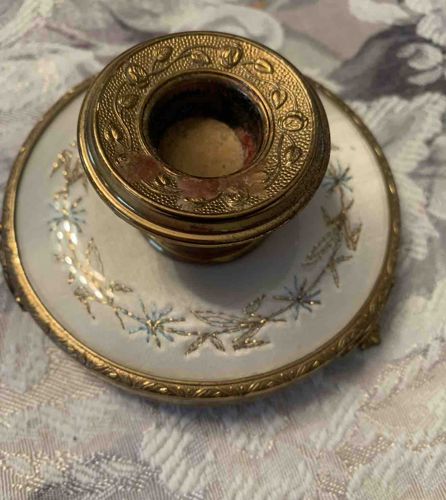
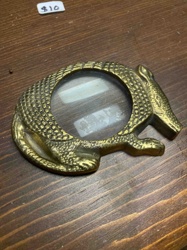
This item is an antique or vintage inkwell, likely part of a desk set. It features a circular, approximately 4-5 inch diameter, base with an elevated central inkwell holder. The primary materials appear to be brass or bronze for the metal components, combined with a ceramic or enamel insert on the base. The metal parts exhibit a dull gold or brass color, consistent with aged patinated brass, and show visible signs of wear and oxidation, particularly within the central well and on the raised decorative elements. The central inkwell holder is exquisitely detailed with an embossed or chased vine and leaf motif encircling its rim, indicating significant craftsmanship. The base features a creamy white or ivory-colored ceramic or enamel surface, adorned with delicate, raised floral and foliate designs in a light blue and gold color palette. These designs appear to be hand-painted or applied enamels, suggesting a high level of artistic detail. The raised nature of these floral patterns adds a tactile dimension to the piece. There might be some minor chipping or crazing on the enamel/ceramic base, though it's not clearly discernible from the image. The overall style suggests a late 19th to early 20th-century period, possibly Art Nouveau or early Art Deco, due to the floral motifs and ornate brass work. No specific maker's marks or signatures are visible in the provided image. The functionality of the piece, as an inkwell, is evident from the central well designed to hold an ink pot.
AI Appraisal Report
Upon visual examination of the provided image, I assess this antique/vintage brass and enamel inkwell. The condition appears to be consistent with its age, showing patination and wear on the brass components, which is expected for an item of this type and period. The detailed vine and leaf motif on the inkwell holder and the delicate raised floral designs on the creamy white enamel base suggest an Art Nouveau or early Art Deco aesthetic, likely dating to the late 19th or early 20th century. The craftsmanship, particularly the applied enamels and embossed metalwork, indicates a high-quality manufacture. While signs of chipping or crazing on the enamel are not definitively clear from the image, their presence would slightly diminish value.
From a market perspective, comparable brass and enamel inkwells of this era, especially those with intricate designs and in good condition, typically attract moderate demand from collectors of desk accessories, Art Nouveau items, and general antiques. Rarity is moderate; while not unique, pieces with this specific level of detail and material combination are not common mass-produced items. Factors significantly impacting value include the overall artistic merit, the condition of both metal and enamel components, and the historical period it represents.
It is crucial to note the limitations of authenticity verification solely from images. Without a physical inspection, I cannot ascertain the exact metal composition (brass vs. bronze), the precise nature of the "enamel" (true vitreous enamel versus painted ceramic), or detect subtle restorations, repairs, or hairline cracks not visible. An in-person examination would allow for closer inspection of surface irregularities, weight, tactile assessment of the raised decorations, and a thorough search for any makers' marks or signatures, which would provide definitive authentication and potentially enhance or refine the appraisal value. Furthermore, provenance documentation (e.g., previous ownership records, original purchase receipts) would significantly bolster authenticity and historical context. Scientific testing, such as elemental analysis, could confirm material composition definitively.