AI estimate as of September 12, 2025 · verify with a professional before acting
AI-Generated · Verify before acting
Everything on this page is generated by AI for informational purposes only. AI can make mistakes — the AI may misidentify items or misattribute them (artist, maker, brand, designer, origin, era). This is not an official valuation and should not be used for insurance, sale, tax, estate, legal, or lending purposes — or any decision requiring a certified appraisal. It is not an authoritative claim about any person, brand, or rights holder — do not share or rely on it as a factual statement about a third party. Always consult qualified professionals before making financial decisions.
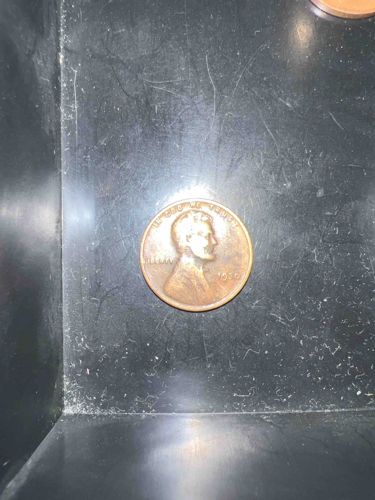
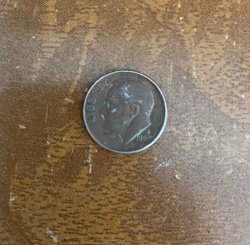
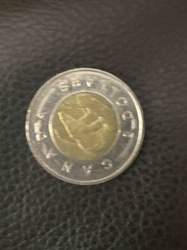
The item is a United States one-cent coin, specifically a Lincoln Wheat Cent, minted in 1936. It is made primarily of copper, exhibiting the characteristic reddish-brown coloration of circulated copper coinage. The coin has a circular shape with a reeded edge, though the reeding is not clearly visible in the provided image. The obverse features a right-facing bust of Abraham Lincoln, designed by Victor David Brenner. Above Lincoln's head, the motto "IN GOD WE TRUST" is faintly discernible, and to his left, the word "LIBERTY" is visible. Below Lincoln's bust, the minting year "1936" is clearly struck. The quality of the strike appears to be good for a circulated coin of its age, with facial features and lettering largely intact, though some wear is evident on the higher points of Lincoln's portrait and the surrounding text. The coin displays a consistent patina, suggesting natural aging rather than harsh chemical cleaning. There are no obvious signs of severe damage, such as nicks, dents, or significant scratching, though minor circulation marks are present across the surface, consistent with a coin that has been handled and used over time. The overall condition suggests it has been in circulation but cared for, falling into a fine to very fine grading band. No mint mark is immediately visible beneath the date, suggesting it was minted in Philadelphia, which did not typically use a mint mark for cents during this period. The craftsmanship is typical of U.S. Mint production from the early 20th century.
AI Appraisal Report
Based on my visual examination of the provided image, this 1936 Lincoln Wheat Cent appears to be authentic. The design elements, including Lincoln's bust, the lettering, and the date '1936', are consistent with known genuine examples of this coin. The obverse depicts Abraham Lincoln facing right, with 'IN GOD WE TRUST' and 'LIBERTY' visible, and the '1936' date below the bust. As no mint mark is visible below the date, it is presumed to be a Philadelphia mint strike, which is common for this period and does not typically feature a mint mark.
The coin exhibits wear consistent with circulation, falling into what I would assess as Fine (F) to Very Fine (VF) condition. There is clear detail remaining in Lincoln's profile and the legends, though high points show flattening. The overall patina is even, suggesting natural aging. I do not observe any severe damage such as deep scratches, nicks, or chemical cleaning, which would significantly detract from its value.
Market conditions for common date Lincoln Wheat Cents, even in VF condition, are relatively stable but not subject to high demand from serious collectors unless they are in much higher grades. The 1936 Philadelphia mintage was substantial (almost 3.0 billion coins), meaning it is not considered rare. Factors that impact its value are primarily its circulated condition and common date. Comparative sales data for 1936 Lincoln Cents in F-VF condition typically range from $0.50 to $1.50.
It is crucial to note that this authenticity verification and condition assessment are based solely on the provided image. For full authentication, an in-person physical examination would be necessary to thoroughly inspect for any alterations, confirm the coin's weight and dimensions, and perform a more precise grading. Without physical inspection, I cannot account for subtle details like luster, exact rim condition, or hidden defects that might impact value or authenticity.