AI Appraisal Estimate

AI-generated estimates · not official valuations

From the user

What was submitted

Photo and notes provided by the user — not generated by AI

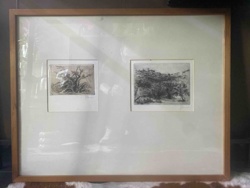
Submitted item photo
Submitted photo · June 30, 2026

User's notes

No additional notes provided.

AI analysis below

AI appraisal

AI analysis & estimate

AI-Generated · Verify before acting

Everything below is generated by AI for informational purposes only. AI can make mistakes — the AI may misidentify items or misattribute them (artist, maker, brand, designer, origin, era). This is not an official valuation and should not be used for insurance, sale, tax, estate, legal, or lending purposes — or any decision requiring a certified appraisal. It is not an authoritative claim about any person, brand, or rights holder — do not share or rely on it as a factual statement about a third party. Always consult qualified professionals before making financial decisions.

Read the full disclaimer

AI Identification

·Not independently authenticated·Verify before acting

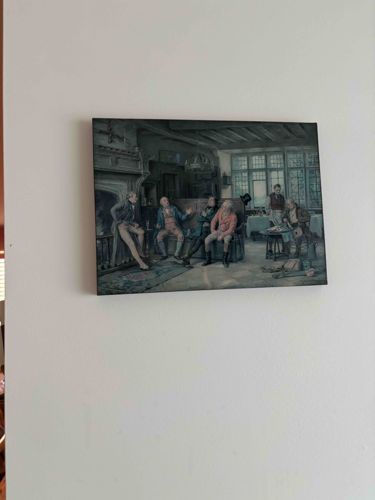
Late 19th or Early 20th Century Genre Print of a Tavern Scene

Wall Art / Prints & Multiples

AI Estimated Value

·Not an official valuation·Verify before acting

$40.00-$75.00

As of June 30, 2026

AI Item Analysis

·AI can make mistakes·Verify before acting
This item is a rectangular genre print depicting a group of several men in an 18th-century style tavern interior. The scene features a central group of figures seated on high-backed wooden settles in front of a large, ornate hearth, while another man stands to the left and a servant/waiter moves in the background near a window. The color palette is composed of muted, earthy tones including deep greens, browns, and slate blues, with focal pops of red and buff in the men's waistcoats and breeches. This style of 'Merrie England' tavern scene was highly popular in the Victorian and Edwardian eras, often used for lithographs, chromolithographs, or photogravures. The print appears to be mounted on a flat panel or block without a visible traditional frame. The level of detail suggests a commercial reproduction of an original oil painting from the late 19th century. From the provided view, the surface appears largely intact, though there is a subtle visible sheen that may indicate a protective varnish or a laminate layer that has aged over time. The edges appear sharp, suggesting it might be an unframed canvas wrap or a board-mounted print. There are no immediately visible signatures or maker's marks from this distance, which is typical for decor-grade reproductions of this period and style.
AI Appraisal Report

·AI can make mistakes·Verify before acting
I have examined the provided image of a late 19th or early 20th-century genre print depicting a tavern scene. The work is a commercial reproduction, likely a lithograph or photogravure, of a 'Merrie England' style oil painting popular during the Edwardian era. The composition focuses on nostalgic 18th-century imagery, utilizing a muted palette of earth tones. Based on the visual evidence, the print appears to be mounted on a wooden block or panel, a common format for decorative housewares of the mid-20th century. The visible sheen suggests a varnish or laminate coating which, while protective, indicates this was produced for domestic decor rather than as a fine art limited edition. The condition appears stable with sharp edges, though the lack of a traditional frame and the apparent mass-produced mounting style limit its appeal to the collectible market. Market demand for unsigned, decor-grade historical genre prints has weakened significantly as modern tastes shift away from Victorian revivalism. Comparisons to similar mounted tavern scenes in regional auctions and secondary marketplaces show values rarely exceeding $100. Limitations: This appraisal is based solely on digital imagery. A physical inspection is required to determine the specific printing process (e.g., halftone vs. lithography) and to check for hidden foxing or adhesive degradation under the mount. High-resolution examination of the dot pattern would be necessary to confirm the exact date of production. No provenance was provided, which, while unlikely to significantly raise the value of a reproduction, would be necessary to establish any historical significance.

Get your items appraised

Instant estimates of your treasures with AI-powered appraisals

Browse More Appraisals