AI identification & appraisal estimate

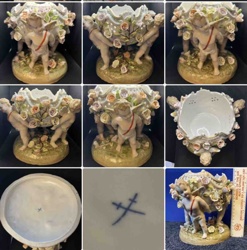
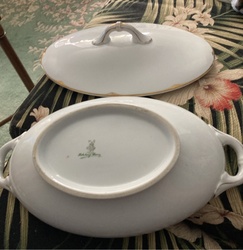
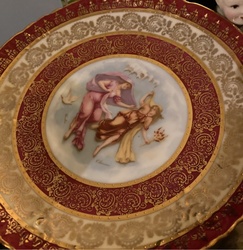
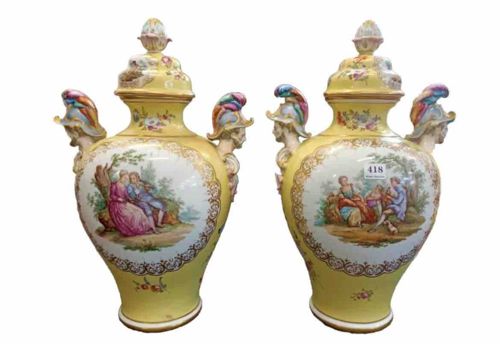
Pair of Dresden Helena Wolfsohn Yellow-Ground Porcelain Covered Urns

Submitted photo of Pair of Dresden Helena Wolfsohn Yellow-Ground Porcelain Covered Urns
Photo submitted by the user — not generated by AI

User's notes

Dresden urns

These notes were written by the person who submitted this item. Appraiser.AI has not verified them, and the AI's identification and estimate may rely on them.

AI Estimated Value

Not an official valuation

$4,500 - $6,500

AI estimate as of February 16, 2026 · verify with a professional before acting

AI-Generated · Verify before acting

Everything on this page is generated by AI for informational purposes only. AI can make mistakes — the AI may misidentify items or misattribute them (artist, maker, brand, designer, origin, era). This is not an official valuation and should not be used for insurance, sale, tax, estate, legal, or lending purposes — or any decision requiring a certified appraisal. It is not an authoritative claim about any person, brand, or rights holder — do not share or rely on it as a factual statement about a third party. Always consult qualified professionals before making financial decisions.

This analysis also relies on unverified notes provided by the user, which may be incomplete or inaccurate and could affect the result.

Read the full disclaimer

AI Item Analysis

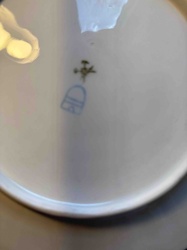
A pair of decorative covered porcelain urns, attributed to the late 19th-century Dresden workshop of Helena Wolfsohn. The urns feature a vibrant canary yellow ground, which was a hallmark of Wolfsohn's style in imitation of early Meissen patterns. Each urn is designed with an ovoid body, a tapering neck, and a conforming domed lid topped with a bud-style finial. Central to each vessel is a large, heart-shaped or quatrefoil white reserve framed by elaborate gilded rococo scrollwork. Within these reserves are finely hand-painted polychrome Watteau-style 'fête galante' scenes, depicting figures in a pastoral landscape. The urns are uniquely accented with twin sculptural handles in the form of classical warrior busts wearing plumed helmets, finished in multi-colored enamels. Minor floral sprays decorate the neck and base areas. Visible condition indicates light gilt wear and surface grime consistent with age; a small chip or restoration may be present on the delicate feathered plumes of the handles. These pieces typically bear the 'AR' (Augustus Rex) monograms, which Wolfsohn used until litigation by Meissen in the 1880s, dating these likely to the 1870s or early 1880s.
AI Appraisal Report

I have examined the images of this pair of Dresden porcelain urns attributed to the Helena Wolfsohn workshop. These pieces represent a high-water mark for the 19th-century 'Dresden Revival' of the Meissen aesthetic. The choice of canary yellow ground is particularly desirable, as it was one of the most difficult pigments to fire successfully. The quality of the hand-painted 'fête galante' scenes—executed in the manner of Antoine Watteau—is superior, and the rare inclusion of polychrome sculptural warrior-bust handles significantly elevates this pair above standard floral or mask-handled examples. Critically, the use of the 'AR' monogram dates these prior to the 1883 legal settlement between Meissen and the Dresden decorators, placing them in the 1870-1880 period. While the market for 19th-century porcelain has softened compared to previous decades, large-scale, statement pieces with vibrant ground colors and figural work maintain strong appeal among international collectors and interior designers. Values are primarily impacted by the condition of the delicate plumed helmets, which are prone to chipping. Limitations: My assessment is based on visual data only. A physical inspection is required to confirm the presence of high-fire porcelain versus soft-paste, and to search for 'overspray' that might indicate professional restoration to the handles or rims. Authenticity of the AR mark must be verified under UV light to ensure it is underglaze and contemporary with the piece. I would also recommend reviewing any provenance documentation to confirm historical ownership, as large yellow-ground pieces were frequently commissioned for prestigious European villas.

Keep exploring

More antique european porcelain and ceramics appraisals

Get your items appraised

Instant AI-powered appraisal estimates from a photo

Browse More Appraisals