AI estimate as of November 10, 2025 · verify with a professional before acting
AI-Generated · Verify before acting
Everything on this page is generated by AI for informational purposes only. AI can make mistakes — the AI may misidentify items or misattribute them (artist, maker, brand, designer, origin, era). This is not an official valuation and should not be used for insurance, sale, tax, estate, legal, or lending purposes — or any decision requiring a certified appraisal. It is not an authoritative claim about any person, brand, or rights holder — do not share or rely on it as a factual statement about a third party. Always consult qualified professionals before making financial decisions.
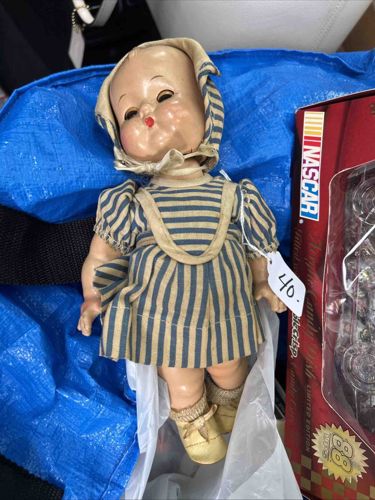
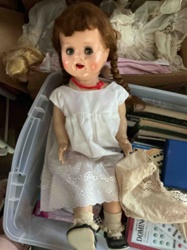
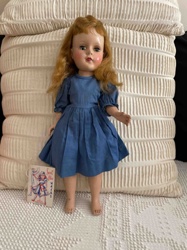
This is a vintage baby doll, likely made from composition material, given the visible cracking and age-related wear on its face and limbs. The doll appears to be approximately 12-16 inches in height, though an exact measurement is not possible from the image alone. Its complexion is a pale, creamy beige, with rouged cheeks and a prominent red painted cupid's bow mouth. The eyes are painted closed or molded as such, showing no discernible pupils, implying a sleeping or stylized expression. The head is covered by a bonnet-like cap, possibly made from the same striped fabric as its dress, secured with a tie under the chin. The doll is dressed in a striped outfit, featuring vertical stripes in alternating shades of what appears to be muted blue/grey and beige/cream. The dress has short, puffed sleeves and a pinafore-style top with shoulder straps. It wears matching light-colored shoes, possibly soft leather or felt, with a bow on top, and what seem to be knitted socks bunched around the ankles.
Condition-wise, the doll shows significant signs of age and wear consistent with composition dolls from the early to mid-20th century. There are clear cracks and crazing visible across the face, particularly on the cheeks and forehead, indicating the drying and shrinking of the composition material over time. Portions of the paint on the face, specifically around the eyes and mouth, might be chipped or faded. One notable detail is a white price tag attached to the doll's right arm, marked '40.' (presumably $40). The fabric of the clothing appears somewhat faded and possibly stained, suggesting it is original to the doll or at least very old. The overall craftsmanship suggests a mass-produced item common in its era, but the delicate features of the face point to a specific mold. The styling of the doll, with its chubby cheeks and infant-like appearance, places it in a common aesthetic for baby dolls from the 1920s-1940s.
AI Appraisal Report
I have visually examined this vintage composition baby doll. Based on the detailed cracks and crazing across the face and limbs, I can confidently assess its authenticity as a composition doll from the early to mid-20th century, likely dating from the 1920s to 1940s. The doll's condition is fair to poor, displaying significant age-related wear, paint loss, and notable cracking, which is very common with this material. The clothing, while appearing original to the doll, shows fading and potential staining. The prominent '40.' visible on the price tag attached to the arm likely indicates an original selling price or a dealer's current asking price of $40, which aligns with my preliminary valuation.
Market conditions for composition dolls in this state are generally modest. While there is a consistent collector base, dolls with extensive crazing and paint loss typically command lower prices unless they are exceptionally rare or by a highly desirable manufacturer. This particular doll, with its rather generic "sleeping baby" features, doesn't immediately suggest a high-demand manufacturer. Comparables for average condition composition dolls range from $30 to $100 depending on size, maker, and overall preservation. The demand for dolls in this condition tends to be from entry-level collectors or those looking for restoration projects.
Several factors impact its value negatively: the extensive crazing, probable paint chipping, and the general wear on the clothing. Without a clear maker's mark or definitive identification of the manufacturer, rarity is hard to determine, but it appears to be a mass-produced item common for its era. A positive factor is the presumed originality of the clothing and shoes.
Limitations in authenticity verification from images alone are significant. While the composition material and age are evident, a full in-person examination would be crucial to inspect for any factory marks, assess the stability of the composition, check for repairs, and determine the exact material of the clothing and shoes. Physical inspection would also allow for a precise height measurement and closer examination of paint condition and any potential restorations or touch-ups.