These notes were written by the person who submitted this item. Appraiser.AI has not verified them, and the AI's identification and estimate may rely on them.
AI Estimated Value
Not an official valuation
$150-300
AI estimate as of September 26, 2025 · verify with a professional before acting
AI-Generated · Verify before acting
Everything on this page is generated by AI for informational purposes only. AI can make mistakes — the AI may misidentify items or misattribute them (artist, maker, brand, designer, origin, era). This is not an official valuation and should not be used for insurance, sale, tax, estate, legal, or lending purposes — or any decision requiring a certified appraisal. It is not an authoritative claim about any person, brand, or rights holder — do not share or rely on it as a factual statement about a third party. Always consult qualified professionals before making financial decisions.
This analysis also relies on unverified notes provided by the user, which may be incomplete or inaccurate and could affect the result.
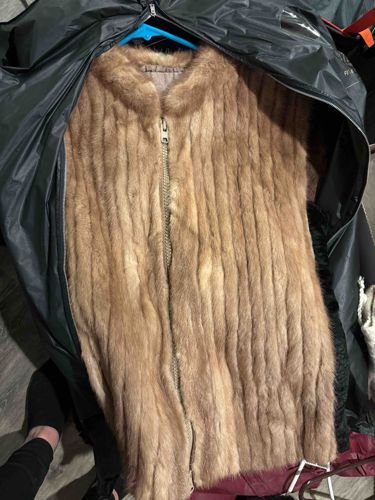
This item is a short-length jacket or coat made from real fox fur. The fur appears to be a natural, warm, reddish-brown or sandy beige color, consistent with typical fox pelts. The construction shows distinct vertical panels of fur, a common technique in fur garment manufacturing to maximize the appearance and drape of the fur. It features a rounded, band-style collar and a central front opening with a visible metallic zipper closure. The zipper pull is a standard, rectangular metal tab. The jacket is currently displayed on a light blue plastic hanger, contained within a black, non-woven fabric garment bag, which is partially unzipped. The lining, visible at the neck opening, appears to be a light-colored, possibly satin or silk-blend fabric, showing some signs of age or wear with slight discoloration. The overall condition of the fur appears good, but without closer inspection, it's difficult to ascertain if there are any areas of shedding, matting, or dry rot to the pelts. The craftsmanship seems typical of commercially produced fur garments, with neatly joined fur panels. Given the style, particularly the zipper closure and simple collar, it likely dates from the mid-20th century, possibly 1950s-1970s, as earlier fur coats often featured more elaborate closures or longer lengths. The garment bag suggests it has been stored, which is crucial for preserving fur. The texture of the fur looks relatively soft and full. No manufacturer's marks or signatures are clearly visible.
AI Appraisal Report
Based on my visual examination, this is a short-length jacket made from real fox fur, consistent with the owner's description. The fur appears to be a natural reddish-brown/sandy beige. The vertical panel construction is typical for such garments. The visible metallic zipper and band collar suggest a mid-20th century origin, likely 1950s-1970s. The fur's condition appears decent from the image, but without physical inspection, I cannot confirm the absence of shedding, matting, or dry rot to the pelts, which are common issues in vintage fur and would significantly impact value. The discolored lining also hints at age and some wear. The absence of maker's marks is common but limits specific dating or origin. The garment bag indicates appropriate storage, a positive factor.
Market conditions for vintage fur coats have softened considerably due to ethical concerns and fluctuating fashion trends. Demand for full-length, high-quality vintage furs remains modest, while shorter, more casual styles like this one are less sought after unless they possess exceptional design or provenance. This jacket's style isn't particularly rare or unique. Factors limiting value include its age, potential hidden condition issues, lack of designer attribution, and general market disinterest in non-designer vintage fur.
To fully authenticate the fur's condition and address potential issues like dry rot or pelt strength, an in-person examination would be crucial. Scientific testing is not typically required but provenance documentation (receipts, labels) would help confirm origin and quality if available. Without physical inspection, I must make assumptions about the underlying pelt health.