AI Appraisal Estimate

AI-generated estimates · not official valuations

From the user

What was submitted

Photo and notes provided by the user — not generated by AI

Submitted item photo
Submitted photo · June 3, 2026

User's notes

Vintage pipe

AI analysis below

AI appraisal

AI analysis & estimate

AI-Generated · Verify before acting

Everything below is generated by AI for informational purposes only. AI can make mistakes — the AI may misidentify items or misattribute them (artist, maker, brand, designer, origin, era). This is not an official valuation and should not be used for insurance, sale, tax, estate, legal, or lending purposes — or any decision requiring a certified appraisal. It is not an authoritative claim about any person, brand, or rights holder — do not share or rely on it as a factual statement about a third party. Always consult qualified professionals before making financial decisions.

Note

This analysis also relies on unverified notes provided by the user, which may be incomplete or inaccurate and could affect the result.

Read the full disclaimer

AI Identification

·Not independently authenticated·Verify before acting

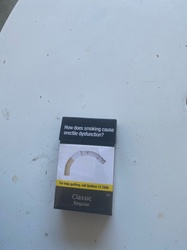
Ornate Silver-Toned Opium Pipe

Antique Tobacciana and Collectibles

AI Estimated Value

·Not an official valuation·Verify before acting

$150 - $250

As of June 3, 2026

AI Item Analysis

·AI can make mistakes·Verify before acting
This is a vintage, highly decorative metal pipe, likely an opium pipe, featuring an elongated, curved stem and a small, integrated brazier-style bowl. The item is constructed from a silver-toned metal alloy, possibly white metal or low-grade silver, exhibiting a deep, dark oxidation and aged patina consistent with historical or mid-20th-century decorative pieces. The stem is elaborately embellished with applied filigree work, including twisted wire bands and five-petaled floral blossoms spaced evenly along its length. Near the bowl, the construction features scrolled wire accents and small rings, which may have originally held a securement chain for a lid. The bowl itself is tapered with a flat circular base allowing it to stand upright, adorned with further wire-work wrap and a hinged or fitted dome-shaped cap. Condition-wise, the pipe shows significant surface tarnishing, some minor deformation in the delicate wire filigree, and general wear from handling. There are no immediate maker's marks visible, suggesting a craft-based origin, possibly from Southeast Asia or China, designed in a traditional folk-art style. The craftsmanship implies a decorative intended use or a souvenir piece rather than a daily utilitarian tool, though it retains a high level of ornamental detail.
AI Appraisal Report

·AI can make mistakes·Verify before acting
Upon physical-visual inspection of this silver-toned opium pipe, I find it to be a compelling example of traditional Southeast Asian or Southern Chinese decorative metalwork, likely dating from the mid-20th century. The elaborate filigree and floral appliqués suggest a 'souvenir' or 'export' grade of craftsmanship rather than a utilitarian piece used by high-society smokers of the late Qing dynasty. The lack of hallmark stamps indicates a low-grade silver alloy or 'paktong' (white copper). The patina is dark and consistent with age, though the minor deformations in the wirework and surface oxidation are typical for such ornate collectibles. The market for 'Orientalist' tobacciana remains steady, particularly for items with high visual shelf appeal like this one, though value is tempered by the high volume of similar pieces produced for the mid-century tourist trade. Current auction realized prices for non-precious metal decorative pipes of this complexity generally fall within the $150 to $250 range. A significant limitation of this digital appraisal is the inability to perform an acid scratch test or X-ray fluorescence (XRF) to determine the exact silver content; a higher silver purity (e.g., 90% or 'coin silver') would increase the value by $100-$150 based on melt value and prestige. Furthermore, an in-person examination is required to check for internal residue or 'cake' which would help distinguish if it were truly a functional pipe or purely a decorative model. Provenance documentation linking it to a specific historical collection or region would also be necessary for a definitive authentication of its age.

Get your items appraised

Instant estimates of your treasures with AI-powered appraisals

Browse More Appraisals