AI estimate as of July 26, 2025 · verify with a professional before acting
AI-Generated · Verify before acting
Everything on this page is generated by AI for informational purposes only. AI can make mistakes — the AI may misidentify items or misattribute them (artist, maker, brand, designer, origin, era). This is not an official valuation and should not be used for insurance, sale, tax, estate, legal, or lending purposes — or any decision requiring a certified appraisal. It is not an authoritative claim about any person, brand, or rights holder — do not share or rely on it as a factual statement about a third party. Always consult qualified professionals before making financial decisions.
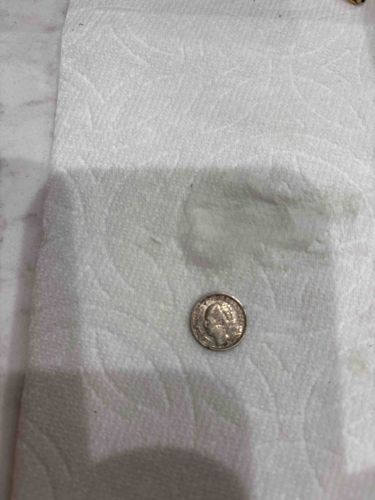
The item depicted is a circulated Mercury Dime, also known as a Winged Liberty Head Dime, from the United States. Its physical characteristics include a small, round metallic form, typical of a dime, with a silvery-gray color that exhibits some toning, possibly due to age and exposure. The material is likely silver, consistent with dimes minted before 1965. The obverse features a left-facing profile of Liberty wearing a winged Phrygian cap, symbolizing freedom of thought. Details on the cap and hair appear somewhat worn but are largely discernible. There is a visible date, which appears to be '1942' or '1943', located at the bottom of the obverse. The rim shows some wear, but the overall shape is still round. There are no obvious deep scratches, dents, or major structural damage, suggesting a typical level of wear for a coin that has been in circulation. The surface displays a dull luster consistent with natural patina rather than recent cleaning, which is generally preferred by collectors. While specific mint marks or designer initials are not clearly visible in this image, they would typically be found on the reverse or near the date if present. The apparent date places this coin squarely within the mid-20th century, specifically the period between 1916 and 1945 when Mercury Dimes were minted. The quality of strike and craftsmanship visible, despite circulation wear, suggests a standard U.S. Mint production. The details around Liberty's face and the lettering, though not perfectly crisp, are still identifiable.
AI Appraisal Report
Based on my visual examination of the provided image, I can assert that the item is indeed a circulated Mercury Dime, consistent with its description. The silvery-gray color and toning are typical of a silver coin from this era, and the visible date, likely 1942 or 1943, places it within the correct mintage period (1916-1945). The wear on the obverse, particularly on Liberty's cap and hair, signifies its circulated status, yet core details remain discernible. The absence of deep scratches, dents, or signs of aggressive cleaning is a positive factor for collectors. Its dull luster suggests a natural patina, which is generally more desirable than a harsh, cleaned appearance.
Market conditions for circulated Mercury Dimes are generally stable, driven by collector demand for pre-1965 silver coinage and numismatic interest in the Mercury Dime series itself. While common dates in circulated grades are widely available, their intrinsic silver value provides a floor for their price. This specific coin, appearing to be a common date, falls into a category where its value is primarily tied to its silver content plus a small numismatic premium for its recognizable design and historical significance. Rarity is not a significant factor here; these dates were minted in large quantities. The condition, while circulated, is acceptable for many entry-to-mid level collectors.
Limitations regarding authenticity verification from images alone are crucial to note. While it appears genuine, an in-person examination would be necessary to confirm the coin's authenticity through tactile inspection, weight, diameter, and precise observation of mint marks or subtle die characteristics. Magnified inspection could reveal details not visible in photos, such as signs of alteration or counterfeiting. Provenance documentation could further enhance its historical value, and scientific testing (e.g., specific gravity) would provide definitive material composition confirmation, though this is rarely necessary for common circulated silver coins.