AI Appraisal Estimate

AI-generated estimates · not official valuations

From the user

What was submitted

Photo and notes provided by the user — not generated by AI

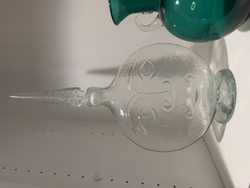
Submitted item photo
Submitted photo · June 19, 2026

User's notes

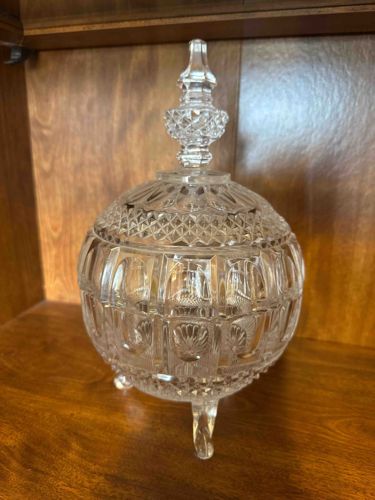
Clear, heavy, candy dish with lid , diamond cut pattern around the perimeter, 3 glass legs on the base with pattern cut on the bottom perimeter

AI analysis below

AI appraisal

AI analysis & estimate

AI-Generated · Verify before acting

Everything below is generated by AI for informational purposes only. AI can make mistakes — the AI may misidentify items or misattribute them (artist, maker, brand, designer, origin, era). This is not an official valuation and should not be used for insurance, sale, tax, estate, legal, or lending purposes — or any decision requiring a certified appraisal. It is not an authoritative claim about any person, brand, or rights holder — do not share or rely on it as a factual statement about a third party. Always consult qualified professionals before making financial decisions.

Note

This analysis also relies on unverified notes provided by the user, which may be incomplete or inaccurate and could affect the result.

Read the full disclaimer

AI Identification

·Not independently authenticated·Verify before acting

Pressed Glass Footed Candy Dish with Finial Lid

Vintage Glassware / Decorative Art

AI Estimated Value

·Not an official valuation·Verify before acting

$45.00 - $65.00

As of June 19, 2026

AI Item Analysis

·AI can make mistakes·Verify before acting
This is a heavy, clear pressed glass candy dish or bon-bon jar features a globular body supported by three scrolled tripod feet. The exterior is decorated with an intricate geometric pattern consisting of a central band of arched panels containing frosted or textured shell-like motifs, flanked by borders of diamond-point or cross-hatched cuttings. The matching domed lid mirrors the diamond-point pattern and is topped by a tall, multi-tiered pedestal finial with a small knop at the peak. Based on the construction and mold lines, this item is likely mid-20th-century American or European pressed glass, designed to mimic high-end Brilliant Period cut glass. The glass appears to have good clarity with significant light refraction, suggesting a high lead content or quality lime-glass composition. No visible maker's marks are present in the image, which is common for such utility crystal pieces. The item appears to be in good vintage condition with no major chips or cracks visible on the finial or feet, though light surface scratches consistent with use and age are expected upon close physical inspection. The craftsmanship is evidenced by the symmetry of the molded patterns and the stability of the integral legs.
AI Appraisal Report

·AI can make mistakes·Verify before acting
I have completed a visual assessment of this clear pressed glass footed candy dish and its corresponding finial lid. The piece exhibits characteristic traits of mid-20th-century American pressed glass, specifically designed to emulate the more expensive American Brilliant Period (ABP) cut glass. Based on the provided imagery, the clarity of the glass and the sharpness of the diamond-point pattern suggest a high-quality manufacture, possibly by firms like Westmoreland, Smith, or Indiana Glass. The condition appears Excellent; the scroll feet and the tiered finial—the most vulnerable points—show no significant chipping or structural fractures. While this dish lacks a maker's mark, the symmetry of the mold and the lack of visible clouding (sickness) indicate it has been well-maintained. The market for mid-century pressed glass is currently stable but saturated. While decorative, these pieces were mass-produced, which limits rarity and restricts the value to the decorative utility category rather than high-end investment crystal. Comparables for footed 'candy jars' of this size and pattern typically realize between $40 and $70 in retail antique settings. My valuation is limited by the inability to perform a physical tactile inspection. A definitive authentication would require an ultraviolet (UV) light test to check for manganese or lead fluorescence, which helps date the glass batch, and a physical weight assessment to determine lead content. Furthermore, provenance or original box labels would be required to attribute this to a specific glass house with 100% certainty. Without these, the value remains based on its aesthetic merit and identified era-specific design.

Get your items appraised

Instant estimates of your treasures with AI-powered appraisals

Browse More Appraisals