AI estimate as of July 19, 2025 · verify with a professional before acting
AI-Generated · Verify before acting
Everything on this page is generated by AI for informational purposes only. AI can make mistakes — the AI may misidentify items or misattribute them (artist, maker, brand, designer, origin, era). This is not an official valuation and should not be used for insurance, sale, tax, estate, legal, or lending purposes — or any decision requiring a certified appraisal. It is not an authoritative claim about any person, brand, or rights holder — do not share or rely on it as a factual statement about a third party. Always consult qualified professionals before making financial decisions.
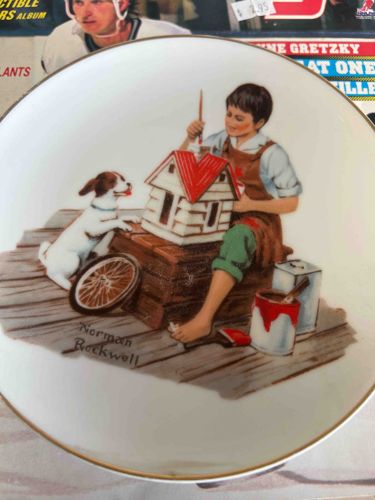
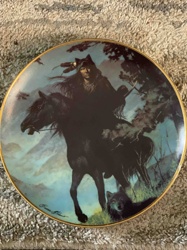
This is a decorative collector's plate, primarily white with a golden rim. The central image depicts a classic Norman Rockwell illustration titled 'Boy with Dog and Birdhouse' (also known as 'The Painter'). The illustration features a young boy, likely in his early teens, with short dark hair, wearing a light blue shirt, green pants, and a brown apron. He is seated on a wooden crate or bench, barefoot, and attentively painting the roof of a small, white birdhouse red with a paintbrush. To his left, a white dog with brown patches, possibly a Jack Russell Terrier, stands on its hind legs with its front paws resting on the wooden surface, looking towards the boy and the birdhouse with curiosity. An old wooden wagon wheel leans against the wooden structure. In the foreground, near the boy's right foot, there's a spilled can of red paint and a paintbrush resting beside it. A larger, perhaps silver or grey, paint can is also visible. The background depicts rustic wooden planks, suggesting an outdoor or workshop setting. The artwork itself shows fine detail in the figures and objects, with a clear and vibrant color palette characteristic of Rockwell's style. The bottom left of the illustration clearly bears the signature "Norman Rockwell" in a cursive script, indicating the artist and the authenticity of the reproduced artwork. The plate appears to be in very good condition with no visible chips, cracks, or significant wear to the illustration or the golden rim, suggesting it has been well-preserved, likely for display purposes rather than utilitarian use. The lack of visible manufacturing marks on the front face suggests they are located on the reverse side of the plate. The style and subject matter highly indicate a mid-to-late 20th-century production, typical of collector plate series featuring popular artwork.
AI Appraisal Report
Upon examining the provided image of the Norman Rockwell 'Boy with Dog and Birdhouse' Collector's Plate, I assess its condition as very good to excellent. The ceramic surface appears free of chips, cracks, or significant wear. The golden rim retains its integrity, and crucially, the vibrant colors and fine details of the reproduced 'The Painter' illustration are well-preserved. The visible 'Norman Rockwell' signature within the artwork supports its authenticity as a licensed reproduction, typical of collector plates in the mid-to-late 20th century.
Market conditions for collector plates, particularly those mass-produced, tend to be soft. While Norman Rockwell's original works command high prices, reproductions on collector plates generally do not. Factors impacting value include the lack of inherent rarity, as these plates were often produced in large editions, and the limited demand from serious art collectors who prioritize original works or limited-edition prints on paper. These plates primarily appeal to niche collectors of decorative items or Rockwell memorabilia, and even within that group, the market is saturated.
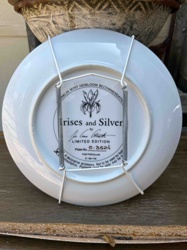
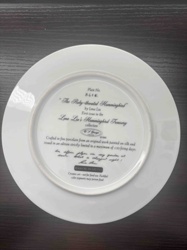
Without physical inspection, I cannot confirm the specific manufacturer, series (e.g., 'Rockwell's Rediscovered Women' or 'Four Seasons'), edition size, or any backstamp information, which could slightly influence the appeal to a dedicated collector. My assessment is limited to the visual evidence presented. A physical examination would allow for inspection of the reverse side for manufacturer marks, edition numbers, and any certificates of authenticity that typically accompany such items, which are crucial for definitive authentication and valuation within the collector plate market. While the imagery is unequivocally Rockwell's, the plate's specific manufacturing details would confirm its provenance as a legitimate collectible issue. No scientific testing is required as this is not an original artwork.