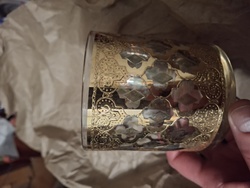
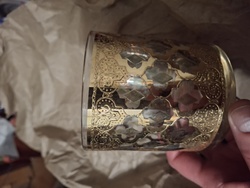
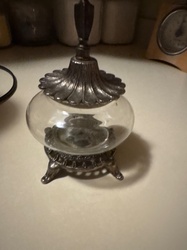
AI estimate as of October 2, 2025 · verify with a professional before acting
AI-Generated · Verify before acting
Everything on this page is generated by AI for informational purposes only. AI can make mistakes — the AI may misidentify items or misattribute them (artist, maker, brand, designer, origin, era). This is not an official valuation and should not be used for insurance, sale, tax, estate, legal, or lending purposes — or any decision requiring a certified appraisal. It is not an authoritative claim about any person, brand, or rights holder — do not share or rely on it as a factual statement about a third party. Always consult qualified professionals before making financial decisions.
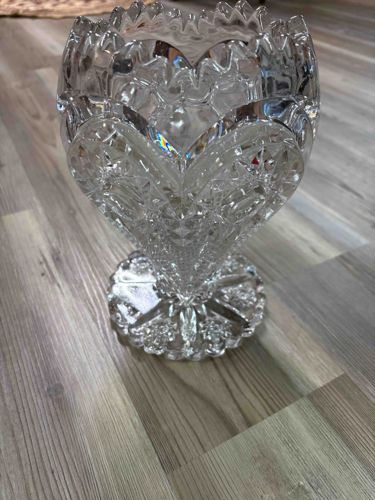
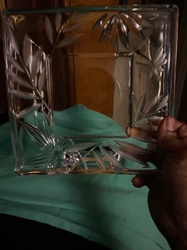
This exquisite item is a clear cut glass vase, featuring a distinct pedestal base. The primary decorative pattern throughout the body of the vase and the base consists of deeply cut and polished hearts, interspersed with diamond-cut patterns that create a dazzling, refractive effect. The material appears to be high-quality lead crystal or heavy pressed glass, judging by its brilliance and the sharp edges of the cuts. The overall color is transparent, showcasing the sparkling light play of its faceted surfaces. The rim of the vase is scalloped or fluted, following the contours of the heart motifs, adding to its decorative appeal. The base is sturdy and heavily cut, providing stability and complementing the intricate design of the body. There are no visible chips, cracks, or significant abrasions from the provided images, suggesting it is in very good condition, though a full inspection would be required to confirm minor wear consistent with age, such as slight scratches to the base or rim. No apparent manufacturing marks, signatures, or stamps are visible in the images. The stylistic elements, particularly the deep cutting and patterned design, suggest an age perhaps from the late 19th to mid-20th century, a period when cut glass was highly prized. Its craftsmanship indicates a piece designed for ornamental purposes, likely for holding flowers or as a standalone decorative object. The precise cutting and polished surfaces are indicators of good quality and attention to detail during its manufacture.
AI Appraisal Report
Based on my visual examination of the provided images of this Cut Glass Heart-Pattern Pedestal Vase, I can assess its condition and potential authenticity. The vase appears to be in very good condition, showing no obvious chips, cracks, or significant abrasions. The deep, polished cuts forming the heart and diamond patterns, along with the scalloped rim and sturdy pedestal base, suggest a piece of quality craftsmanship. The brilliance points to either high-quality lead crystal or heavy pressed glass, a distinction that would require in-hand examination to confirm. The style is consistent with late 19th to mid-20th-century cut glass.
Market conditions for decorative cut glass of this type are generally stable but not experiencing rapid appreciation. Comparable pieces, often referred to as 'Brilliant Period' style though not necessarily from that specific era, typically fetch modest prices unless attributed to a renowned manufacturer. Demand is moderate, appealing to collectors of vintage decorative glassware. While not exceedingly rare, a piece in such good condition with an appealing design like this heart pattern does hold value.
Factors significantly impacting value include the material (lead crystal is more desirable than pressed glass), the precision and depth of the cuts, and the overall condition. The absence of visible manufacturing marks is common for this type of item.
It is crucial to note the limitations of image-based appraisal. Authenticity regarding the specific origin (e.g., American Brilliant, European, or later reproduction) cannot be definitively confirmed without physical inspection. An in-person examination would allow for tactile assessment of material, weight, resonance, and scrutiny for minor condition issues like faint abrasions or fleabites, especially along the cut edges and base. Additionally, provenance documentation, if available, would provide invaluable support for authenticity and origin, which could further refine the valuation.